

The Listen Loudly, Act Strongly report lays out systemic racism at the national broadcaster. In the face of external attack, the ABC needs to stand up for its culturally diverse staff.
The University of Melbourne

The University of Melbourne is a global leader in higher education. Across our campuses we convene brilliant minds from different disciplines and sectors to come together to address important questions and tackle grand challenges. In a disrupted world, that capacity has never been more important.
Our vision is to equip our students with a distinctive, future-facing education personalised around their ambitions and needs, enriched by global perspectives and embedded in a richly collaborative research culture. As active citizens and future leaders, our students represent our greatest contribution to the world, and are at the heart of everything we do.
We serve society by engaging with our communities and ensuring education and research are inspired from the outset by need and for the benefit of society, while remaining committed to allowing academic freedom to flourish. In this, we remain true to our purpose and fulfil our mission as a public-spirited organisation, dedicated to the principles of fairness, equality and excellence in everything we do.
We strive for an environment that is inclusive and celebrates diversity.
Beyond our campuses we imagine an Australia that is ambitious, forward thinking and increasing its reputation and influence globally. We are committed to playing a part in achieving this – building on our advantageous location in one of the world’s most exciting cities and across the state of Victoria, in a region rapidly becoming a hub for innovative education, research and collaboration.
Links
Articles

In many cases, patients are unable to shop around or make informed decisions about their care due to a lack of information about the true cost and quality of services.

This celebration of public life in Melbourne’s Fitzroy, in 1974, reveals a vigorous working-class suburb evolving into a countercultural marvel of cheap ‘fixer-uppers’ and bohemian share houses.
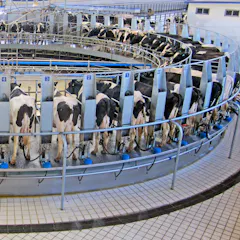
If left unchecked, artificial intelligence will harm animals. Experts in law, ethics and animal welfare call for AI to be included in the revised Australian Animal Welfare Strategy, coming soon.
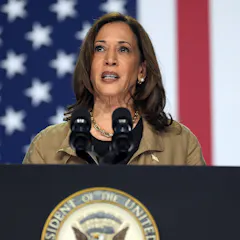
The US presidential race continues to be tight, while the Coalition holds a narrow lead over Labor in one Australian federal poll.

Our research found high rates of tech-based abuse – so our team is designing a new AI tool to detect and document toxic comments.

Penelitian berskala besar menemukan bahwa paparan polusi udara berisiko tinggi menyebabkan ketidaksuburan pada laki-laki dan kebisingan lalu lintas berisko timbulkan ketidaksuburan pada perempuan.
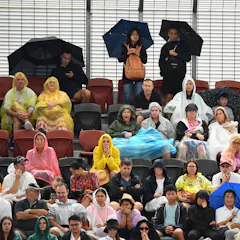
Signs of this potential La Niña are emerging fairly late. But new research may help make predictions earlier.
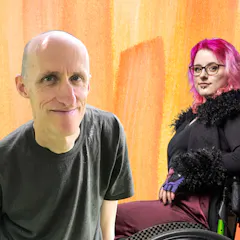
In our post-COVID age of climate change catastrophe, disabled people are ideally equipped to imagine how to overcome barriers to an inclusive world. Andy Jackson led a collaboration of disabled writers.

Behaviour to ‘promote’ or prevent pregnancy can intersect with domestic, family and sexual violence. It weaponises someone’s reproductive capacity to control them.
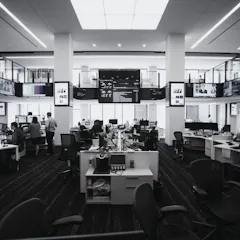
In a time when media companies are more cash-strapped than ever, the threat of defamation action has a chilling effect on the stories that get told.
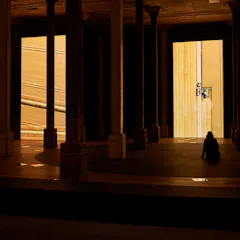
In The Rites of When, Angelica Mesiti considers the rituals that may mark the seasons in our burning planet. The Tank has been waiting for art like this.

Woolworths and Coles face potentially massive fines if they are found guilty of misleading shoppers over the price of hundreds of products.

The Democratic nominee has consolidated the leads she gained after her debate with Donal Trump, in which she was widely seen to have bested the former president.
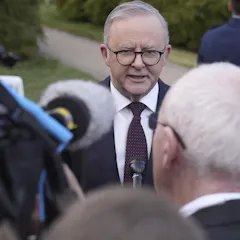
Australians still nominate cost of living and housing as the issues that worry them most.

In recent years, Australia has been dubbed the “defamation capital of the world”. High-profile legal stoushes in the headlines seem to back this up. How can we reconcile this with freedom of speech?
Until now, Australia has been more successful than the US, UK and Canada in managing inflation and unemployment, but underlying weakness in the labour market are putting that success at risk.

Centralising power in a president is more likely to foster personalised, corrupt governance that is democratically unaccountable.
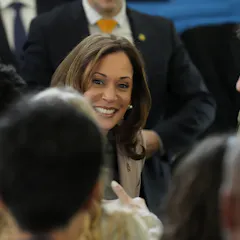
The Democratic nominee has received a sizeable bounce following her strong performance in the presidential debate.
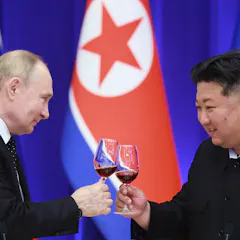
In Autocracy Inc., Pulitzer winner Anne Applebaum suggests there is a “network” among the world’s autocrats, which they use to further their aims and undermine democracy. But is there?
Authors
-

Election Analyst (Psephologist) at The Conversation; and Honorary Associate, School of Mathematics and Statistics, The University of Melbourne
-
Guest Research Fellow, School of Computing and Information Systems, The University of Melbourne
-
Professor of Sociology of Law and Deviance, Università di Bologna; University of Essex; The University of Melbourne
-
McKenzie Research Fellow, The University of Melbourne
-
PhD Candidate, Creative Writing, The University of Melbourne
-
Senior Research Associate, School of Agriculture, Food and Ecosystem Sciences, The University of Melbourne
-
Paleontologist, The University of Melbourne
-
Professor of Law (consumer protections and credit law), The University of Melbourne
-
Emeritus Professor of Creative Writing, The University of Melbourne
-
Lecturer in World Literature (including Australian literature), The University of Melbourne
-
Deputy Vice-Chancellor (Global, Culture and Engagement), The University of Melbourne
-
Professor of Psychology, The University of Melbourne
-
Emeritus professor, History, The University of Melbourne
-
Professor of Health Economics, The University of Melbourne
-
Associate Professor and Head, Behavioural Neuropharmacology Laboratory, The University of Melbourne