

Determining the global average temperature on any given day is complex. It involves thousands of observations, high-tech equipment and sophisticated computer models.
The University of Melbourne

The University of Melbourne is a global leader in higher education. Across our campuses we convene brilliant minds from different disciplines and sectors to come together to address important questions and tackle grand challenges. In a disrupted world, that capacity has never been more important.
Our vision is to equip our students with a distinctive, future-facing education personalised around their ambitions and needs, enriched by global perspectives and embedded in a richly collaborative research culture. As active citizens and future leaders, our students represent our greatest contribution to the world, and are at the heart of everything we do.
We serve society by engaging with our communities and ensuring education and research are inspired from the outset by need and for the benefit of society, while remaining committed to allowing academic freedom to flourish. In this, we remain true to our purpose and fulfil our mission as a public-spirited organisation, dedicated to the principles of fairness, equality and excellence in everything we do.
We strive for an environment that is inclusive and celebrates diversity.
Beyond our campuses we imagine an Australia that is ambitious, forward thinking and increasing its reputation and influence globally. We are committed to playing a part in achieving this – building on our advantageous location in one of the world’s most exciting cities and across the state of Victoria, in a region rapidly becoming a hub for innovative education, research and collaboration.
Links
Articles

Ukrainians have rallied behind the heartwarming stories of refugee cats and dogs, as well as animals ‘soldiers’ on the frontlines.
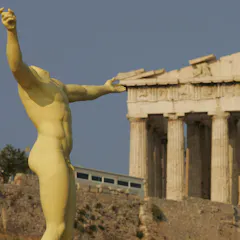
Today’s Olympics are vastly different to those that began in ancient Greece. So what was it like attending those ancient games?

Software like Crowdstrike Falcon can access core computer systems and, essentially, spy on everything. We live with these tradeoffs – but perhaps we don’t have to.
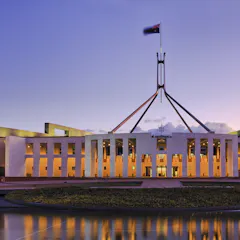
Newspaper reports notwithstanding, Australia’s Measuring What Matters framework is going from strength to strength, becoming deeper embedded in government decision-making.

Many big companies hate thinking about and preparing for so-called ‘black swan’ events –major catastrophies that are hard to predict. That isn’t a wise approach.
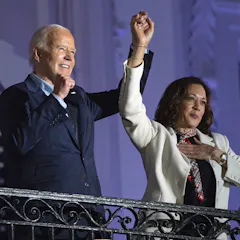
Now that President Biden has pulled out of the race, let’s look at the numbers we have for a Harris vs Trump contest.
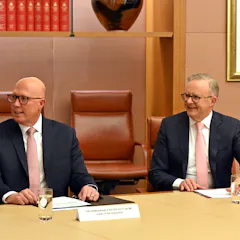
Labor edges ahead in Newspoll, but other polls have worse news for the government.

An update to Falcon software by the cyber security company CrowdStrike has caused an unprecedented global IT outage. So, what is it exactly?
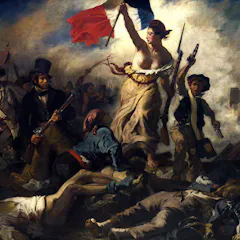
History for Tomorrow prompts us to consider how changes to decision-making might result in issues being resolved more democratically and promptly.
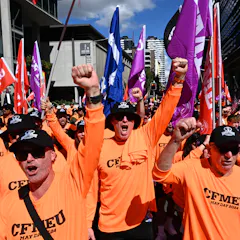
While the issues within one of Australia’s most powerful unions need urgently addressing, fixing the conditions that keep women out of the industry looms as a much larger problem.

The Australian Building and Construction Commission fined the CMFEU $16.1 million over six years. Axing it has removed a check on bad behaviour.

The inviolability of Vestals was predicated on their virginity, which entirely defined their social powers. The control of their sexuality was synonymous with the welfare and politics of the state.

‘Body swapping’ may help people get a clearer idea of what their own bodies are really like.

Ancient physicians prescribed swimming, ball games and walking on sand as ideal forms of physical exercise. A treatise published in 1569 is the best source of information on their advice.

Society’s expectations of how a man works and what he earns is a key contributor to how lonely he feels in the workplace.
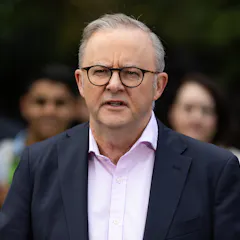
Cost of living pressures continue to hit the Labor government in the polls.

Greater visibility of these businesses – both in government statistics and Indigenous business directories – would not only showcase their diversity and excellence but also promote further success.
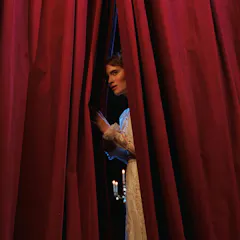
Kristina Ross was awarded the last Australian/Vogel Literary Award for her novel, First Year, a book that may – or may not – inspire students to attend drama school.

Children, busy parents and young people can be more easily swayed by unhealthy food ads. We found campaigns aimed at all of them.
Authors
-

Election Analyst (Psephologist) at The Conversation; and Honorary Associate, School of Mathematics and Statistics, The University of Melbourne
-
Guest Research Fellow, School of Computing and Information Systems, The University of Melbourne
-
Professor of Sociology of Law and Deviance, Università di Bologna; University of Essex; The University of Melbourne
-
McKenzie Research Fellow, The University of Melbourne
-
PhD Candidate, Creative Writing, The University of Melbourne
-
Senior Research Associate, School of Agriculture, Food and Ecosystem Sciences, The University of Melbourne
-
Paleontologist, The University of Melbourne
-
Professor of Law (consumer protections and credit law), The University of Melbourne
-
Emeritus Professor of Creative Writing, The University of Melbourne
-
Lecturer in World Literature (including Australian literature), The University of Melbourne
-
Deputy Vice-Chancellor (Global, Culture and Engagement), The University of Melbourne
-
Professor of Psychology, The University of Melbourne
-
Emeritus professor, History, The University of Melbourne
-
Professor of Health Economics, The University of Melbourne
-
Associate Professor and Head, Behavioural Neuropharmacology Laboratory, The University of Melbourne