

Don’t expect institutional investors to become activists for change to make corporations more responsible. More direct approaches are urgently needed.
The University of Melbourne

The University of Melbourne is a global leader in higher education. Across our campuses we convene brilliant minds from different disciplines and sectors to come together to address important questions and tackle grand challenges. In a disrupted world, that capacity has never been more important.
Our vision is to equip our students with a distinctive, future-facing education personalised around their ambitions and needs, enriched by global perspectives and embedded in a richly collaborative research culture. As active citizens and future leaders, our students represent our greatest contribution to the world, and are at the heart of everything we do.
We serve society by engaging with our communities and ensuring education and research are inspired from the outset by need and for the benefit of society, while remaining committed to allowing academic freedom to flourish. In this, we remain true to our purpose and fulfil our mission as a public-spirited organisation, dedicated to the principles of fairness, equality and excellence in everything we do.
We strive for an environment that is inclusive and celebrates diversity.
Beyond our campuses we imagine an Australia that is ambitious, forward thinking and increasing its reputation and influence globally. We are committed to playing a part in achieving this – building on our advantageous location in one of the world’s most exciting cities and across the state of Victoria, in a region rapidly becoming a hub for innovative education, research and collaboration.
Links
Articles

Media companies are mad as hell at tech giants and don’t want to take it anymore. But what choice do they have?
The Conversation64.5 MB (download)
No wonder that, according to a new international survey, media companies are increasingly unhappy with their lot. In this episode we hear from the survey's author, Robert Whitehead.
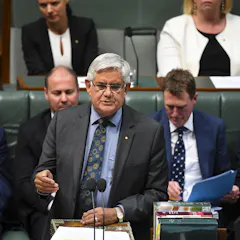
We have welcomed the opportunity to guide the co-design process because we feel this is a once-in-a-generation opportunity to recast how decisions are made in Indigenous affairs.
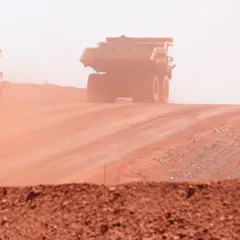
We can use renewable energy to turn raw ore into higher-value processed metals, and that’s good for jobs and exports.

Robots are becoming more common in our lives. And while they may not have “feelings”, perhaps the way we treat them reflects more on our character than we previously thought.
In 2018, domestic numbers for undergraduate courses fell for the first time since 2013 – they will remain stagnant for some years. This and other factors put unis at face financial risk.

The president’s support among non-college educated whites remains strong, and the only thing likely to shift that is a weakened economy.
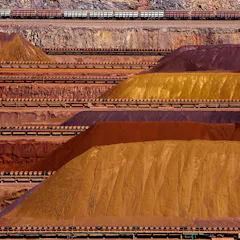
Eminent economist Ross Garnaut says if climate action fails, he fears the consequences ‘would be beyond contemporary Australia’. But zero-emissions iron and aluminium could be the way forward.
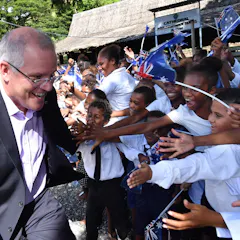
New research shows that funding for DFAT has hit a new low of 1.3% of the federal budget. Scaling back has a real effect on Australia’s influence around the world.
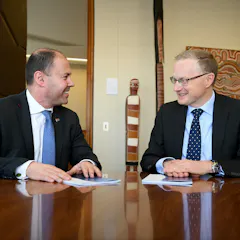
Every one of the 13 economists surveyed by The Conversation thinks more stimulus is needed. None think it should all come from the Reserve Bank. Most think the budget surplus can wait.
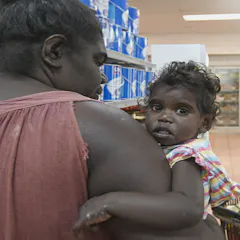
The government wants to triple the number of Australians on the Cashless Debit Card in the face of scant evidence it does them any good.

Research shows we’re pretty gullible as it is. And our increasing reliance on machines for completing everyday tasks makes us all-the-more vulnerable to being exploited.

The Productivity Commission has highlighted the growing burden of mental illness in Australia. But to really change things, its final recommendations should have a sharper focus on prevention.
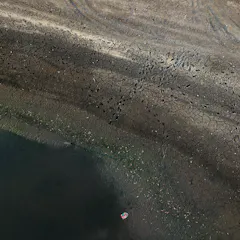
Drought has both natural and human causes, but deep cuts in our greenhouse gas emissions are urgently needed, regardless.
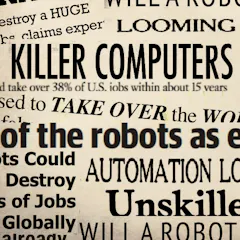
Automation does threaten jobs, but the most widely cited study exaggerates the effect and pointed to job losses in places where they didn’t happen.

On the issue of a retreat from coal, Albanese is trying to walk both sides of the highway by wandering down the middle.

New research shows Australians are working non-standard hours, and the job of scheduling a social life around them falls disproportionately to women.
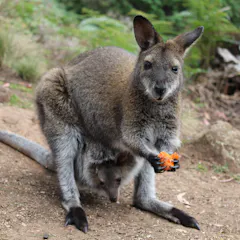
Animals that pause their pregnancies could help us learn valuable lesson about human pregnancy, and even unlock secrets to stem cells and cancer.

Community members see gender portrayals in advertising as out of step with contemporary society.

A host of political and social factors have created Brazil’s polarised political climate.
Authors
-

Election Analyst (Psephologist) at The Conversation; and Honorary Associate, School of Mathematics and Statistics, The University of Melbourne
-
Research fellow, Faculty of Architecture, Building and Planning, The University of Melbourne
-
Guest Research Fellow, School of Computing and Information Systems, The University of Melbourne
-
Professor of Sociology of Law and Deviance, Università di Bologna; University of Essex; The University of Melbourne
-
McKenzie Research Fellow, The University of Melbourne
-
Research assistant, Movember Institute of Men's Health, The University of Melbourne
-
Professor of Education Futures, The University of Melbourne
-
Senior Research Associate, School of Agriculture, Food and Ecosystem Sciences, The University of Melbourne
-
Senior Lecturer, Centre for Advancing Journalism, The University of Melbourne
-
Research Fellow, Centre for Youth Mental Health, The University of Melbourne
-
Deputy Vice-Chancellor (Global, Culture and Engagement), The University of Melbourne
-
Emeritus professor, History, The University of Melbourne
-
Associate Professor and Head, Behavioural Neuropharmacology Laboratory, The University of Melbourne
-
Lecturer in History, The University of Melbourne
-
Associate Professor, Centre for Youth Mental Health, The University of Melbourne