

Traditional notions of masculinity affect the health and well-being of men and those around them. Here’s how we can challenge these stereotypes.
The University of Melbourne

The University of Melbourne is a global leader in higher education. Across our campuses we convene brilliant minds from different disciplines and sectors to come together to address important questions and tackle grand challenges. In a disrupted world, that capacity has never been more important.
Our vision is to equip our students with a distinctive, future-facing education personalised around their ambitions and needs, enriched by global perspectives and embedded in a richly collaborative research culture. As active citizens and future leaders, our students represent our greatest contribution to the world, and are at the heart of everything we do.
We serve society by engaging with our communities and ensuring education and research are inspired from the outset by need and for the benefit of society, while remaining committed to allowing academic freedom to flourish. In this, we remain true to our purpose and fulfil our mission as a public-spirited organisation, dedicated to the principles of fairness, equality and excellence in everything we do.
We strive for an environment that is inclusive and celebrates diversity.
Beyond our campuses we imagine an Australia that is ambitious, forward thinking and increasing its reputation and influence globally. We are committed to playing a part in achieving this – building on our advantageous location in one of the world’s most exciting cities and across the state of Victoria, in a region rapidly becoming a hub for innovative education, research and collaboration.
Links
Articles

In our research, we offer teachers the chance to hone their skills in their teaching discipline, such as art. Those part of the program say it makes them better teachers, and more likely to stay.

Smart speakers can listen out for more than just your voice commands at home. They can hear what’s going on around you and react, security systems can even listen out for gunshots.

City fringe foodbowls supply much of our fresh produce and can increase climate resilience by making better use of wastewater and organic waste. A new roadmap outlines how to protect these foodbowls.

Science development in Africa is intimately linked to the quality of people who are able to lead change.

The Al Jazeera report makes for powerful viewing. But from a journalistic point of view, is it ethical?

There’s concern that paying upfront for the services of mortgage brokers would frighten customers away. But it needn’t, if they provide good service and explain what are charging for.

Been on a tropical holiday? You might have brought home more than just a new sarong and extra colour in your cheeks – perhaps a mosquito that spreads dengue, or another known as ‘the BBQ stopper’.
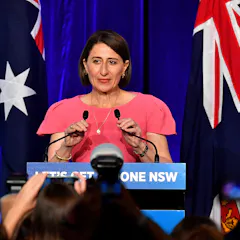
The Berejiklian government has been returned to power, with Labor having a poorer-than-expected showing following a disastrous final week of campaigning.

As many as half of all temporary migrant workers are being underpaid. After a two-year inquiry, the Migrant Workers’ Taskforce has provided a blueprint to do something about it.

Pell trial reporters, a judge and a media lawyer on why the suppression order debate is far from over
The Conversation, CC BY79.9 MB (download)
On the day George Pell was sentenced, several experts with wide-ranging experiences of suppression orders discussed how they affect the public’s right to know and whether the laws should be reformed.

Kebab vans symbolise the success of ‘bottom-up’ multiculturalism, providing a way for the non-European cultural ‘other’ to become part of our way of life.

Here’s a list of terms and security tools that can help you – and your family – feel more confident about cybersecurity.

UK parliamentary rules state that an amendment ‘which is the same, in substance’ as an issue that has already been voted on, cannot be proposed again in parliament.

Supporting women to have a labour companion or doula of their choice during childbirth has benefits for women and their babies. It could be especially important for women from migrant backgrounds.

On the day of the Christchurch mosque shootings, several media outlets repeatedly failed the test of necessity in showing graphic footage.

Recent polling indicates that no one party will be able to win a majority government in the upcoming NSW election, with Labor needing to gain six seats to deprive the Coalition from a victory.

Giving female marsupials a sniff of prospective partners increases the chance of a successful love connection.

What’s often missing from domestic violence responses are investments and strategies to stop men perpetrating violence in the first place.
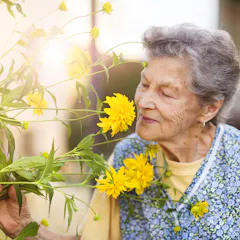
Our ability to smell is a function of the brain, so it makes sense that an impaired sense of smell can point to cognitive decline. The good news is training our noses may be effective.
Authors
-

Election Analyst (Psephologist) at The Conversation; and Honorary Associate, School of Mathematics and Statistics, The University of Melbourne
-
Research fellow, Faculty of Architecture, Building and Planning, The University of Melbourne
-
Guest Research Fellow, School of Computing and Information Systems, The University of Melbourne
-
Professor of Sociology of Law and Deviance, Università di Bologna; University of Essex; The University of Melbourne
-
McKenzie Research Fellow, The University of Melbourne
-
Research assistant, Movember Institute of Men's Health, The University of Melbourne
-
Professor of Education Futures, The University of Melbourne
-
Senior Research Associate, School of Agriculture, Food and Ecosystem Sciences, The University of Melbourne
-
Senior Lecturer, Centre for Advancing Journalism, The University of Melbourne
-
Research Fellow, Centre for Youth Mental Health, The University of Melbourne
-
Deputy Vice-Chancellor (Global, Culture and Engagement), The University of Melbourne
-
Emeritus professor, History, The University of Melbourne
-
Associate Professor and Head, Behavioural Neuropharmacology Laboratory, The University of Melbourne
-
Lecturer in History, The University of Melbourne
-
Associate Professor, Centre for Youth Mental Health, The University of Melbourne