

Adélaïde Labille-Guiard was a supremely skilled artist. But like so many talented women before and since, she suffered from snide allegations that she could not be capable of such brilliance.
The University of Melbourne

The University of Melbourne is a global leader in higher education. Across our campuses we convene brilliant minds from different disciplines and sectors to come together to address important questions and tackle grand challenges. In a disrupted world, that capacity has never been more important.
Our vision is to equip our students with a distinctive, future-facing education personalised around their ambitions and needs, enriched by global perspectives and embedded in a richly collaborative research culture. As active citizens and future leaders, our students represent our greatest contribution to the world, and are at the heart of everything we do.
We serve society by engaging with our communities and ensuring education and research are inspired from the outset by need and for the benefit of society, while remaining committed to allowing academic freedom to flourish. In this, we remain true to our purpose and fulfil our mission as a public-spirited organisation, dedicated to the principles of fairness, equality and excellence in everything we do.
We strive for an environment that is inclusive and celebrates diversity.
Beyond our campuses we imagine an Australia that is ambitious, forward thinking and increasing its reputation and influence globally. We are committed to playing a part in achieving this – building on our advantageous location in one of the world’s most exciting cities and across the state of Victoria, in a region rapidly becoming a hub for innovative education, research and collaboration.
Links
Articles
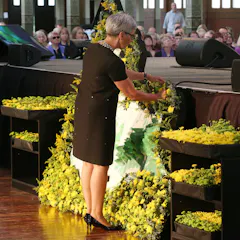
The Black Saturday fires transformed the way Australia responds to bushfires.
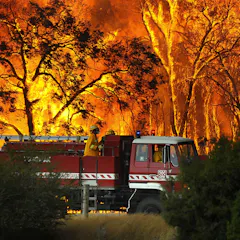
Black Saturday in 2009 was Australia’s worst bushfire tragedy. But climate projections predict more bushfire danger in the future, threatening our water supplies as well as homes.
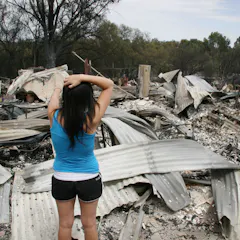
In the years after Black Saturday, climate adaptation research was in full swing, creating knowledge in how to deal with the risks. But a series of funding cuts have left this research in decline.
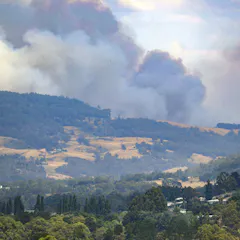
Climate change is making Tasmania more vulnerable to brutal fire conditions.
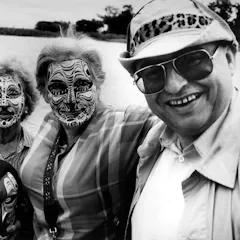
At a time when formulaic factual ‘content’ reigns on our TV screens, a new essay on Australian documentary making is a rallying call for those who believe the genre can effect social change.

Venezuela’s hyperinflation has been caused by an inept public policy of printing more money and private individuals making the most of differences between official and unofficial exchange rates.

Trailblazing US Supreme Court Justice Ruth Bader Ginsburg is known to many as the ‘Notorious RBG’. But the new film On the Basis of Sex is a muted portrayal of her.

Behrouz Boochani, an asylum seeker currently detained on Manus Island, has won Australia’s richest literary prize. The win commands the question, ‘what makes an Australian writer?’
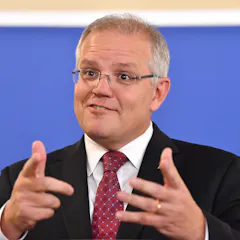
While the latest Newspoll gave the Morrison govenrment a welcome boost, it will need to avoid the “February slump”.
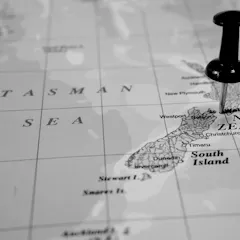
A mismatch between Australian and New Zealand regulations means Australian taxpayers could be on the hook if a New Zealand bank fails.
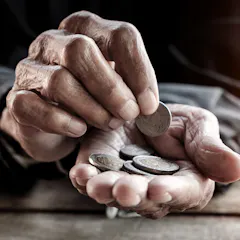
Research on bankrupts illustrates the contrasting financial fortunes of older Australians.

As the US shutdown continues, voters seem to be increasingly blaming the president for the impasse; meanwhile, a “no-deal” Brexit looms.
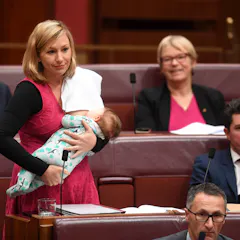
Australia’s parliament has become more family-friendly in the last decade, but women with families are still finding it tough. Other democracies can provide some inspiration.
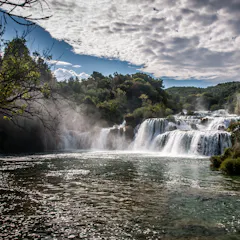
While making small volumes of pure water in a lab is possible, it’s not practical. The reaction is expensive, releases lots of energy, and can cause really massive explosions.

S'il y a des raisons de penser que la crise de la quarantaine existe, les malaises survenant à cette période auraient pu se produire aussi bien avant qu’après cet « âge mûr » difficile à cerner.

Two new measures of financial well-being contain surprises and show many people believe they are doing better than you might think.

Tres investigadores de Australia y Países Bajos se han adentrado en el mundo de las cadenas de venta de túnidos para descubrir que la inmensa mayoría hace negocio gracias a suministradores surasiáticos que explotan a sus trabajadores sin ningún tipo de miramiento.

On one measure our company tax rate is the third-highest, but we like it that way because it allows us to give big tax refunds to local shareholders, many of them retirees.
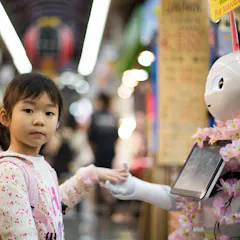
Chatbots and virtual personal assistants are becoming an integral part of our daily lives. They could change how we talk to each other, and how we relate to ourselves.
Authors
-

Election Analyst (Psephologist) at The Conversation; and Honorary Associate, School of Mathematics and Statistics, The University of Melbourne
-
Research fellow, Faculty of Architecture, Building and Planning, The University of Melbourne
-
Guest Research Fellow, School of Computing and Information Systems, The University of Melbourne
-
Professor of Sociology of Law and Deviance, Università di Bologna; University of Essex; The University of Melbourne
-
McKenzie Research Fellow, The University of Melbourne
-
Research assistant, Movember Institute of Men's Health, The University of Melbourne
-
Professor of Education Futures, The University of Melbourne
-
Senior Research Associate, School of Agriculture, Food and Ecosystem Sciences, The University of Melbourne
-
Senior Lecturer, Centre for Advancing Journalism, The University of Melbourne
-
Research Fellow, Centre for Youth Mental Health, The University of Melbourne
-
Deputy Vice-Chancellor (Global, Culture and Engagement), The University of Melbourne
-
Emeritus professor, History, The University of Melbourne
-
Associate Professor and Head, Behavioural Neuropharmacology Laboratory, The University of Melbourne
-
Lecturer in History, The University of Melbourne
-
Associate Professor, Centre for Youth Mental Health, The University of Melbourne