

Forget eyecatching headlines about planting millions of new trees – natural mature forests are far better at storing carbon.
The University of Melbourne

The University of Melbourne is a global leader in higher education. Across our campuses we convene brilliant minds from different disciplines and sectors to come together to address important questions and tackle grand challenges. In a disrupted world, that capacity has never been more important.
Our vision is to equip our students with a distinctive, future-facing education personalised around their ambitions and needs, enriched by global perspectives and embedded in a richly collaborative research culture. As active citizens and future leaders, our students represent our greatest contribution to the world, and are at the heart of everything we do.
We serve society by engaging with our communities and ensuring education and research are inspired from the outset by need and for the benefit of society, while remaining committed to allowing academic freedom to flourish. In this, we remain true to our purpose and fulfil our mission as a public-spirited organisation, dedicated to the principles of fairness, equality and excellence in everything we do.
We strive for an environment that is inclusive and celebrates diversity.
Beyond our campuses we imagine an Australia that is ambitious, forward thinking and increasing its reputation and influence globally. We are committed to playing a part in achieving this – building on our advantageous location in one of the world’s most exciting cities and across the state of Victoria, in a region rapidly becoming a hub for innovative education, research and collaboration.
Links
Articles

Media Files: ACCC seeks to clip wings of tech giants like Facebook and Google but international effort is required
The Conversation55 MB (download)
In Dickens' era, international copyright law developed from a worldwide effort to deal with a global problem. Is it time to tackle tech giants the same way? A journalist and a media owner explain.

Retrospective drug testing is meant to help deter doping in sport, but will the public become indifferent to drug taking as more and more cheaters are caught?
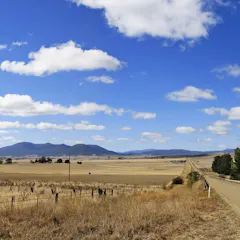
Hitting the Paris targets will go a long way to securing Melbourne’s water supply against future pressure.
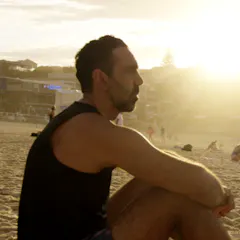
A new film chronicling the impact of racism on Indigenous football star Adam Goodes is both a damning and hopeful portrait of contemporary Australia.
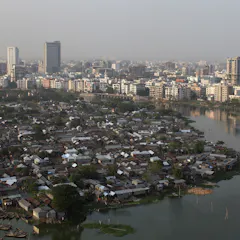
A community of 200,000 in Dhaka faces eviction to make room for “development”. Is it time to rethink the concept, especially with a billion people now living in informal settlements worldwide?

Key to the success of the much-lauded Fleabag is its creator’s repurposing of two cliched narrative devices: flashback and breaking the fourth wall.

Algorithms are only human (well, designed by humans) but we need to trust they’ll do what they’re supposed to do. And that means we need a better way to test them.
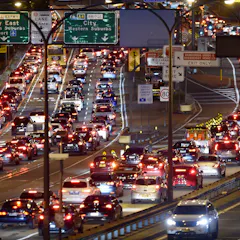
Average commuting times for Australians have increased by 23% in 15 years. And those with long commutes are less satisfied with their work, working hours, work-life balance and even pay.

For families, the HILDA report has little good news – childcare costs, poverty and anxiety are rising, all while women are more involved in the labour market. But there is some reason to hope.

Around 20% of young Australian women had a diagnosis of depression or anxiety in 2017 compared with 12.8% in 2009. But the proportion of people reporting significant symptoms has remained stable.

In 2017, 56% of men aged 18 to 29 lived with one or both parents, up from 47% in 2001. And over the same period, the proportion of women aged 18 to 29 living with their parents rose from 36% to 54%.

Surprisingly, Australian-born women are significantly more likely to live in an inter-ethnic relationship than their male counterparts.

Google and Facebook will find it harder to take over firms that aren’t yet competitors, but the regulator has offered little to the operators of traditional newspaper, radio and television outlets.

The difficulties for people facing housing disadvantage don’t end as soon as their situation improves. They are at higher risk of poorer mental health years or even decades later.
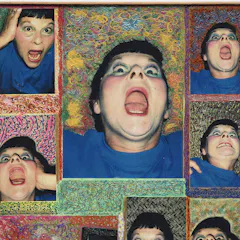
Best known as the subject of her husband Richard’s work, Pat Larter was herself a major artist.

The research, mostly in mice, delivers some interesting new insights about endometriosis but we still haven’t found the cause, let alone a cure.
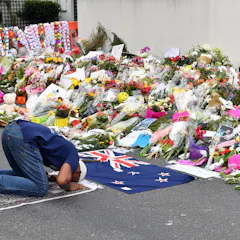
The Australian Communication and Media Authority’s report into the conduct of Australian media in the aftermath of the Christchurch shootings is nuanced but very tame.
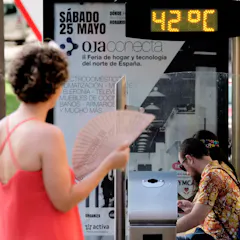
The clearest picture yet of the past 2,000 years of global temperatures has shown warming in the last 50-odd years is unprecedented in the last two millennia.
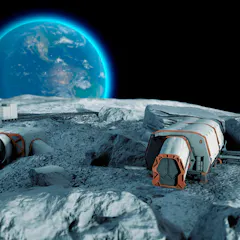
CC BY-ND49.4 MB (download)
Episode four of To the moon and beyond, a podcast series marking the 50th anniversary of the moon landings.
Authors
-

Election Analyst (Psephologist) at The Conversation; and Honorary Associate, School of Mathematics and Statistics, The University of Melbourne
-
Research fellow, Faculty of Architecture, Building and Planning, The University of Melbourne
-
Guest Research Fellow, School of Computing and Information Systems, The University of Melbourne
-
Professor of Sociology of Law and Deviance, Università di Bologna; University of Essex; The University of Melbourne
-
McKenzie Research Fellow, The University of Melbourne
-
Research assistant, Movember Institute of Men's Health, The University of Melbourne
-
Professor of Education Futures, The University of Melbourne
-
Senior Research Associate, School of Agriculture, Food and Ecosystem Sciences, The University of Melbourne
-
Senior Lecturer, Centre for Advancing Journalism, The University of Melbourne
-
Research Fellow, Centre for Youth Mental Health, The University of Melbourne
-
Deputy Vice-Chancellor (Global, Culture and Engagement), The University of Melbourne
-
Emeritus professor, History, The University of Melbourne
-
Associate Professor and Head, Behavioural Neuropharmacology Laboratory, The University of Melbourne
-
Lecturer in History, The University of Melbourne
-
Associate Professor, Centre for Youth Mental Health, The University of Melbourne