

Because it happened within the Australian Plate rather than at a plate boundary, shockwaves from the quake travelled more efficiently to Darwin than to cities closer to the epicentre.
The University of Melbourne

The University of Melbourne is a global leader in higher education. Across our campuses we convene brilliant minds from different disciplines and sectors to come together to address important questions and tackle grand challenges. In a disrupted world, that capacity has never been more important.
Our vision is to equip our students with a distinctive, future-facing education personalised around their ambitions and needs, enriched by global perspectives and embedded in a richly collaborative research culture. As active citizens and future leaders, our students represent our greatest contribution to the world, and are at the heart of everything we do.
We serve society by engaging with our communities and ensuring education and research are inspired from the outset by need and for the benefit of society, while remaining committed to allowing academic freedom to flourish. In this, we remain true to our purpose and fulfil our mission as a public-spirited organisation, dedicated to the principles of fairness, equality and excellence in everything we do.
We strive for an environment that is inclusive and celebrates diversity.
Beyond our campuses we imagine an Australia that is ambitious, forward thinking and increasing its reputation and influence globally. We are committed to playing a part in achieving this – building on our advantageous location in one of the world’s most exciting cities and across the state of Victoria, in a region rapidly becoming a hub for innovative education, research and collaboration.
Links
Articles
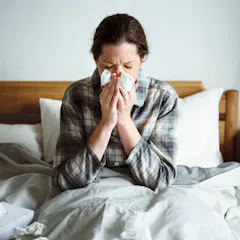
The flu vaccine takes about two weeks to start working and only protects against influenza, so you can still get sick from other viruses after your flu shot.
Mulga is an Aussie icon: hardy, adaptable, and absolutely everywhere.
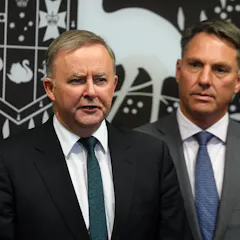
Notionally, Labor will need a 0.6% swing to win the next election. But the details make it much more complicated - and difficult.

Successful city squares act as nodes that connect places. They facilitate flows of people going about their daily lives through them as much, if not more, than they attract people to them. These flows…

In just three decades we’ve gone from a very limited internet connection in Australia to now sharing our lives online.

A lack of convenient public transport is one of the main disadvantages of life in the outer suburbs. Driverless vehicles, by halving the cost of bus services, are ready to fill the gap.
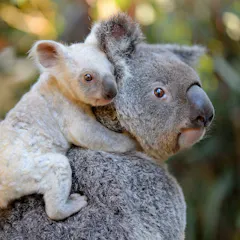
We used to think a marsupial mum didn’t know when she was pregnant, but new research shows that’s wrong. And that could help in conservation of endangered species.
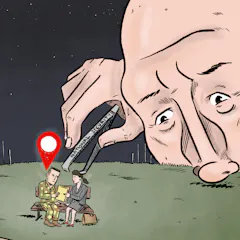
Ideally, Australia would introduce constitutional protections for media freedom. But, in the meantime, four laws need urgent reform to better balance those freedoms with national security.
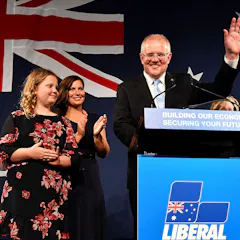
According to election results, areas with low levels of tertiary education swung strongly to the Coalition in NSW and Queensland, helping propel Scott Morrison to victory.
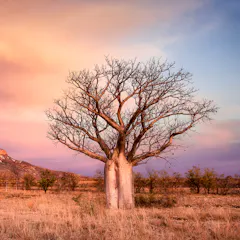
The leaves, when boiled, can be eaten like spinach. The seeds can be roasted for a coffee substitute, and the pulp can be fermented to make beer.

New research has found that racial vilification is a common occurrence in junior sport in Australia – and is rarely punished when it happens.
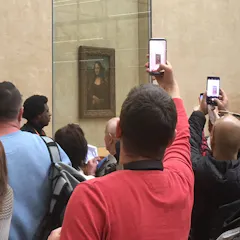
Leonardo da Vinci’s Mona Lisa is the world’s most visited artwork. Its appeal rests partly on several mysteries.
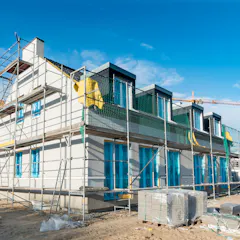
People on the minimum wage can afford only 2% of private rentals and only 1% if on the pension. Affordable housing requirements are often mandatory overseas, but Victoria is relying on negotiation.
Australia’s new emissions data for the December 2018 quarter show a rise on the previous quarter, although the raw figures actually dropped. Here’s what that all means.
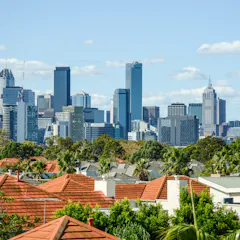
Melbourne and Sydney are members of 100 Resilient CIties, which the Rockefeller Foundation has said it will no longer fund. So what has the global network achieved? And what can we learn from this?

This week’s raids on media show our democracy at its darkest.
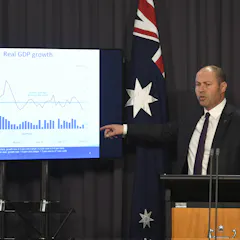
It it wasn’t for a surge in government spending economic growth would be extraordinarily weak. As it is, it’s the weakest since the global financial crisis.
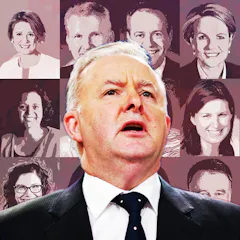
From Bill Shorten to Kristina Keneally, our experts break down Labor’s new shadow ministry – who’s in, who’s been promoted, and who faces the greatest challenges in their new roles
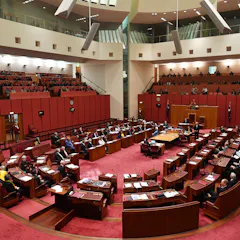
After strong results in the 2019 election, the Coalition is likely to have 35 of the 76 seats when the Senate next sits.
Authors
-

Election Analyst (Psephologist) at The Conversation; and Honorary Associate, School of Mathematics and Statistics, The University of Melbourne
-
Research fellow, Faculty of Architecture, Building and Planning, The University of Melbourne
-
Guest Research Fellow, School of Computing and Information Systems, The University of Melbourne
-
Professor of Sociology of Law and Deviance, Università di Bologna; University of Essex; The University of Melbourne
-
McKenzie Research Fellow, The University of Melbourne
-
Research assistant, Movember Institute of Men's Health, The University of Melbourne
-
Professor of Education Futures, The University of Melbourne
-
Senior Research Associate, School of Agriculture, Food and Ecosystem Sciences, The University of Melbourne
-
Senior Lecturer, Centre for Advancing Journalism, The University of Melbourne
-
Research Fellow, Centre for Youth Mental Health, The University of Melbourne
-
Deputy Vice-Chancellor (Global, Culture and Engagement), The University of Melbourne
-
Emeritus professor, History, The University of Melbourne
-
Associate Professor and Head, Behavioural Neuropharmacology Laboratory, The University of Melbourne
-
Lecturer in History, The University of Melbourne
-
Associate Professor, Centre for Youth Mental Health, The University of Melbourne