

The 2018 Prime Minister’s Prizes for Science were awarded at Canberra’s Parliament House on October 17. Along with the top prize, life science, physics, innovation and teaching were recognised.
The University of Melbourne

The University of Melbourne is a global leader in higher education. Across our campuses we convene brilliant minds from different disciplines and sectors to come together to address important questions and tackle grand challenges. In a disrupted world, that capacity has never been more important.
Our vision is to equip our students with a distinctive, future-facing education personalised around their ambitions and needs, enriched by global perspectives and embedded in a richly collaborative research culture. As active citizens and future leaders, our students represent our greatest contribution to the world, and are at the heart of everything we do.
We serve society by engaging with our communities and ensuring education and research are inspired from the outset by need and for the benefit of society, while remaining committed to allowing academic freedom to flourish. In this, we remain true to our purpose and fulfil our mission as a public-spirited organisation, dedicated to the principles of fairness, equality and excellence in everything we do.
We strive for an environment that is inclusive and celebrates diversity.
Beyond our campuses we imagine an Australia that is ambitious, forward thinking and increasing its reputation and influence globally. We are committed to playing a part in achieving this – building on our advantageous location in one of the world’s most exciting cities and across the state of Victoria, in a region rapidly becoming a hub for innovative education, research and collaboration.
Links
Articles

A survey of Australian parents has found many are overwhelmed by the stress of managing their child’s behaviour.
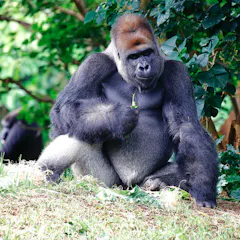
Malaria can be transmitted from humans to gorillas, with devastating effects.

Five out of five experts said we shouldn’t reward kids with food. But for very different reasons.
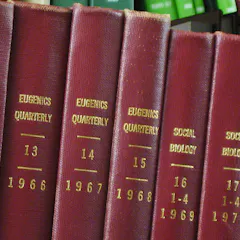
If those who survive are the fittest, does that also make them the best? And if so, is engineering ‘better’ babies just evolution, or another step in a long history of eugenics?
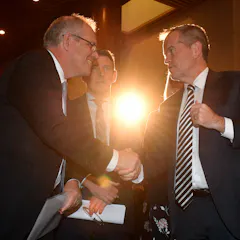
The latest polls are a mixed bag for the Morrison government: there were gains in primary and two-party preferred vote, but the polls still have Labor in an election-winning position.
While the figures may seem alarming, we should remember that, unlike free-to-air TV, subscription video-on-demand services are not regulated for local content.
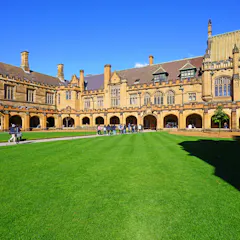
Universities should very rarely prevent controversial speakers from spreading their message.

The Russian Revolution – an event that affected more than Russia and was more than a revolution.
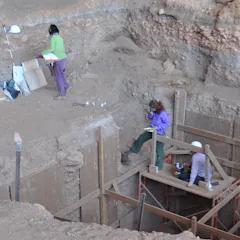
Archaeologists are trash sifters. They use clues preserved in artefacts, plant and animal remains that people threw away or left behind to reconstruct the past.

Despite good oral hygiene, some children have weak teeth that are more prone to decay.
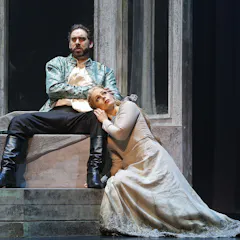
Pelléas and Mélisande tells a story of forbidden love between its title characters, set in the fictitious kingdom of Allemonde. However the action offstage before the opera’s 1902 premiere was just as dramatic.

Guardian Australia’s Katharine Murphy and former MP David Feeney on the digital disruption of media and politics
The Conversation62.5 MB (download)
Today on the podcast we're talking filter bubbles, fake news, opinion vs fact. Media Files asks two experts how the media and politics influence each other - and why that's causing concern.

This production, a collaboration with local theatre artists, stages a public debate hosted by the (made up) Melbourne Trust Forum. It unfolds as part media reportage and part gameshow.
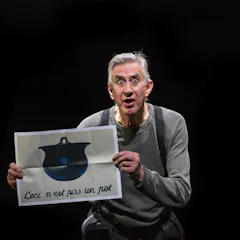
Samuel Beckett wrote Watt while hiding from the Gestapo during the second world war. It describes Watt’s journey to, within, and away from Mr Knott’s house, where Watt lives for some time as a servant.
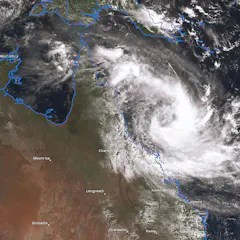
Cyclone season approacheth, but this year there’s a twist
The Conversation, CC BY31.4 MB (download)
Australia must come to terms with some fundamental shifts in our weather patterns. This month, Andrew Watkins from the BOM and climate scientist Joelle Gergis explore what's in store.
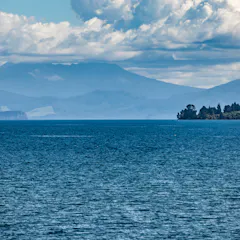
New research shows that carbon dioxide in groundwater can affect the aging of volcanic eruptions. The findings could help predict future eruptions.
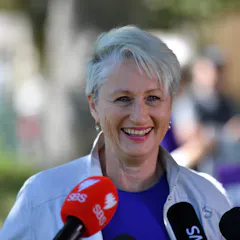
A change of heart on preferences appears to have cost the high-profile independent in Wentworth, while the controversy around Brett Kavanaugh’s confirmation has been of benefit to Donald Trump.
Black wattle is part of Australia’s iconic acacia family, but it’s largely regarded as a pest overseas. But this fast-growing plant is a boon to gardeners, improving soil and sheltering other plants.

An offer that appears beneficial on the surface, but can lead to unintended negative consequences is called a “perverse incentive”.
Authors
-

Election Analyst (Psephologist) at The Conversation; and Honorary Associate, School of Mathematics and Statistics, The University of Melbourne
-
Research fellow, Faculty of Architecture, Building and Planning, The University of Melbourne
-
Guest Research Fellow, School of Computing and Information Systems, The University of Melbourne
-
Professor of Sociology of Law and Deviance, Università di Bologna; University of Essex; The University of Melbourne
-
McKenzie Research Fellow, The University of Melbourne
-
Research assistant, Movember Institute of Men's Health, The University of Melbourne
-
Professor of Education Futures, The University of Melbourne
-
Senior Research Associate, School of Agriculture, Food and Ecosystem Sciences, The University of Melbourne
-
Senior Lecturer, Centre for Advancing Journalism, The University of Melbourne
-
Research Fellow, Centre for Youth Mental Health, The University of Melbourne
-
Deputy Vice-Chancellor (Global, Culture and Engagement), The University of Melbourne
-
Emeritus professor, History, The University of Melbourne
-
Associate Professor and Head, Behavioural Neuropharmacology Laboratory, The University of Melbourne
-
Lecturer in History, The University of Melbourne
-
Associate Professor, Centre for Youth Mental Health, The University of Melbourne