

Men and young people are more likely to be ageist, but few Australians are resolutely ageist in their views, a new survey finds.
The University of Melbourne

The University of Melbourne is a global leader in higher education. Across our campuses we convene brilliant minds from different disciplines and sectors to come together to address important questions and tackle grand challenges. In a disrupted world, that capacity has never been more important.
Our vision is to equip our students with a distinctive, future-facing education personalised around their ambitions and needs, enriched by global perspectives and embedded in a richly collaborative research culture. As active citizens and future leaders, our students represent our greatest contribution to the world, and are at the heart of everything we do.
We serve society by engaging with our communities and ensuring education and research are inspired from the outset by need and for the benefit of society, while remaining committed to allowing academic freedom to flourish. In this, we remain true to our purpose and fulfil our mission as a public-spirited organisation, dedicated to the principles of fairness, equality and excellence in everything we do.
We strive for an environment that is inclusive and celebrates diversity.
Beyond our campuses we imagine an Australia that is ambitious, forward thinking and increasing its reputation and influence globally. We are committed to playing a part in achieving this – building on our advantageous location in one of the world’s most exciting cities and across the state of Victoria, in a region rapidly becoming a hub for innovative education, research and collaboration.
Links
Articles

On Q&A, Minister for Urban Infrastructure and Cities Paul Fletcher said South Australia’s high electricity prices were “the consequence” of Jay Weatherill’s renewable energy policies. Is that right?

The Death of Stalin has been banned in Russia. While the film is hardly disrespectful to Russian people, it does make Putin uncomfortable with its satirical take of leadership.

Despite skin conditions such as acne having no negative health effects, they can take a huge toll on the confidence and mental health of the person.

Today’s workplaces extend beyond physical spaces, so movements like #metoo must trigger change in how we behave online.
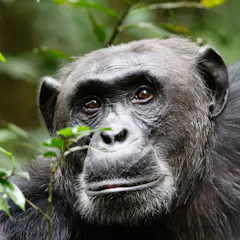
The short answer is no. An individual of one species cannot, during its lifetime, turn into another species. But your question helps us think about life, evolution and what it means to be human.
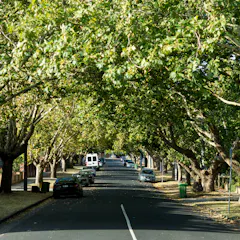
Tree bonds are set to be introduced by a Melbourne city council to protect city trees. But how do they work and why are they needed?
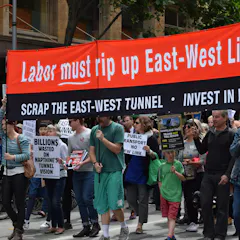
Transport infrastructure has such an impact on what kind of city we become that more democratic planning is long overdue. But public consultation is typically limited and focused on design issues.

While the RBA might not be able to influence the current cash rate, it can still influence longer-term rates by offering guidance about its future policy decisions.
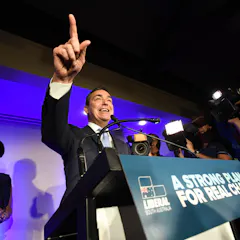
After 16 years in government, the Liberals oust Labor in South Australia – but the biggest disasters of the night were Nick Xenophon and SA-BEST, with Xenophon not even winning his seat.

Research partnerships between Australian universities, the Department of Defence and weapons manufacturers may not be ethically justifiable.
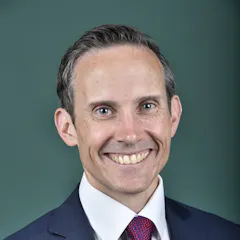
Economist, author and MP Andrew Leigh spoke to Fiona Fidler about how we should be using randomised trials more to drive decisions and policy in public life.

Student activists are presenting important, emotionally powerful counter-narratives to those of the gun lobby. Their success will depend on whether they can sustain these efforts.
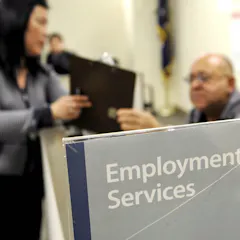
Unemployment rates have risen in Australia while falling in the US. But Australia has experienced a much smaller decline in the proportion of its population who are in work.
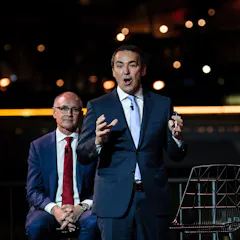
SA Liberal Party leader Steven Marshall said that state Labor policy had left South Australians with ‘the highest energy prices in Australia’ and ‘the least reliable grid’. Is that right?

Most parents will tell you their kids love juice. It tastes good and often comes in convenient and child-friendly packaging. Is the occasional juice OK?
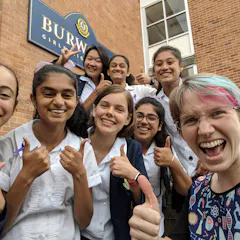
An ambassador needs to do more than just encourage young girls to enter STEMM, the role must address structural and cultural issues that push women out of the pipeline mid-career.
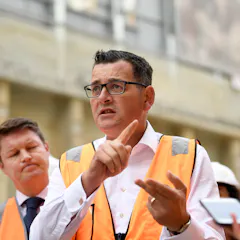
The polls seem to be swinging back in favour of the Andrews Labor government in Victoria, while in New South Wales it’s neck-and-neck.

Plato suggested we leave complex things to experts and Aristotle suggested we leave them to the people. That tension has carried through to modern debates about where expertise belongs.
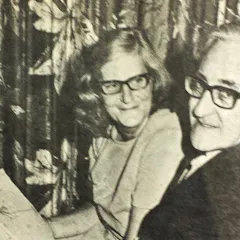
Ruth and Maurie Crow were early advocates of the compact city. They also warned 50 years ago that a clear justice intent was needed to shape cities for their citizens rather than vested interests.
Authors
-

Election Analyst (Psephologist) at The Conversation; and Honorary Associate, School of Mathematics and Statistics, The University of Melbourne
-
Research fellow, Faculty of Architecture, Building and Planning, The University of Melbourne
-
Guest Research Fellow, School of Computing and Information Systems, The University of Melbourne
-
Professor, School of Psychological Sciences, The University of Melbourne
-
McKenzie Research Fellow, The University of Melbourne
-
Research assistant, Movember Institute of Men's Health, The University of Melbourne
-
Professor of Education Futures, The University of Melbourne
-
Senior Research Associate, School of Agriculture, Food and Ecosystem Sciences, The University of Melbourne
-
Senior Lecturer, Centre for Advancing Journalism, The University of Melbourne
-
Research Fellow, Centre for Youth Mental Health, The University of Melbourne
-
Deputy Vice-Chancellor (Global, Culture and Engagement), The University of Melbourne
-
Emeritus professor, History, The University of Melbourne
-
Associate Professor, Complex Human Data Hub, Melbourne School of Psychological Sciences, The University of Melbourne
-
Lecturer in History, The University of Melbourne
-
Associate Professor, Centre for Youth Mental Health, The University of Melbourne