

The polls are leaning towards the Liberals holding power in Tasmania, but the unpopularity of the federal Coalition government could help Labor get over the line.
The University of Melbourne

The University of Melbourne is a global leader in higher education. Across our campuses we convene brilliant minds from different disciplines and sectors to come together to address important questions and tackle grand challenges. In a disrupted world, that capacity has never been more important.
Our vision is to equip our students with a distinctive, future-facing education personalised around their ambitions and needs, enriched by global perspectives and embedded in a richly collaborative research culture. As active citizens and future leaders, our students represent our greatest contribution to the world, and are at the heart of everything we do.
We serve society by engaging with our communities and ensuring education and research are inspired from the outset by need and for the benefit of society, while remaining committed to allowing academic freedom to flourish. In this, we remain true to our purpose and fulfil our mission as a public-spirited organisation, dedicated to the principles of fairness, equality and excellence in everything we do.
We strive for an environment that is inclusive and celebrates diversity.
Beyond our campuses we imagine an Australia that is ambitious, forward thinking and increasing its reputation and influence globally. We are committed to playing a part in achieving this – building on our advantageous location in one of the world’s most exciting cities and across the state of Victoria, in a region rapidly becoming a hub for innovative education, research and collaboration.
Links
Articles
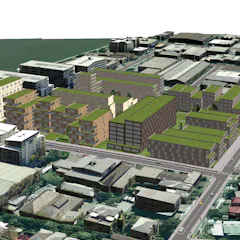
3D urban modelling is a transformative technology for designing cities. But incorporating new technologies into planning practice has its challenges.
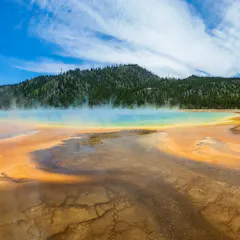
Fill a tank with water, sugar, and old mobile phones. Add bacteria and stir. Result? Rare earth metals. This is biomining, and it’s the way of the future.

The strong US economy has improved Donald Trump’s ratings in the last month.
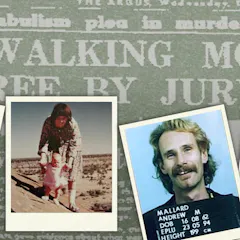
Speaking with: Professor David Field about unusual crimes that have changed the law
CC BY-ND27.2 MB (download)
Sleepwalking murders and 'battered wife' syndrome are unique precedents set by extraordinary cases. David Field talks about unusual cases that have shaped Australian law.
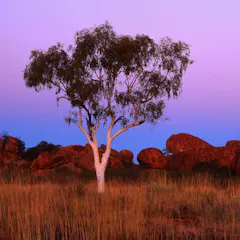
There’s a fine tradition of Australian poetry harnessing the corrective power of insult. In doing so, it prompts us to face hard questions about our history and identity.

Australian cities generally minimise negative attributes such as crime, segregation and violence, but developing positive attributes such as inclusivity appears more challenging.

In an age of so-called ‘fake news’ and ‘alternative facts’, Hollywood is producing stories, like The Post, of how journalism should be done.

It’s about time tennis players had a union –
in other sports they have contributed to higher pay, better working conditions and life after sport.

Leo Tolstoy’s Anna Karenina is often acclaimed as the best novel ever written. The enthralling narrative explores love and family through intertwining plot lines, with Anna and her desire at the centre.

The government claims university degrees are failing businesses, but analysis of the latest graduate outcome and employer satisfaction surveys tells us the problem is with underemployment.

New research uncovers how Australian children actually use Minecraft – shedding light on what devices they use, the social nature of play and a reality check on claims of gender-neutrality.

A theatre production of Mark Haddon’s much-loved novel is affirmative and at times deeply sentimental, with a hi-tech set, and exacting choreography.

This is an article from Curious Kids, a series for children. The Conversation is asking kids to send in questions they’d like an expert to answer. All questions are welcome – serious, weird or wacky! Why…

Australians love cooking with gas, but what if you could make your own supply, using leftover food waste? It may be time for more households to embrace home biogas – and stop paying gas bills.
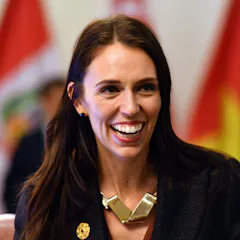
In both Australian and overseas elections held in 2017, the left generally performed better than expected.
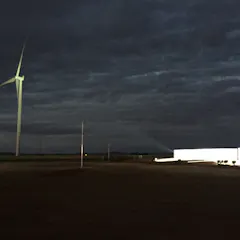
After a month of operation, the Tesla battery at Hornsdale Power Reserve in SA is outperforming expectations - and the model is set to be emulated in Victoria
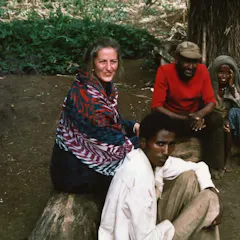
One of the least recognised aspects of Germaine Greer’s professional life is her international career as a journalist. It spans reportage in Vietnam and Ethiopia and interviews with figures such as Primo Levi.
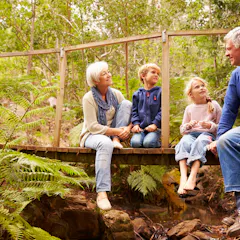
Families are changing, and our political leaders should reflect on this diversity to ensure social policies reflect these differences, so that all families are well supported.
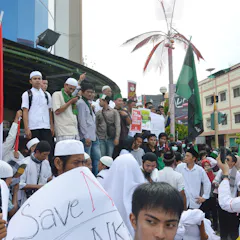
Isu-isu ketimpangan dan ketidakadilan, dan ungkapan kemarahan terhadap status quo, semakin sering dibingkai dengan identitas rasial dan keagamaan di Indonesia.
Authors
-

Election Analyst (Psephologist) at The Conversation; and Honorary Associate, School of Mathematics and Statistics, The University of Melbourne
-
Research fellow, Faculty of Architecture, Building and Planning, The University of Melbourne
-
Guest Research Fellow, School of Computing and Information Systems, The University of Melbourne
-
Professor, School of Psychological Sciences, The University of Melbourne
-
McKenzie Research Fellow, The University of Melbourne
-
Research assistant, Movember Institute of Men's Health, The University of Melbourne
-
Professor of Education Futures, The University of Melbourne
-
Senior Research Associate, School of Agriculture, Food and Ecosystem Sciences, The University of Melbourne
-
Senior Lecturer, Centre for Advancing Journalism, The University of Melbourne
-
Research Fellow, Centre for Youth Mental Health, The University of Melbourne
-
Deputy Vice-Chancellor (Global, Culture and Engagement), The University of Melbourne
-
Emeritus professor, History, The University of Melbourne
-
Associate Professor, Complex Human Data Hub, Melbourne School of Psychological Sciences, The University of Melbourne
-
Lecturer in History, The University of Melbourne
-
Associate Professor, Centre for Youth Mental Health, The University of Melbourne