

Unaffordable home loans, poor financial advice and unmanageable consumer credit may have serious consequences for many Australians, beyond bankruptcy and debt. Here’s what the research says.
The University of Melbourne

The University of Melbourne is a global leader in higher education. Across our campuses we convene brilliant minds from different disciplines and sectors to come together to address important questions and tackle grand challenges. In a disrupted world, that capacity has never been more important.
Our vision is to equip our students with a distinctive, future-facing education personalised around their ambitions and needs, enriched by global perspectives and embedded in a richly collaborative research culture. As active citizens and future leaders, our students represent our greatest contribution to the world, and are at the heart of everything we do.
We serve society by engaging with our communities and ensuring education and research are inspired from the outset by need and for the benefit of society, while remaining committed to allowing academic freedom to flourish. In this, we remain true to our purpose and fulfil our mission as a public-spirited organisation, dedicated to the principles of fairness, equality and excellence in everything we do.
We strive for an environment that is inclusive and celebrates diversity.
Beyond our campuses we imagine an Australia that is ambitious, forward thinking and increasing its reputation and influence globally. We are committed to playing a part in achieving this – building on our advantageous location in one of the world’s most exciting cities and across the state of Victoria, in a region rapidly becoming a hub for innovative education, research and collaboration.
Links
Articles
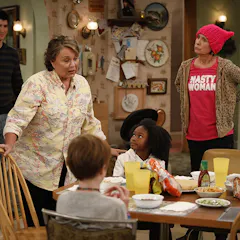
When it debuted in 1988, Roseanne was a breath of fresh air against the conservative middle class family sitcoms then on air. Its reboot in 2018 feels just as relevant.
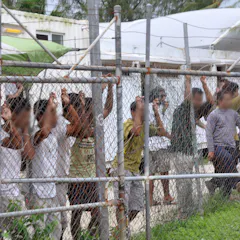
The most morally monstrous actions might work as deterrents but be unacceptable morally even to the most casual conscience.
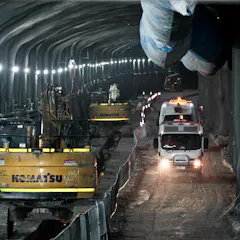
Analysis of the business cases for three of the biggest projects deemed “high priority” by Infrastructure Australia raises questions about the process.
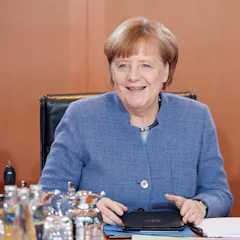
The German approach to refugees is becoming increasingly binary: if you are not a refugee, you must leave; if you are a refugee, you must integrate.
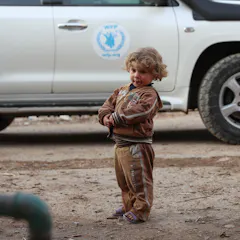
Rebuilding Syria will be complex and costly. But expertise and extensive funds will be in short supply due the geopolitical absence of the US and other Western countries.
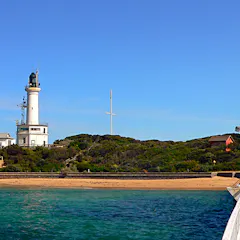
The Victorian community is seeing a worsening epidemic of flesh-eating bacteria that causes Buruli ulcer. But how can we prevent this disease if we don’t know where it comes from and how it spreads?

A government review of regional, rural and remote education tells us we need to recognise the uniqueness of and understand successes in these communities to improve outcomes for these students.
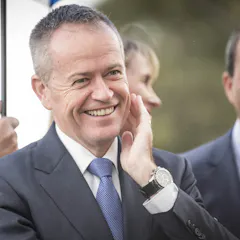
On the new boundaries, Labor requires just a five-seat gain to win a majority, while the Coalition needs to gain two seats to retain its majority.
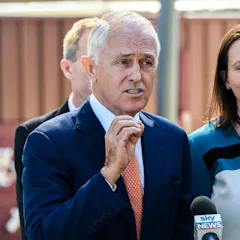
Despite the government’s 30th Newspoll loss under Malcolm Turnbull, this week’s polls have been a mixed bag for both sides.

Questionable research practices are not fraud, and they’re not cause for panic. But they do give us some hints about how we can make science more robust.
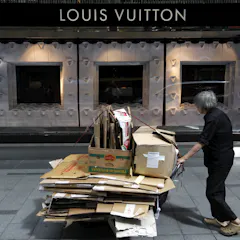
Inequality is decried at campaign rallies and in the global commentariat. But little is being done at any policy level.
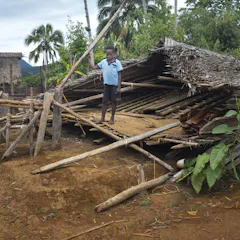
Fresh earthquakes and aftershocks hit parts of Papua New Guinea following February’s deadly quake. It’s Australia’s slow push north that’s part of PNG’s seismic activity.

With any type of human exploration, there are risks as we push boundaries, and there are inevitably mishaps and fatalities as a result. Space tourism is no exception.
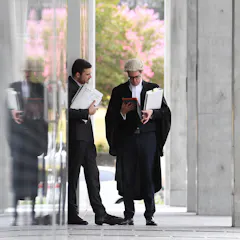
Mandatory retirement ages are mostly a thing of the past in Australia. Removing the last vestiges of this practice is one way to address the problem of Australia’s ageing workforce.
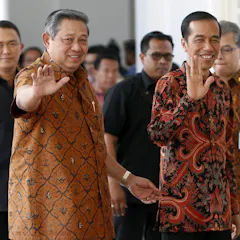
Many activists have entered politics in the two decades of Indonesia’s democratisation. But this hasn’t improved the quality of democracy in the country.
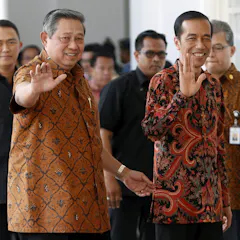
Banyak aktivis yang memasuki dunia politik dalam dua dekade demokratisasi Indonesia. Tetapi ini tidak memperbaiki kualitas demokrasi di negeri ini.
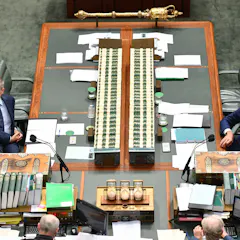
The Coalition braces for the next Newspoll, while a redistribution gives Labor reason to smile, and the Batman byelection results are finalised.

It’s understandable to want to shield children from the impacts of disasters. But research suggests that they should be given a voice in disaster planning and a role in reducing the risks.

Instead of pulling us to the top or bottom, the force of gravity pulls us to the middle of the Earth.
Authors
-

Election Analyst (Psephologist) at The Conversation; and Honorary Associate, School of Mathematics and Statistics, The University of Melbourne
-
Research fellow, Faculty of Architecture, Building and Planning, The University of Melbourne
-
Guest Research Fellow, School of Computing and Information Systems, The University of Melbourne
-
Professor of Sociology of Law and Deviance, Università di Bologna; University of Essex; The University of Melbourne
-
McKenzie Research Fellow, The University of Melbourne
-
Research assistant, Movember Institute of Men's Health, The University of Melbourne
-
Professor of Education Futures, The University of Melbourne
-
Senior Research Associate, School of Agriculture, Food and Ecosystem Sciences, The University of Melbourne
-
Senior Lecturer, Centre for Advancing Journalism, The University of Melbourne
-
Research Fellow, Centre for Youth Mental Health, The University of Melbourne
-
Deputy Vice-Chancellor (Global, Culture and Engagement), The University of Melbourne
-
Emeritus professor, History, The University of Melbourne
-
Associate Professor and Head, Behavioural Neuropharmacology Laboratory, The University of Melbourne
-
Lecturer in History, The University of Melbourne
-
Associate Professor, Centre for Youth Mental Health, The University of Melbourne