

When it comes to plot, emotions or even themes, Tree of Codes is a mystery. But its technical prowess is undeniable.
The University of Melbourne

The University of Melbourne is a global leader in higher education. Across our campuses we convene brilliant minds from different disciplines and sectors to come together to address important questions and tackle grand challenges. In a disrupted world, that capacity has never been more important.
Our vision is to equip our students with a distinctive, future-facing education personalised around their ambitions and needs, enriched by global perspectives and embedded in a richly collaborative research culture. As active citizens and future leaders, our students represent our greatest contribution to the world, and are at the heart of everything we do.
We serve society by engaging with our communities and ensuring education and research are inspired from the outset by need and for the benefit of society, while remaining committed to allowing academic freedom to flourish. In this, we remain true to our purpose and fulfil our mission as a public-spirited organisation, dedicated to the principles of fairness, equality and excellence in everything we do.
We strive for an environment that is inclusive and celebrates diversity.
Beyond our campuses we imagine an Australia that is ambitious, forward thinking and increasing its reputation and influence globally. We are committed to playing a part in achieving this – building on our advantageous location in one of the world’s most exciting cities and across the state of Victoria, in a region rapidly becoming a hub for innovative education, research and collaboration.
Links
Articles

Debt agreements have become the fastest form of personal insolvency in Australia. But in many cases, there are better options available to manage debt.
The New Zealand election was held on 23 September, with final results released on 7 October. The conservative National won 56 of the 120 seats, Labour 46, the anti-immigrant populist NZ First 9, the Greens…

The decision to exclude transgender woman Hannah Mouncey from the AFLW may breach anti-discrimination law, and contradicts the AFL’s public position of embracing diversity and inclusivity.

Mette Ingvartsen’s 7 Pleasures aims to upend
clichés about nudity. But the ‘confrontational’ use of nudity in dance and performance art is itself now something of a cliche.
I’m often unenthused, to put it mildly, about social media campaigns. I’ve expressed my… reservations… about #WISH and #DoItInADress previously. While invariably well-intentioned, such campaigns often…
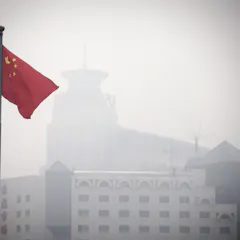
While China launches its new energy market, Australia is still lagging behind in implementing a mechanism to control carbon emissions
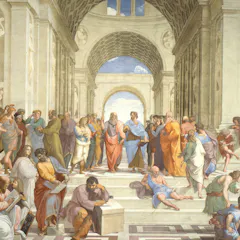
Australian universities are teaching ‘identity politics’ at the expense of Western history, according to an Institute of Public Affairs report. But unis make decisions based on student demand, not politics.
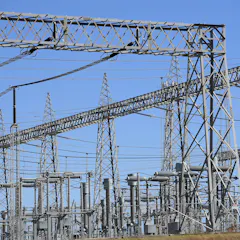
The federal government has announced a new National Energy Guarantee focused on electricity reliability, after deciding not to implement a clean energy target.

The share house may be taken for granted now, but before the late 1960s it was hard for women to live independently of families or husbands. For some, communal housing was life-changing.
This week’s Newspoll, conducted 12-15 October from a sample of 1580, gave Labor a 54-46 lead, unchanged from three weeks ago. Primary votes were 37% Labor (down 1), 36% Coalition (steady), 10% Greens (up…
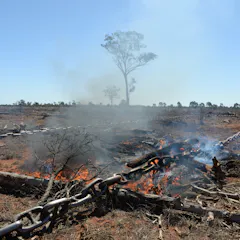
The outgoing Threatened Species Commissioner has downplayed the importance of land clearing as a threat to Australia’s plants and animals. But it’s the biggest threat, and magnifies the others too.
A NSW ReachTEL poll for Fairfax media, conducted 5 October from a sample of 1650, gave the Coalition a 52-48 lead by preference flows at the 2015 election, a 3 point gain for Labor since a Channel 7 ReachTEL…

Indonesia perlu mengejar ketertinggalan dengan meningkatkan keterampilan berbasis internet dan literasi digital seperti yang telah dilakukan oleh Cina dan India.
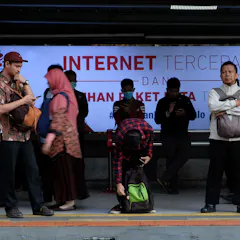
Indonesia has a lot of catching up to do to provide its people with skills, including digital literacy, to find jobs in a shifting landscape propelled by innovation in digital technology.
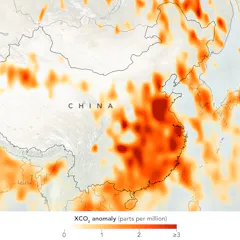
New data from a NASA satellite show in unprecedented detail the flow of carbon dioxide into the atmosphere. Future satellites should even be able to detect the signatures of individual power stations.
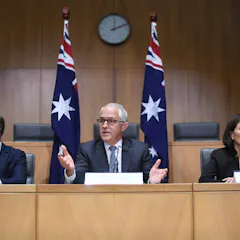
The Productivity Commission has recommended reform to the relationship between the federal and state governments. Here are three areas that demand it.

There is no clear-cut definition of what mindfulness actually is. This has potentially serious implications.

Only around 10% of new drugs in development make it onto the market. A drug needs to go through animal trials, and then four phases of human trials to be deemed suitable for use in patients.
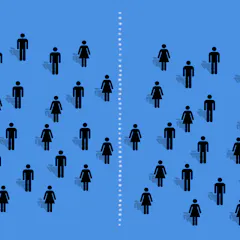
A randomised controlled trial is the best way to compare a new treatment with the standard treatment. And randomising trial participants is a core feature of the experiment.
Authors
-

Professor in Geomatics and SDI, The University of Melbourne
-
Election Analyst (Psephologist) at The Conversation; and Honorary Associate, School of Mathematics and Statistics, The University of Melbourne
-
Research fellow, Faculty of Architecture, Building and Planning, The University of Melbourne
-
Professor, School of Psychological Sciences, The University of Melbourne
-
McKenzie Research Fellow, The University of Melbourne
-
Research assistant, Movember Institute of Men's Health, The University of Melbourne
-
Professor of Education Futures, The University of Melbourne
-
Research Fellow, Department of Infrastructure Engineering, The University of Melbourne
-
Senior Lecturer, Centre for Advancing Journalism, The University of Melbourne
-
Research Fellow, Centre for Youth Mental Health, The University of Melbourne
-
Associate Professor and Principal Fellow in Urban Risk and Resilience, The University of Melbourne
-
Associate Professor in Transport Engineering, Department of Infrastructure Engineering, The University of Melbourne
-
Associate Professor, Complex Human Data Hub, Melbourne School of Psychological Sciences, The University of Melbourne
-
Lecturer in History, The University of Melbourne
-
Associate Professor, Centre for Youth Mental Health, The University of Melbourne