

Indonesia perlu mengejar ketertinggalan dengan meningkatkan keterampilan berbasis internet dan literasi digital seperti yang telah dilakukan oleh Cina dan India.
The University of Melbourne

The University of Melbourne is a global leader in higher education. Across our campuses we convene brilliant minds from different disciplines and sectors to come together to address important questions and tackle grand challenges. In a disrupted world, that capacity has never been more important.
Our vision is to equip our students with a distinctive, future-facing education personalised around their ambitions and needs, enriched by global perspectives and embedded in a richly collaborative research culture. As active citizens and future leaders, our students represent our greatest contribution to the world, and are at the heart of everything we do.
We serve society by engaging with our communities and ensuring education and research are inspired from the outset by need and for the benefit of society, while remaining committed to allowing academic freedom to flourish. In this, we remain true to our purpose and fulfil our mission as a public-spirited organisation, dedicated to the principles of fairness, equality and excellence in everything we do.
We strive for an environment that is inclusive and celebrates diversity.
Beyond our campuses we imagine an Australia that is ambitious, forward thinking and increasing its reputation and influence globally. We are committed to playing a part in achieving this – building on our advantageous location in one of the world’s most exciting cities and across the state of Victoria, in a region rapidly becoming a hub for innovative education, research and collaboration.
Links
Articles
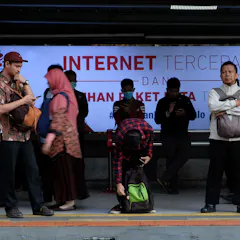
Indonesia has a lot of catching up to do to provide its people with skills, including digital literacy, to find jobs in a shifting landscape propelled by innovation in digital technology.
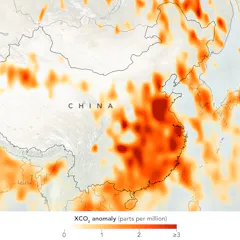
New data from a NASA satellite show in unprecedented detail the flow of carbon dioxide into the atmosphere. Future satellites should even be able to detect the signatures of individual power stations.
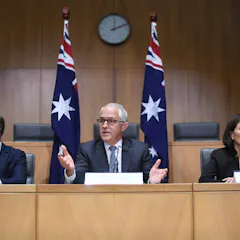
The Productivity Commission has recommended reform to the relationship between the federal and state governments. Here are three areas that demand it.

There is no clear-cut definition of what mindfulness actually is. This has potentially serious implications.

Only around 10% of new drugs in development make it onto the market. A drug needs to go through animal trials, and then four phases of human trials to be deemed suitable for use in patients.
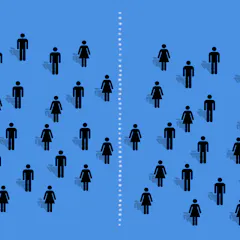
A randomised controlled trial is the best way to compare a new treatment with the standard treatment. And randomising trial participants is a core feature of the experiment.

The students of class 3E, Ferny Grove State School, want to know if astronauts get space sick when travelling to the International Space Station.

Denis Villeneuve’s much anticipated Blade Runner 2049 has met with mostly praise and a few notably dour takes. It appears to be yielding disappointing results at the box office. While the film is visually…

The debate about the nature of early trauma memories and their recovery isn’t new.
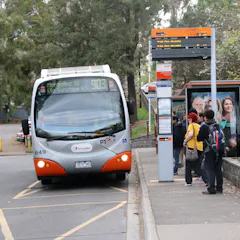
No matter whether competitive tendering or negotiation is used, operators that do not meet clear and transparent service benchmarks should be shown the door.
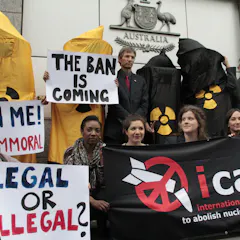
A grassroots movement with its genesis in Melbourne has won the Nobel Peace Prize.

Caravan tells the tale of a mother and daughter who live in a caravan. Staged in the Malthouse Theatre’s forecourt, it is a sweet look at class and gender.

Senators should consider how repayment thresholds vary depending on family circumstances, the impacts on taxes and how long students will be saddled with debt.

In a suburban hair salon, a Muslim woman suddenly feels unwelcome in the country she has loved for 40 years.
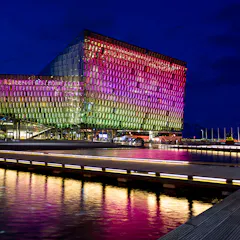
Digital media on building facades are changing the appearance of our cities. This creates a need for new urban policy guidelines to retain architectural quality and promote social engagement.
In the last decade, there have been many horrific gun crimes in the US, where at least 10 people have been murdered in the one incident. However, the National Rifle Association has successfully fought…

Taylor Mac’s 90-minute version of a 24-hour history of pop music is a hit, determined to forge a renewed sense community with the audience.

In the terrible aftermath of the Las Vegas massacre people have been urgently trying to explain it. Some have put race at the centre of their explanations. Mass shootings, they argue, reveal something…

Without limiting global warming Europe is likely to see more severe heatwaves, less frequent extreme cold and more intense rain events.
Authors
-

Election Analyst (Psephologist) at The Conversation; and Honorary Associate, School of Mathematics and Statistics, The University of Melbourne
-
Research fellow, Faculty of Architecture, Building and Planning, The University of Melbourne
-
Guest Research Fellow, School of Computing and Information Systems, The University of Melbourne
-
Professor, School of Psychological Sciences, The University of Melbourne
-
McKenzie Research Fellow, The University of Melbourne
-
Research assistant, Movember Institute of Men's Health, The University of Melbourne
-
Professor of Education Futures, The University of Melbourne
-
Senior Research Associate, School of Agriculture, Food and Ecosystem Sciences, The University of Melbourne
-
Senior Lecturer, Centre for Advancing Journalism, The University of Melbourne
-
Research Fellow, Centre for Youth Mental Health, The University of Melbourne
-
Deputy Vice-Chancellor (Global, Culture and Engagement), The University of Melbourne
-
Emeritus professor, History, The University of Melbourne
-
Associate Professor, Complex Human Data Hub, Melbourne School of Psychological Sciences, The University of Melbourne
-
Lecturer in History, The University of Melbourne
-
Associate Professor, Centre for Youth Mental Health, The University of Melbourne