

The Industrial Revolution choked English cities in smog, filled rivers with waste and spread disease in crowded cities. At the same time, fairy tales about humans destroying nature proliferated.
The University of Melbourne

The University of Melbourne is a global leader in higher education. Across our campuses we convene brilliant minds from different disciplines and sectors to come together to address important questions and tackle grand challenges. In a disrupted world, that capacity has never been more important.
Our vision is to equip our students with a distinctive, future-facing education personalised around their ambitions and needs, enriched by global perspectives and embedded in a richly collaborative research culture. As active citizens and future leaders, our students represent our greatest contribution to the world, and are at the heart of everything we do.
We serve society by engaging with our communities and ensuring education and research are inspired from the outset by need and for the benefit of society, while remaining committed to allowing academic freedom to flourish. In this, we remain true to our purpose and fulfil our mission as a public-spirited organisation, dedicated to the principles of fairness, equality and excellence in everything we do.
We strive for an environment that is inclusive and celebrates diversity.
Beyond our campuses we imagine an Australia that is ambitious, forward thinking and increasing its reputation and influence globally. We are committed to playing a part in achieving this – building on our advantageous location in one of the world’s most exciting cities and across the state of Victoria, in a region rapidly becoming a hub for innovative education, research and collaboration.
Links
Articles

On Q&A, government minister Zed Seselja remarked that surveys showed confidence in media has fallen globally. In Australia, he said, it has dropped lower than in the US. Is he right?

A new study has for first time placed a dollar value on how much it would cost the government to replace those who unofficially care for family members with mental illness.

More and more, the culture of elite, professional footy is characterised by commercialisation and corporatisation.
This week’s Newspoll, conducted 16-19 March from a sample of 1820, has Labor leading 52-48, but this is a 3 point gain for the Coalition since the previous Newspoll, three weeks ago. Primary votes are…

Employees in this study would forgo A$1 million for their employer, to gain as little as A$500 personally.

We’re in danger of losing the health benefits of soils faster than they are replaced.

The arts sector lobbied hard against the Catalyst funding model, which the ALP had labelled ‘a ministerial slush fund’. But will the money returned to the Australia Council go to those who need it?

The lovers at the centre of The Green Bell - its author, Paula Keogh, and that passing meteor of Australian poetry, Michael Dransfield - met in the psychiatric unit of Canberra Hospital.

A planned expansion to the Snowy Hydro scheme is grabbing headlines. But a new plan could build oceanfront hydro power in places without mountains - including South Australia.

Smashed avo storms, news stories about lazy millennials … Has anything changed in the 20 years since Mark Davis wrote his influential book Gangland?

Studies have shown that shame can motivate people to be both helpful but also vengeful, so the verdict is still out on whether it curbs bad behaviour.

Delirium is a neurological (nervous system) condition where a person becomes suddenly confused. Around one in five elderly people in hospital suffer from delirium.

The NBN could offer faster broadband to more people if it could widen its planned Fibre to the Curb rollout.
In the third in my series on the crisis besetting the National Electricity Market (NEM) in eastern Australia (see Part 1 & Part 2), I look at some evidence for how the market itself has played a role…

It is 20 years since author Mark Davis wrote his influential book Gangland exploring the domination of baby boomers in public life. Is it time for a fresh exploration of ‘generationalism’ today?
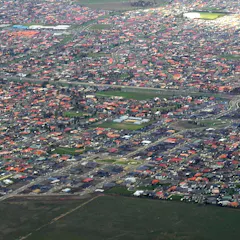
Victoria has been lagging behind other states in developing an affordable housing strategy. Now that one has been released, how well does it meet the needs of households on lower incomes?

Business Briefing: how the attitudes of the next generation are changing the property market
The Conversation18.5 MB (download)
There's been a shift in attitudes to the property market over generations, from owning a home as a right, to owning a home as a commodity.
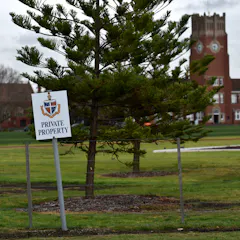
In a world where educational opportunity is unjustly distributed, there are questions as to whether private schools should be exempt from paying income tax.

By excluding prisoners from the NDIS, the federal government is discriminating against prisoners with a disability in direct contravention of our international human rights obligations.
Authors
-

Professor in Geomatics and SDI, The University of Melbourne
-
Election Analyst (Psephologist) at The Conversation; and Honorary Associate, School of Mathematics and Statistics, The University of Melbourne
-
Research fellow, Faculty of Architecture, Building and Planning, The University of Melbourne
-
ARC Future Fellow & Associate Professor, Mechanical Engineering, The University of Melbourne
-
Professor, School of Psychological Sciences, The University of Melbourne
-
McKenzie Research Fellow, The University of Melbourne
-
Research assistant, Movember Institute of Men's Health, The University of Melbourne
-
Professor of Education Futures, The University of Melbourne
-
Research Fellow, Department of Infrastructure Engineering, The University of Melbourne
-
Research Fellow, Centre for Youth Mental Health, The University of Melbourne
-
Associate Professor and Principal Fellow in Urban Risk and Resilience, The University of Melbourne
-
Associate Professor in Transport Engineering, Department of Infrastructure Engineering, The University of Melbourne
-
Associate Professor, Complex Human Data Hub, Melbourne School of Psychological Sciences, The University of Melbourne
-
Lecturer in History, The University of Melbourne
-
Associate Professor, Centre for Youth Mental Health, The University of Melbourne