
The West Australian election will be held in five weeks, on 11 March. A WA Newspoll, conducted Monday to Wednesday from a sample of 1130, gives Labor a 54-46 lead, a 2 point gain for Labor since the August…
The University of Melbourne

The University of Melbourne is a global leader in higher education. Across our campuses we convene brilliant minds from different disciplines and sectors to come together to address important questions and tackle grand challenges. In a disrupted world, that capacity has never been more important.
Our vision is to equip our students with a distinctive, future-facing education personalised around their ambitions and needs, enriched by global perspectives and embedded in a richly collaborative research culture. As active citizens and future leaders, our students represent our greatest contribution to the world, and are at the heart of everything we do.
We serve society by engaging with our communities and ensuring education and research are inspired from the outset by need and for the benefit of society, while remaining committed to allowing academic freedom to flourish. In this, we remain true to our purpose and fulfil our mission as a public-spirited organisation, dedicated to the principles of fairness, equality and excellence in everything we do.
We strive for an environment that is inclusive and celebrates diversity.
Beyond our campuses we imagine an Australia that is ambitious, forward thinking and increasing its reputation and influence globally. We are committed to playing a part in achieving this – building on our advantageous location in one of the world’s most exciting cities and across the state of Victoria, in a region rapidly becoming a hub for innovative education, research and collaboration.
Links
Articles
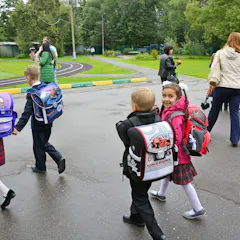
Attending early education and getting learning support from parents can really help get children ready to start school.
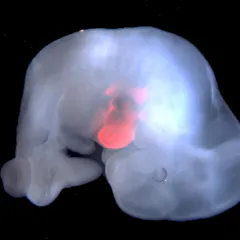
Human-animal hybrids - or ‘chimeras’ - might sound strange, but they offer great hope for new life saving therapies, as long as key ethical boundaries are respected.

Research comes with risk and uncertainty so getting the right message across to the people who matter can be a challenge for scientists. A new plan out today hopes to change that.
Mental health problems continue to carry a heavy stigma. People who experience them are often feared, excluded, shamed and discriminated against. Overcoming that stigma is a high priority, not least because…
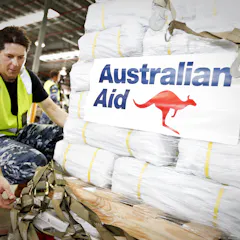
We check the facts on how Australia’s foreign aid spend has changed over time.

Some say homelessness creates squalor in our cities. But Hosier Lane — the most Instagrammed spot in Melbourne — thrives partly due to homeless street artists.
For many people suffering from disabling conditions, announcements in the press around breakthroughs in stem cell research undoubtedly bring hope.
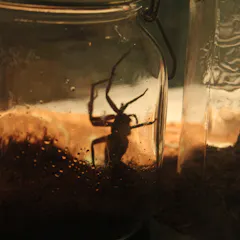
Australia’s snakes, spiders and other venomous critters tend to strike fear in many people. But is Australia’s reputation as a nation of deadly creatures deserved?
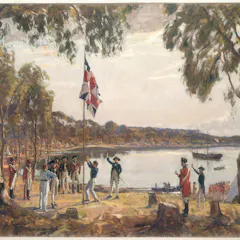
The marking of our national day has long been fraught, and this year is no exception.
With the Trump presidency we may be entering a golden age of insult and name-calling. Trump is exercising leadership in this regard with about 300 people, places and things feeling his sting.

‘Intelligent’ voice interfaces like Alexa and Siri are much hyped, but they have limitations, not all of which can be solved with better technology.
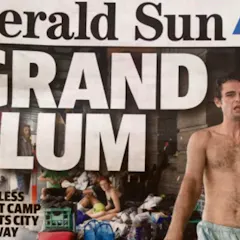
Bans are ineffective when used against populations that have nowhere else to go. Importantly, research shows that punitive approaches to the homeless cost more than supported housing strategies.
Following the shock resignation of NSW Premier Mike Baird on Thursday, Seven News commissioned a ReachTEL poll that night. The Coalition leads 55-45 after preferences, a 2 point gain for the Coalition…
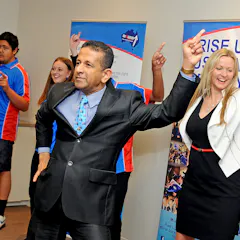
Charities in Australia can be political. They can advocate and lobby to further their charitable purposes. But they can’t be party-political.

Information on hospital deaths hasn’t always been so hard to find. Back in the 1860s Melbourne’s one hospital published regular stats on the number of patients dying.

The Wildlife Photographer of the Year exhibition features sumptuous images: from giant cuttlefish courting to a vertigo-inducing portrait of an orangutan taken with a GoPro camera.
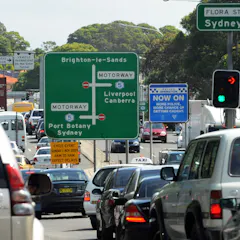
Australia needs stronger policy aimed at curbing air pollution, but the options currently on the table fall short. For now, we could all aim to drive less and turn off the engine when the car is idle.
The education minister says that under Labor there were child care price spikes of up to 14% over a 12 month period, but under the Coalition those have fallen to “around 6% on average”. Is that right?

Despite the furore over the ‘ghosting’ of Peter Cushing in Rogue One, directors will continue to push for improved technology enabling digital replication of actors.
Authors
-

Professor in Geomatics and SDI, The University of Melbourne
-
Election Analyst (Psephologist) at The Conversation; and Honorary Associate, School of Mathematics and Statistics, The University of Melbourne
-
Research fellow, Faculty of Architecture, Building and Planning, The University of Melbourne
-
ARC Future Fellow & Associate Professor, Mechanical Engineering, The University of Melbourne
-
Professor, School of Psychological Sciences, The University of Melbourne
-
McKenzie Research Fellow, The University of Melbourne
-
Research assistant, Movember Institute of Men's Health, The University of Melbourne
-
Professor of Education Futures, The University of Melbourne
-
Research Fellow, Department of Infrastructure Engineering, The University of Melbourne
-
Associate Professor and Principal Fellow in Urban Risk and Resilience, The University of Melbourne
-
Associate Professor in Transport Engineering, Department of Infrastructure Engineering, The University of Melbourne
-
Professor of Psychology, The University of Melbourne
-
Associate Professor, Complex Human Data Hub, Melbourne School of Psychological Sciences, The University of Melbourne
-
Lecturer in History, The University of Melbourne
-
Professor of Health Economics, The University of Melbourne