

Degree apprenticeships are being rolled out in the UK. They bridge the gap between technical skills, employment and higher education. Is there scope for something similar in Australia?
The University of Melbourne

The University of Melbourne is a global leader in higher education. Across our campuses we convene brilliant minds from different disciplines and sectors to come together to address important questions and tackle grand challenges. In a disrupted world, that capacity has never been more important.
Our vision is to equip our students with a distinctive, future-facing education personalised around their ambitions and needs, enriched by global perspectives and embedded in a richly collaborative research culture. As active citizens and future leaders, our students represent our greatest contribution to the world, and are at the heart of everything we do.
We serve society by engaging with our communities and ensuring education and research are inspired from the outset by need and for the benefit of society, while remaining committed to allowing academic freedom to flourish. In this, we remain true to our purpose and fulfil our mission as a public-spirited organisation, dedicated to the principles of fairness, equality and excellence in everything we do.
We strive for an environment that is inclusive and celebrates diversity.
Beyond our campuses we imagine an Australia that is ambitious, forward thinking and increasing its reputation and influence globally. We are committed to playing a part in achieving this – building on our advantageous location in one of the world’s most exciting cities and across the state of Victoria, in a region rapidly becoming a hub for innovative education, research and collaboration.
Links
Articles
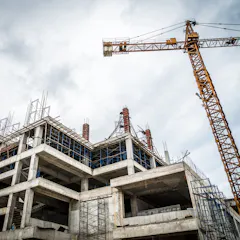
A modest rebalancing of federal tax policy toward build-to-rent housing could fill affordable housing funding gaps. Australian funds are already investing in such a scheme in the US.
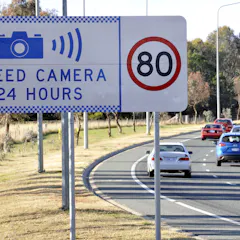
Wider societal issues are driving road user behaviour, which cannot be fixed by taking a traditional road safety approach.
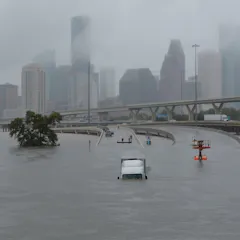
The unpredictability of hurricanes makes it hard to say for sure whether climate change is making them worse. But we do know that sea-level rise and increased evaporation will worsen the impacts.
At the start of Donald Trump’s term, the FiveThirtyEight poll aggregate gave him 48% approval, 43% disapproval, for a net approval of +5. More than seven months into Trump’s term, his ratings are 37% approve…

Speaking with: Dr. John Gerrard on infectious diseases
The Conversation, CC BY-ND23.2 MB (download)
William Isdale speaks to Dr. John Gerrard about the constant threat of infectious diseases and what we can do to prevent a deadly pandemic from establishing itself in Australia.

Same-sex attracted people have poorer mental health than their heterosexual peers, but In jurisdictions that have legalised same-sex marriage, the gap between the two is much smaller.

From spontaneous mass singing after a terror attack to Irish laments, music reflects the painful, complex and laborious task of mourning.
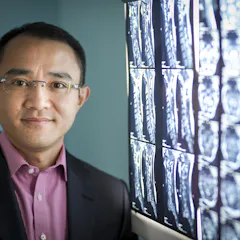
Melbourne neurosurgeon Dr Michael Wong was stabbed in a hospital foyer in February, 2014. He recalls his attack with painful clarity and calls for better protection for hospital staff.
This week’s Newspoll, conducted 17-20 August from a sample of 1770, has broken the string of six consecutive 53-47 leads for Labor. Labor had a 54-46 lead, a one point gain since last fortnight. Primary…
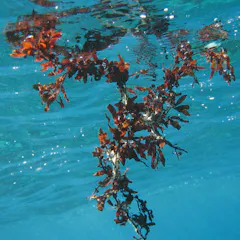
Tonight on the ABC’s Catalyst, scientist Tim Flannery asks if seaweed can save the world. It’s a bold claim for algae, but seaweed could play a key role in keeping climate change in check.

Cement has a huge greenhouse footprint, largely because the chemical process by which it is made releases carbon dioxide. But there are several different ways for cement to green up its act.

MIFF 2017 made good on its promise to explore new worlds, with timely films on American civil rights, Indigenous music, and queer activism. Here’s our pick of the ones to see.

A stable environment that teaches men to be men and women to be women could be helping to enforce gender across generations.
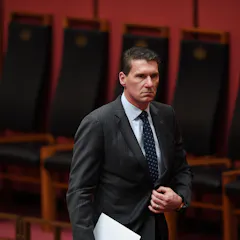
In the marriage equality debate as in any other, media outlets must balance the right to freedom of speech with the balance of evidence.
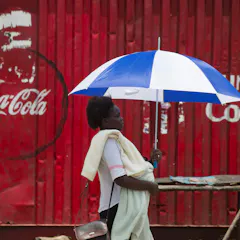
Unhealthy food corporations use various tactics to undermine public health policies aimed at tackling the scourge of non-communicable diseases like diabetes and obesity.
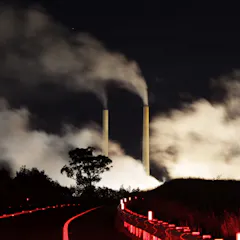
Australia is the 16th-largest emitter of mercury in the world. A huge amount comes from coal power stations – and a new report argues our pollution guidelines are hopelessly lax.
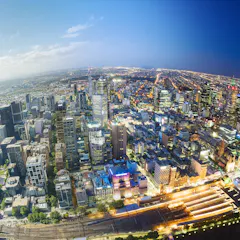
The neediest suburbs get a much poorer deal in Sydney than in Melbourne. A new study provides a suburb-by-suburb breakdown of state investment, including what facilities and services have been funded.
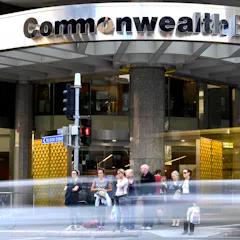
A new lawsuit against the CBA puts climate change in a new legal light: a financial hazard. The case opens up fresh lines of attack on institutions that contribute to climate change.

Personality traits reflecting how well we treat others can be separated into politeness and compassion, which are each linked to different kinds of prosocial behaviours.
Authors
-

Professor in Geomatics and SDI, The University of Melbourne
-
Election Analyst (Psephologist) at The Conversation; and Honorary Associate, School of Mathematics and Statistics, The University of Melbourne
-
Research fellow, Faculty of Architecture, Building and Planning, The University of Melbourne
-
Professor, School of Psychological Sciences, The University of Melbourne
-
McKenzie Research Fellow, The University of Melbourne
-
Research assistant, Movember Institute of Men's Health, The University of Melbourne
-
Professor of Education Futures, The University of Melbourne
-
Research Fellow, Department of Infrastructure Engineering, The University of Melbourne
-
Senior Lecturer, Centre for Advancing Journalism, The University of Melbourne
-
Research Fellow, Centre for Youth Mental Health, The University of Melbourne
-
Associate Professor and Principal Fellow in Urban Risk and Resilience, The University of Melbourne
-
Associate Professor in Transport Engineering, Department of Infrastructure Engineering, The University of Melbourne
-
Associate Professor, Complex Human Data Hub, Melbourne School of Psychological Sciences, The University of Melbourne
-
Lecturer in History, The University of Melbourne
-
Associate Professor, Centre for Youth Mental Health, The University of Melbourne