

Australian mosquitoes, unlike their Asian and American counterparts, can still be controlled by insecticides like pyrethroids. What lessons are there for managing pesticide resistance in insects?
The University of Melbourne

The University of Melbourne is a global leader in higher education. Across our campuses we convene brilliant minds from different disciplines and sectors to come together to address important questions and tackle grand challenges. In a disrupted world, that capacity has never been more important.
Our vision is to equip our students with a distinctive, future-facing education personalised around their ambitions and needs, enriched by global perspectives and embedded in a richly collaborative research culture. As active citizens and future leaders, our students represent our greatest contribution to the world, and are at the heart of everything we do.
We serve society by engaging with our communities and ensuring education and research are inspired from the outset by need and for the benefit of society, while remaining committed to allowing academic freedom to flourish. In this, we remain true to our purpose and fulfil our mission as a public-spirited organisation, dedicated to the principles of fairness, equality and excellence in everything we do.
We strive for an environment that is inclusive and celebrates diversity.
Beyond our campuses we imagine an Australia that is ambitious, forward thinking and increasing its reputation and influence globally. We are committed to playing a part in achieving this – building on our advantageous location in one of the world’s most exciting cities and across the state of Victoria, in a region rapidly becoming a hub for innovative education, research and collaboration.
Links
Articles
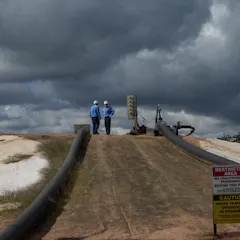
Australia has enough gas reserves to supply the next 25 years’ demand. Federal pressure to lift state bans on onshore gas development is pointless, risky – and won’t bring prices down.
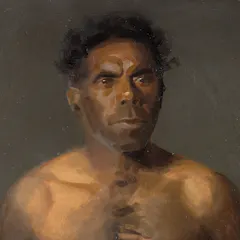
Anthropologist Percy Leason thought he was painting the extinction of Victoria’s Indigenous people in the 1930s. He was wrong, but his portraits, part of a new exhibition at the National Gallery of Victoria, are surprisingly sympathetic.
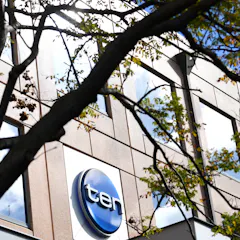
The most pertinent issue is how much power the federal government is prepared to allow any single media proprietor to have.
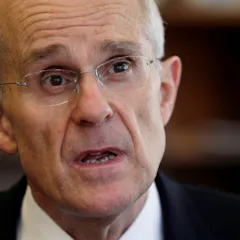
The Federal Court will now have an opportunity to clarify how mergers should be valued, ensuring the ACCC and the Australian Competition Tribunal are applying the same standard.

The “Xennials” are supposedly a group born between the late 1970s and early 1980s, who were born analogue and became digital adults. But the evidence for their existence isn’t as clear-cut as we might hope.

Myths that fluoridated water isn’t natural, safe, doesn’t work and shouldn’t be used to make up infant formula persist. Here’s what the evidence says.

Developing principles to create cities that are good for all is not easy. Who decides what is good? And for whom? We desperately need a big and general public discussion about this.
This week’s Newspoll, conducted 6-9 July from a sample of 1600, gave Labor its fourth consecutive 53-47 lead. Primary votes were 36% Labor (down 1 from three weeks ago), 35% Coalition (down 1), 11% One…

The symptoms of depression, PTSD, or social anxiety don’t point to an underlying disorder. They are the disorder.

Some technologies can be used to manipulate mood. Drug research offers insights into their possible impact.

Achieving the goal of sustainable cities depends on rolling back the market after decades of privatisation and deregulation.

From Cate Blanchett to David Williamson, some of Australia’s most well known theatre artists have performed at La Mama, which celebrates its 50th birthday this year.
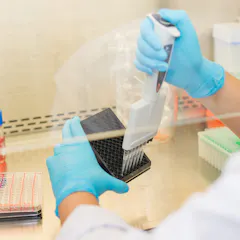
Stem cell science continues to offer great promise. But a growing number of clinics are selling treatments without evidence that what they offer is effective – or even safe.

Less than two years after Europe’s migrant crisis began, EU officials have said that the situation is under control. It’s not

Melbourne’s proposed road project relies on assumptions that inflate estimates of the traffic the new link will carry – but other choices about the future of transport are open to us.
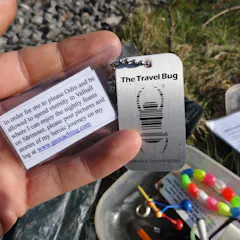
The online game of geocaching shows there are ways to create value online that are not purely financial.
This June was the seventh-warmest and second-driest on record for Australia. Parts of the southwest and southeast saw record dry conditions as frontal systems passed further south than normal and high…

William Isdale speaks with University of Queensland Professor Peter Koopman about CRISPR technology.
A South Australian Galaxy poll, conducted 28-29 June from a sample of 885, has a 50-50 tie, a three point gain for Labor since the last SA Galaxy poll, in September 2016. Primary votes are 34% Liberal…
Authors
-

Professor in Geomatics and SDI, The University of Melbourne
-
Election Analyst (Psephologist) at The Conversation; and Honorary Associate, School of Mathematics and Statistics, The University of Melbourne
-
Research fellow, Faculty of Architecture, Building and Planning, The University of Melbourne
-
ARC Future Fellow & Associate Professor, Mechanical Engineering, The University of Melbourne
-
Professor, School of Psychological Sciences, The University of Melbourne
-
McKenzie Research Fellow, The University of Melbourne
-
Research assistant, Movember Institute of Men's Health, The University of Melbourne
-
Professor of Education Futures, The University of Melbourne
-
Research Fellow, Department of Infrastructure Engineering, The University of Melbourne
-
Research Fellow, Centre for Youth Mental Health, The University of Melbourne
-
Associate Professor and Principal Fellow in Urban Risk and Resilience, The University of Melbourne
-
Associate Professor in Transport Engineering, Department of Infrastructure Engineering, The University of Melbourne
-
Associate Professor, Complex Human Data Hub, Melbourne School of Psychological Sciences, The University of Melbourne
-
Lecturer in History, The University of Melbourne
-
Associate Professor, Centre for Youth Mental Health, The University of Melbourne