

New research shows young women experience street harassment about once every two days.
The University of Melbourne

The University of Melbourne is a global leader in higher education. Across our campuses we convene brilliant minds from different disciplines and sectors to come together to address important questions and tackle grand challenges. In a disrupted world, that capacity has never been more important.
Our vision is to equip our students with a distinctive, future-facing education personalised around their ambitions and needs, enriched by global perspectives and embedded in a richly collaborative research culture. As active citizens and future leaders, our students represent our greatest contribution to the world, and are at the heart of everything we do.
We serve society by engaging with our communities and ensuring education and research are inspired from the outset by need and for the benefit of society, while remaining committed to allowing academic freedom to flourish. In this, we remain true to our purpose and fulfil our mission as a public-spirited organisation, dedicated to the principles of fairness, equality and excellence in everything we do.
We strive for an environment that is inclusive and celebrates diversity.
Beyond our campuses we imagine an Australia that is ambitious, forward thinking and increasing its reputation and influence globally. We are committed to playing a part in achieving this – building on our advantageous location in one of the world’s most exciting cities and across the state of Victoria, in a region rapidly becoming a hub for innovative education, research and collaboration.
Links
Articles

For over a century Australia’s venomous snakes have been counted amongst the world’s deadliest, yet human fatalities remain strikingly rare. How did our snakes develop such a fearsome reputation?
By-elections occurred today for the US House in two Republican-held seats: Georgia’s sixth Congressional District (CD) and South Carolina’s fifth CD. In SC’s fifth, Democrat Archie Parnell almost pulled…
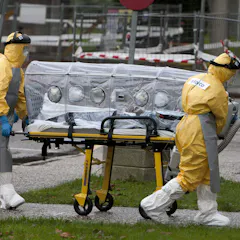
Professor Peter Doherty on infectious disease pandemics
The Conversation, CC BY-ND47.6 MB (download)
William Isdale speaks with the University of Melbourne's Professor Peter Doherty about infectious disease pandemics.
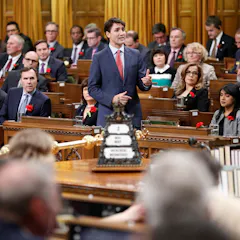
Countries such as Canada offer Australia clear lessons on how to better police lobbying.
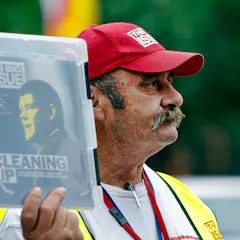
The data show wealth inequality has grown but is lower now than before the GFC. And overall household income inequality has barely shifted since the start of this century.

Family violence will not always be ‘obvious’ to CCTV. Therefore measures must be put in place to ensure that footage cannot be used against victims should circumstances of violence be challenged.

Why can’t the state fund an ongoing program of upgrading, replacing and building public housing? On the evidence to date, private developers aren’t doing a better job of it.

Climate Council CEO Amanda McKenzie told Q&A that heatwaves were ‘worsening’ in Australia and ‘hot days’ had doubled in the last 50 years. Let’s take a look at the evidence.

Even though the shift towards part-time employment has actually been happening for many years, it now appears to be slowing.
This week’s Newspoll, conducted Thursday to Sunday from a sample of 1790, has Labor leading by 53-47, unchanged since the last Newspoll, three weeks ago. Primary votes are 37% Labor (up 1), 36% Coalition…

News Corp on the right, Fairfax on the left. This division has a long history in Australia, to the detriment of quality journalism and public debate.

When wealth accumulation becomes the driver of urban regeneration, residents who already have little or no say in the future of our cities are further marginalised by gentrification.

Public interest journalism exposes corruption and wrongdoers, and holds the powerful to account. But it is increasingly under threat, and we need to find ways to protect it.
The Conservatives lost their majority last Thursday 8 June in an election that did not have to be held until May 2020. While this outcome was shocking for the Conservatives, it would have been even worse…

New research shows uncertainty isn’t the cause of slow economic growth. But that could change if the government isn’t clearer about policies.

New research shows an association between moderate drinking and long-term brain impairment. But there are a few reasons to be cautious about these findings.
Seven years ago I wrote a book about infidelity. Not a memoir, no, but my own experiences were indeed divulged amid a broader scholarly discussion of sexuality and feminism. Of the very many radio interviews…

The current rise in atmospheric carbon dioxide levels is unprecedented in the past 800,000 years. As our video explains, ice cores track human changes to the atmosphere that are far beyond natural.
At the UK general election held Thursday, the Conservatives lost their majority. With all 650 seats declared, the Conservatives won 318 seats (down 13 since the 2015 election), Labour 262 (up 30), the…
Authors
-

Professor in Geomatics and SDI, The University of Melbourne
-
Election Analyst (Psephologist) at The Conversation; and Honorary Associate, School of Mathematics and Statistics, The University of Melbourne
-
Research fellow, Faculty of Architecture, Building and Planning, The University of Melbourne
-
ARC Future Fellow & Associate Professor, Mechanical Engineering, The University of Melbourne
-
Professor, School of Psychological Sciences, The University of Melbourne
-
McKenzie Research Fellow, The University of Melbourne
-
Research assistant, Movember Institute of Men's Health, The University of Melbourne
-
Professor of Education Futures, The University of Melbourne
-
Research Fellow, Department of Infrastructure Engineering, The University of Melbourne
-
Research Fellow, Centre for Youth Mental Health, The University of Melbourne
-
Associate Professor and Principal Fellow in Urban Risk and Resilience, The University of Melbourne
-
Associate Professor in Transport Engineering, Department of Infrastructure Engineering, The University of Melbourne
-
Associate Professor, Complex Human Data Hub, Melbourne School of Psychological Sciences, The University of Melbourne
-
Lecturer in History, The University of Melbourne
-
Associate Professor, Centre for Youth Mental Health, The University of Melbourne