

The federal budget will pump A$90 million into boosting domestic gas production, as well as investing in pumped hydro and measures to monitor energy prices.
The University of Melbourne

The University of Melbourne is a global leader in higher education. Across our campuses we convene brilliant minds from different disciplines and sectors to come together to address important questions and tackle grand challenges. In a disrupted world, that capacity has never been more important.
Our vision is to equip our students with a distinctive, future-facing education personalised around their ambitions and needs, enriched by global perspectives and embedded in a richly collaborative research culture. As active citizens and future leaders, our students represent our greatest contribution to the world, and are at the heart of everything we do.
We serve society by engaging with our communities and ensuring education and research are inspired from the outset by need and for the benefit of society, while remaining committed to allowing academic freedom to flourish. In this, we remain true to our purpose and fulfil our mission as a public-spirited organisation, dedicated to the principles of fairness, equality and excellence in everything we do.
We strive for an environment that is inclusive and celebrates diversity.
Beyond our campuses we imagine an Australia that is ambitious, forward thinking and increasing its reputation and influence globally. We are committed to playing a part in achieving this – building on our advantageous location in one of the world’s most exciting cities and across the state of Victoria, in a region rapidly becoming a hub for innovative education, research and collaboration.
Links
Articles

Education experts discuss changes to schools and universities following the federal treasurer’s budget speech.
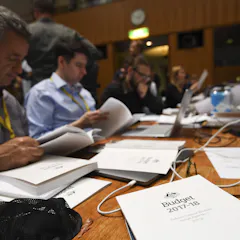
Successive governments have come to see the potential political gain in selectively leaking details of the budget before the big night.

The debate over so-called “trigger warnings” continues to simmer, boiling over in the media every month or so. These warnings – statements alerting students, and other members of the public, if writing…

Schooling expert Dr Glenn Savage answers your questions on recent changes to school funding.

If the Pacific Ocean enters an ‘El Tio’ phase, it could speed the world towards 1.5 degrees of global warming, one of the crucial benchmarks of the Paris Climate Agreement.

Federal Health Minister Greg Hunt has asked the Medicare review taskforce to consider increasing the number of subsidised mental health sessions for those with eating disorders. Why is that necessary?
With all results except overseas French in, centrist Emmanuel Macron has thrashed the far right Marine Le Pen by a 66.1-33.9 margin in yesterday’s French Presidential runoff election. Le Pen won only two…
Since the passage of the 2010 Affordable Care Act, otherwise known as Obamacare, Republicans have attempted to repeal it. In March, the first attempt to repeal and replace Obamacare under President Trump…

A broad process of communication and consultation should be initiated before gene drives are applied to control pests and diseases in Australia.
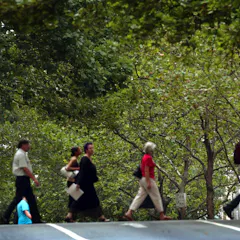
Greening cities that are becoming denser is a major challenge. City-dwellers’ health benefits from both well-designed green spaces and urban density, so we must manage the tensions between them.

Facebook wants to stop violent videos appearing in its feeds, but we must ensure human moderators don’t suffer.
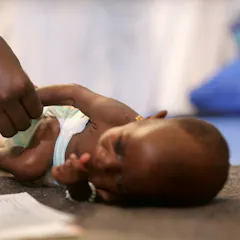
By committing ourselves to understanding how interventions work on the ground, we have the opportunity to save the millions who die unnecessarily each and every year.
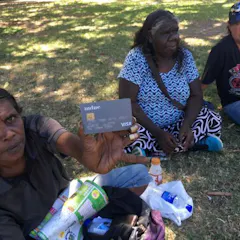
Critics of the Cashless Welfare Card trial overlook the fact it is curbing alcohol and gambling problems – and it’s what the communities want.
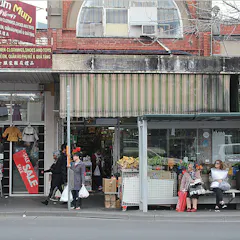
Must the aggressive, homogeneous global pattern of development take its course in Melbourne’s long-standing multicultural suburb of Footscray?
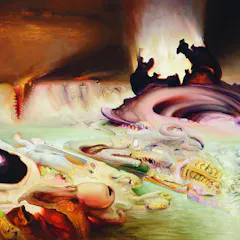
A new art festival featuring climate-related works offers a new way to see an issue that is often framed in purely scientific terms.
Tess (Catherine McClements), an editor who can’t spell - an implausible premise but just go with it - has decided to leave her marriage to Curtis (Peter Houghton), a man who incomprehensibly transitions…

Hidden in the detail of the latest higher education reform package, there are talks of creating teaching-only universities.
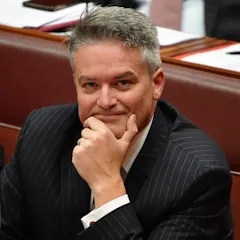
There are many potential reforms to the tax system that are revenue neutral, from broadening the tax base to replacing transaction taxes.
Higher education reform means more pain for students and universities with long lasting consequences.
Authors
-

Professor in Geomatics and SDI, The University of Melbourne
-
Election Analyst (Psephologist) at The Conversation; and Honorary Associate, School of Mathematics and Statistics, The University of Melbourne
-
Research fellow, Faculty of Architecture, Building and Planning, The University of Melbourne
-
Professor, School of Psychological Sciences, The University of Melbourne
-
McKenzie Research Fellow, The University of Melbourne
-
Research assistant, Movember Institute of Men's Health, The University of Melbourne
-
Professor of Education Futures, The University of Melbourne
-
Research Fellow, Department of Infrastructure Engineering, The University of Melbourne
-
Senior Lecturer, Centre for Advancing Journalism, The University of Melbourne
-
Research Fellow, Centre for Youth Mental Health, The University of Melbourne
-
Associate Professor and Principal Fellow in Urban Risk and Resilience, The University of Melbourne
-
Associate Professor in Transport Engineering, Department of Infrastructure Engineering, The University of Melbourne
-
Associate Professor, Complex Human Data Hub, Melbourne School of Psychological Sciences, The University of Melbourne
-
Lecturer in History, The University of Melbourne
-
Associate Professor, Centre for Youth Mental Health, The University of Melbourne