

For more than a month, Samoa has been battling a measles outbreak of huge proportions. Things are very slowly starting to improve.
The Peter Doherty Institute for Infection and Immunity

The Doherty Institute is a world-class institute combining research, teaching, public health and reference laboratory services, diagnostic services and clinical care into infectious diseases and immunity. The establishment of the Doherty Institute represents a radical change in the capacity of Australia and the world to detect, investigate and respond to existing, emerging and re-emerging infectious diseases and agents, with a major focus on diseases that pose serious public and global health threats such as influenza, tuberculosis, HIV, viral hepatitis and drug resistant bacteria. The Doherty’s activities are multi-disciplinary and cross-sectoral, placing great emphasis on translational research and improving clinical outcomes. Teams of interdisciplinary scientists, clinicians and epidemiologists collaborate on a wide spectrum of activities - from basic immunology and discovery research, to the development of new vaccines and new preventative and treatment methods, to surveillance and investigation of disease outbreaks.
Links
Articles

Antibiotic resistance is one of the greatest health challenges of the modern day. It’s especially prevalent, and must be acted on, in Australia’s remote Indigenous communities.

Babies in Australia have been vaccinated against hepatitis B since May 2000, but 240,000 Australians still live with the disease.
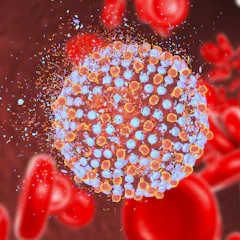
Curing thousands of Australians with hepatitis C is one of the public health success stories of recent years. We can take lessons from this as we continue in the fight against hepatitis B.

Candida auris is a fungus which breeds most commonly in health-care settings. It’s cause for concern because it’s hard to detect, and is resistant to many anti-fungal drugs.

Nobel Prizewinning health researcher Peter Doherty reflects on the challenge of delivering a healthy climate for the world. From hydrogen power to wooden skyscrapers, the options are endless, but all require leadership.

Born in Italy in 1909, Levi-Montalcini avoided being transported to Auschwitz as a young woman and rose to prominence as a neurobiologist. She was a co-recipient of the 1986 Nobel Prize for Medicine.
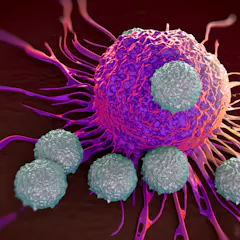
Nobel laureate Peter Doherty explains immunity.

While not perfect, the seasonal flu vaccine is the best way to protect against influenza. There are a few changes to the flu vaccine and what is available this year. Here’s what you need to know.

Hepatitis A is a virus that infects the liver. Symptoms usually take 15-50 days to develop after initial infection and typically last for several weeks or sometimes longer.

Scientific problems require evidence-led solutions. A new proposal to create a federal environmental decision-making body would take some of the politics out of climate policy.

We know overuse and inappropriate use of antibiotics contribute to resistance, so it’s important we develop strategies to improve practice.

Why is it the flu virus is so deadly compared to the common cold virus?

Hepatitis B rates in Indigenous communities are ten times higher than the rest of Australia. Eliminating the infection from Indigenous Australia can make a significant contribution to closing the gap.

Why is it only some viruses are transmissible by blood, and how does the virus actually move from person to person?
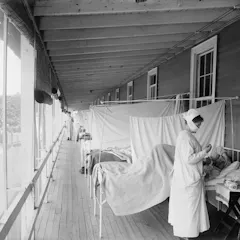
Here we explore our past and present struggles with the most significant infectious diseases human beings have faced.
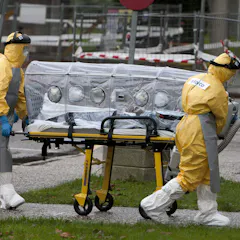
Professor Peter Doherty on infectious disease pandemics
The Conversation, CC BY-ND47.6 MB (download)
William Isdale speaks with the University of Melbourne's Professor Peter Doherty about infectious disease pandemics.

In its broadest sense, the March for Science aims to cause US legislators to reflect a little and understand what they risk if they choose to erode their global scientific leadership.

HIV diagnosis is devastating for patients and their families. But the infection is no longer a death sentence, and should not be prosecuted as such say experts.

Peter Doherty’s Nobel Prize-winning insights proved crucial for understanding how viral infections are controlled.
Authors
-

Microbial Bioinformatician & Postdoctoral Research Fellow, The Peter Doherty Institute for Infection and Immunity
-
Director, WHO Collaborating Centre for Viral Hepatitis, The Peter Doherty Institute for Infection and Immunity
-
Professor of virology and theme leader for viral infectious diseases, The Peter Doherty Institute for Infection and Immunity
-
Professor of Microbiology, The Peter Doherty Institute for Infection and Immunity
-
Postdoctoral researcher, The Peter Doherty Institute for Infection and Immunity
-
Laboratory Head, The Peter Doherty Institute for Infection and Immunity
-
Professor, The Peter Doherty Institute for Infection and Immunity
-
Senior research fellow, The Peter Doherty Institute for Infection and Immunity
-
Professor, The Peter Doherty Institute for Infection and Immunity
-
Post doctoral researcher and medical epidemiologist, The Peter Doherty Institute for Infection and Immunity
-
Honorary Clinical Fellow, Department of Infectious Diseases, The University of Melbourne, The Peter Doherty Institute for Infection and Immunity
-
Laureate Professor Emeritus, The Peter Doherty Institute for Infection and Immunity
-
Molecular microbiologist; laboratory head, The Peter Doherty Institute for Infection and Immunity
-
Melbourne Laureate Professor, University of Melbourne; Director, The Peter Doherty Institute for Infection and Immunity
-
Postdoctoral researcher, The Peter Doherty Institute for Infection and Immunity