
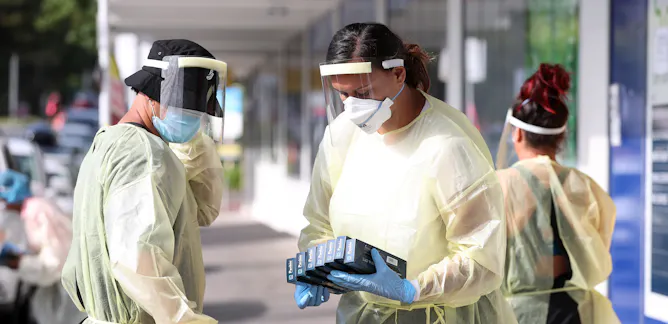
As Omicron cases soar in New Zealand, most people can still avoid getting infected. Even if you share a household with an infected person, catching the virus is not at all inevitable.
Te Kunenga ki Pūrehuroa – Massey University

Te Kunenga ki Pūrehuroa Massey University is a true “University of New Zealand”, with three North Island campuses at Auckland, Manawatū and Wellington and more than 32,000 students studying either on one of the campuses or by distance learning from throughout the world.
Set up as an agricultural college in 1927 it is now a comprehensive university with qualifications in humanities and social sciences, business, creative arts, health and sciences.
Links
Articles

Not everyone voicing suspicion of mainstream media is a conspiracy theorist – we need to guard against the far right monopolising the terms of media criticism.

New Zealand has a high concentration of extremist alt-right groups relative to similar countries. The challenge now is to head off hate crime and violence.
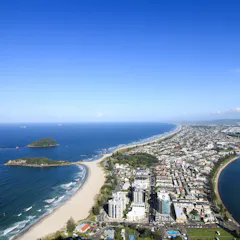
Globally, about a billion people living in coastal cities are at risk of climate hazards. The impacts go well beyond the coast and could affect us all, with disruptions to supply chains and trade.
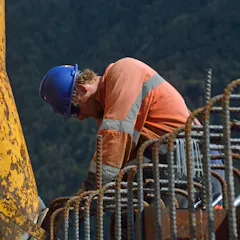
The construction sector has long suffered from lack of co-ordination, poor planning and vulnerability to shocks. If the country’s building and infrastructure needs are to be met, that has to change.
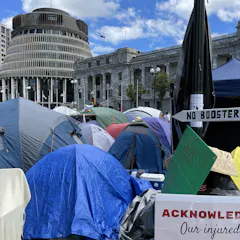
As the government approaches the mid-term mark, is the protest in parliament grounds a PR boost for Jacinda Ardern or a sign of declining political consensus?

The tertiary sector’s air miles may be dominated by a small number of hyper-mobile senior academics, but studies show virtual conferences can improve diversity, career development and emissions.
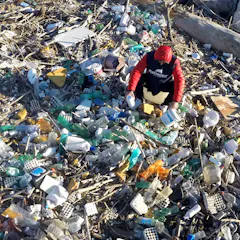
Global plastics production is set to double by 2040. The upcoming UN meeting is a chance for New Zealand to stake a stronger position on a proposed treaty to reign in plastic pollution.
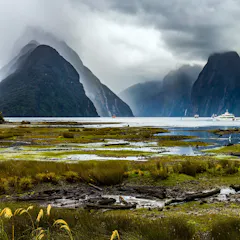
Conservation efforts can result in conflict between different interest groups, but outcomes could improve if we allowed a greater degree of public participation, beyond mere consultation.
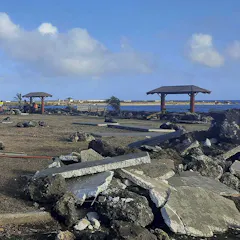
As Fiji did after 2016’s catastrophic cyclone, Tonga will likely face challenges with building materials and costs, and low levels of technical expertise. But these can be overcome.

The pathway for foreign doctors to practise in New Zealand is neither easy nor very fair, meaning an over-stretched health system is missing out on valuable expertise.

COVID-19 lockdowns have kept researchers from their labs and libraries and delayed projects. What can be done to reduce the likely impacts?
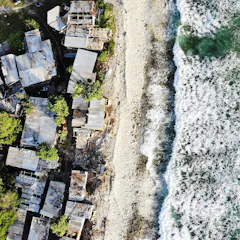
What should climate scientists do in the face of ever rising emissions? They could continue providing more evidence, join climate activists – or stop work in protest against government inaction.
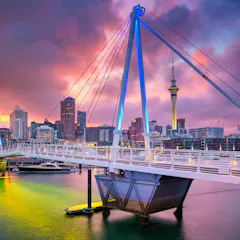
There are many reasons to be pessimistic about the future – but what if we got it right? Here’s the case for optimism.

Like it or not, many Pākehā New Zealanders are the beneficiaries of a colonial settlement system based on dispossession and alienation. How can the past and present be reconciled honestly?

Most people continue using their car because it’s convenient, but few consider the full cost of depreciation and maintenance. Carbon dioxide emissions rarely factor in people’s choice of transport.

Once a broad political church, the National Party has become a house divided against itself. New leader Christopher Luxon faces huge challenges uniting both the party and its wider congregation.
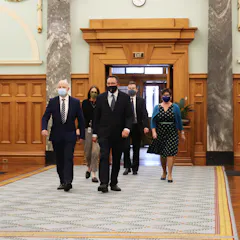
New Zealand’s National MPs are set to elect their fifth leader in just four years to take on Jacinda Ardern’s government. What “habits of the unsuccessful” should they avoid in their next leader?
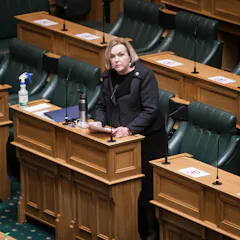
Representative democracies require functional governments but they also need strong oppositions. At the moment, New Zealand has one of these things but not the other.
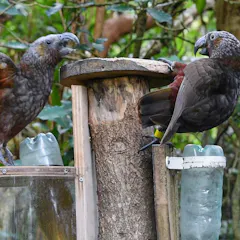
New Zealanders are increasingly concerned about the state of the environment, but
many don’t feel a strong enough connection to nature to become involved in conservation projects.
Authors
-

Lecturer in Aviation Management, Te Kunenga ki Pūrehuroa – Massey University
-
Senior Research Advisor, Toi Rauwhārangi College of Creative Arts, Te Kunenga ki Pūrehuroa – Massey University
-
Senior Lecturer in Critical Popular Music Studies, Te Kunenga ki Pūrehuroa – Massey University
-
Associate Professor, School of Music and Screen Arts, Te Kunenga ki Pūrehuroa – Massey University
-
Professor of Disaster and Emergency Management, Te Kunenga ki Pūrehuroa – Massey University
-
Research associate, Te Kunenga ki Pūrehuroa – Massey University
-
Distinguished Professor of Infectious Disease Epidemiology and Public Health, Te Kunenga ki Pūrehuroa – Massey University
-
Distinguished Professor, College of Humanities and Social Sciences, Te Kunenga ki Pūrehuroa – Massey University
-
Professor of Politics, Te Kunenga ki Pūrehuroa – Massey University
-
Professor in Applied Mathematics, Te Kunenga ki Pūrehuroa – Massey University
-
Assistant Lecturer in Politics and International Relations, Te Kunenga ki Pūrehuroa – Massey University
-
Professor in Indigenous and International Development, Te Kunenga ki Pūrehuroa – Massey University
-
Public Health Researcher, Te Kunenga ki Pūrehuroa – Massey University
-
Research Officer in Drug Policy, SHORE & Whariki Research Centre, Te Kunenga ki Pūrehuroa – Massey University
-
Professor of Organisational Studies, Te Kunenga ki Pūrehuroa – Massey University