
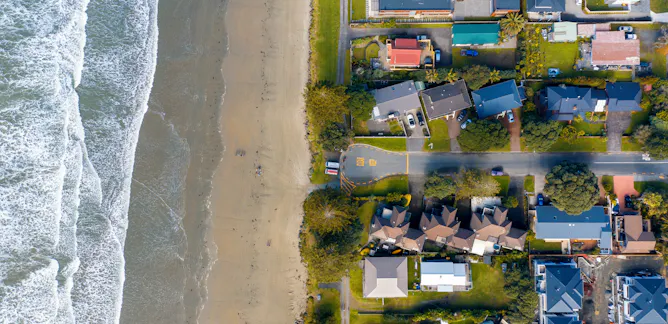
Putting affected people and communities at the centre of difficult relocation decisions must be a priority under laws that replace the old Resource Management Act.
Te Kunenga ki Pūrehuroa – Massey University

Te Kunenga ki Pūrehuroa Massey University is a true “University of New Zealand”, with three North Island campuses at Auckland, Manawatū and Wellington and more than 32,000 students studying either on one of the campuses or by distance learning from throughout the world.
Set up as an agricultural college in 1927 it is now a comprehensive university with qualifications in humanities and social sciences, business, creative arts, health and sciences.
Links
Articles

A veterinary scientist by training, Massey University Vice-Chancellor Jan Thomas has turned to the humanities to learn more about Māori. Here she explains why.

Simon Bridges’s attack on New Zealand’s ‘wokester’ police commissioner might work as politics, but it fails to grasp the nature of policing in an open society.
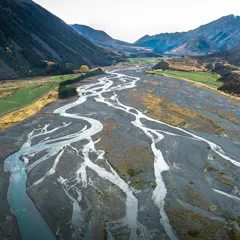
Given climate change predictions of more extreme floods in New Zealand, it’s time to change management practices to work with a river, allowing it room to move and its channels to adjust.

Increasing plastic pollution in southern hemisphere oceans adds a deadly threat to albatrosses, already among the world’s most imperiled seabirds with 73% of species threatened with extinction.
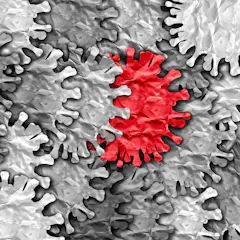
The rapid increase in the number of infections is the most obvious reason why new variants of the virus have been emerging recently. Case numbers doubled in just two months at the end of 2020.

Multiple borders have always existed in Aotearoa New Zealand. We just weren’t as aware of them before the pandemic started locking down communities.

Musical and vocational training must move beyond making students ready for work — they must also be empowered to deal with an industry overdue for reform.

Emissions from road transport in New Zealand have doubled since 1990, and the Climate Change Commission recommends sweeping changes to switch to electric transport options.

The pandemic delivered a political year like no other. The risk now is that the country returns to a ‘normal’ that wasn’t working to start with.

Almost a century ago, New Zealand and Australia were at the forefront of an environmental crisis that forewarned of humanity’s global impact – erosion. It left its mark on culture.
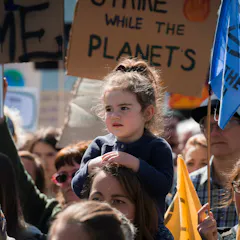
New Zealand is one of few countries to enshrine a zero-carbon goal in law, but current climate policies don’t keep up with that ambition.
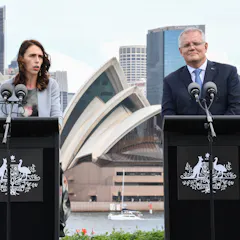
In a major essay, senior Australian political correspondent Laura Tingle suggests her country could still learn from the New Zealand ‘experiment’.

Research reveals a desire by Pacific tourism workers for genuine change once travel starts again, including better wages and conditions and greater local control of operations.

L’analyse cycle de vie des emballages alimentaires omet souvent l’impact et la toxicité éventuelle des fuites de plastique dans l’environnement. Ce qui donne aux plastiques un avantage injustifié.
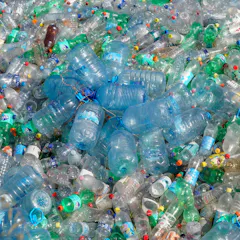
Life-cycle assessments of food packaging often omit the impact and possible toxicity of plastics leaking into the environment. Excluding these factors gives plastics an unjustified advantage.

Donald Trump may be on the way out, but ‘Trumpism’ will remain a political force. Could it ever take hold in New Zealand?

The new cabinet may be diverse and inclusive, but Labour also has unprecedented executive and legislative control.

A reliance on local customary knowledge and practices helped people make a living and strengthened relationships with family and friends.
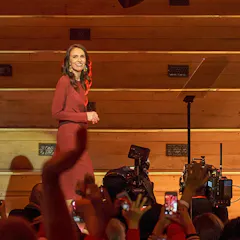
Leaders need to focus on minimizing the COVID-19 harm to both lives and livelihoods if they’re to win support from the electorate.
Authors
-

Lecturer in Aviation Management, Te Kunenga ki Pūrehuroa – Massey University
-
Senior Research Advisor, Toi Rauwhārangi College of Creative Arts, Te Kunenga ki Pūrehuroa – Massey University
-
Senior Lecturer in Critical Popular Music Studies, Te Kunenga ki Pūrehuroa – Massey University
-
Associate Professor, School of Music and Screen Arts, Te Kunenga ki Pūrehuroa – Massey University
-
Professor of Disaster and Emergency Management, Te Kunenga ki Pūrehuroa – Massey University
-
Research associate, Te Kunenga ki Pūrehuroa – Massey University
-
Distinguished Professor of Infectious Disease Epidemiology and Public Health, Te Kunenga ki Pūrehuroa – Massey University
-
Distinguished Professor, College of Humanities and Social Sciences, Te Kunenga ki Pūrehuroa – Massey University
-
Professor of Politics, Te Kunenga ki Pūrehuroa – Massey University
-
Professor in Applied Mathematics, Te Kunenga ki Pūrehuroa – Massey University
-
Assistant Lecturer in Politics and International Relations, Te Kunenga ki Pūrehuroa – Massey University
-
Professor in Indigenous and International Development, Te Kunenga ki Pūrehuroa – Massey University
-
Public Health Researcher, Te Kunenga ki Pūrehuroa – Massey University
-
Research Officer in Drug Policy, SHORE & Whariki Research Centre, Te Kunenga ki Pūrehuroa – Massey University
-
Professor of Organisational Studies, Te Kunenga ki Pūrehuroa – Massey University