
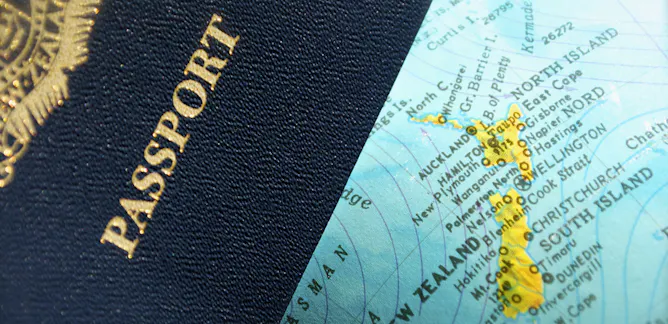
Can a short multiple-choice test encourage new citizens to connect with a sense of national identity, or does it risk oversimplifying complex, contested ideas?
Te Kunenga ki Pūrehuroa – Massey University

Te Kunenga ki Pūrehuroa Massey University is a true “University of New Zealand”, with three North Island campuses at Auckland, Manawatū and Wellington and more than 32,000 students studying either on one of the campuses or by distance learning from throughout the world.
Set up as an agricultural college in 1927 it is now a comprehensive university with qualifications in humanities and social sciences, business, creative arts, health and sciences.
Links
Articles

Surveys may overestimate belief in conspiracy theories because of trolls and jokers – but genuine believers can still cause real-world harm.

Doctors have to balance finite resources and uncertain evidence to decide who should get treatments. The decisions are not always based on need or clinical benefits.

Two bills before parliament will replace the old census with a new and largely untested system. Such a big change deserves more expert and public scrutiny.

Timmy, the humpback whale repeatedly restranding in shallow waters in the Baltic Sea, has reignited a heated debate about when to intervene, and when not to.
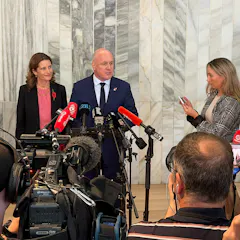
Research shows the most effective leaders are good listeners and aware of their own biases. Above all, people must believe they are ‘one of us’.
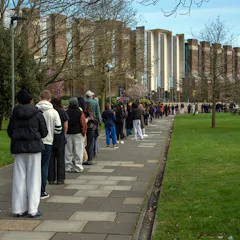
Teens and young adults are more likely to be asymptomatic carriers of the bacterium that cause meningococcal disease, making university students a high-risk group.

The prevalence of long COVID is more than a hundred times greater than the definition of a rare disease – yet there are no specific health services or support.

Kiwis are using artificial intelligence in growing numbers, but trust is low. Could the push toward safer, more responsible AI offer NZ an economic opportunity?
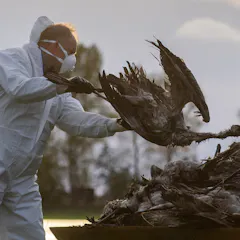
Bird flu is spreading globally and getting closer to New Zealand. Its arrival may be a matter of when, not if – and the risks are significant.

Media rituals based on reporting numbers and trends help us talk about complex issues using simple measures of progress or decline.

New Zealand’s electricity generation now accounts for only 5% of emissions, but oil use in transport is on the rise, outweighing the shift to electric vehicles.

Wholesale and street prices for meth have dropped sharply over seven years, but it’s as potent as ever. Are new global supply routes to blame?

Because of the way generative AI works, there is no real way to prevent false information being presented as truth – or to correct it permanently.

The recently introduced English Language Bill will change little, but highlights a deeper
issue. NZ still lacks a coherent framework for language policy.
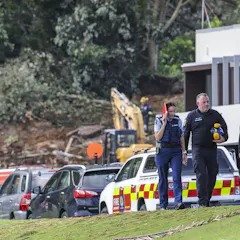
After a series of extreme weather events over the past month, NZ has been reminded that disasters aren’t just acts of nature.

NZ appears to be widening its defence and surveillance capabilities across the region, raising questions about strategic alignment, transparency and independence.
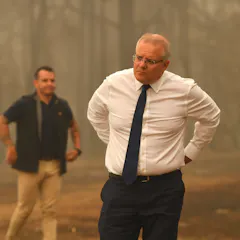
In the past, crisis leadership has skewed towards displays of strength over compassion. New research suggests something is shifting.

Christmas can be joyful, chaotic and exhausting all at once. Three management experts share workplace leadership lessons to help us enjoy the festive season.

Adaptation and planned relocation are unaffordable for at-risk communities and tangata whenua. Government cost-sharing is essential.
Authors
-

Lecturer in Aviation Management, Te Kunenga ki Pūrehuroa – Massey University
-
Senior Research Advisor, Toi Rauwhārangi College of Creative Arts, Te Kunenga ki Pūrehuroa – Massey University
-
Senior Lecturer in Critical Popular Music Studies, Te Kunenga ki Pūrehuroa – Massey University
-
Associate Professor, School of Music and Screen Arts, Te Kunenga ki Pūrehuroa – Massey University
-
Professor in Fatigue Management and Sleep Health/Associate Dean, Research, Te Kunenga ki Pūrehuroa – Massey University
-
Research associate, Te Kunenga ki Pūrehuroa – Massey University
-
Distinguished Professor of Infectious Disease Epidemiology and Public Health, Te Kunenga ki Pūrehuroa – Massey University
-
Distinguished Professor, College of Humanities and Social Sciences, Te Kunenga ki Pūrehuroa – Massey University
-
Professor of Politics, Te Kunenga ki Pūrehuroa – Massey University
-
Professor in Applied Mathematics, Te Kunenga ki Pūrehuroa – Massey University
-
Assistant Lecturer in Politics and International Relations, Te Kunenga ki Pūrehuroa – Massey University
-
Professor in Indigenous and International Development, Te Kunenga ki Pūrehuroa – Massey University
-
Public Health Researcher, Te Kunenga ki Pūrehuroa – Massey University
-
Research Officer in Drug Policy, SHORE & Whariki Research Centre, Te Kunenga ki Pūrehuroa – Massey University
-
Professor of Organisational Studies, Te Kunenga ki Pūrehuroa – Massey University