

New Zealand’s capital requirements are meant to ensure banks survive a 1-in-200-year event. The next Reserve Bank governor will need to weigh the costs of relaxing the rules.
Te Kunenga ki Pūrehuroa – Massey University

Te Kunenga ki Pūrehuroa Massey University is a true “University of New Zealand”, with three North Island campuses at Auckland, Manawatū and Wellington and more than 32,000 students studying either on one of the campuses or by distance learning from throughout the world.
Set up as an agricultural college in 1927 it is now a comprehensive university with qualifications in humanities and social sciences, business, creative arts, health and sciences.
Links
Articles

Though it often addresses men, the Quran has much to say about women: from marriage and divorce to property rights.

Supporters of a four-year term say it would give governments more time to make better policy. But without deeper changes, it may only increase political uncertainty.

Hospitalisations and deaths attributed to COVID have dropped significantly since a peak in 2022. But a new variant could still reverse the trend quickly.

Children placed in state care from 1950 to 1999 have had significantly shorter average life expectancies than the wider population, this new analysis shows.
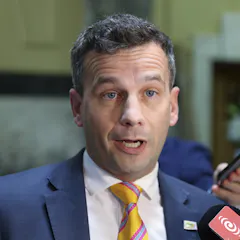
The ACT Party leader believes government assets should provide a return or be sold. But a majority of New Zealanders are consistently opposed to more privatisation.

The prime minister’s state-of-the-nation focus on economic growth, particularly in mining and tourism, was long on aspiration and short on realistic expectations.
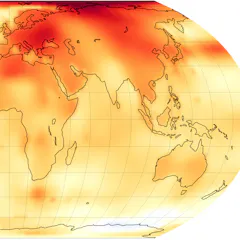
The Climate Change Commission identified three major changes since 2019: other countries are doing more, impacts are becoming more severe, and delaying action shifts costs to future generations.
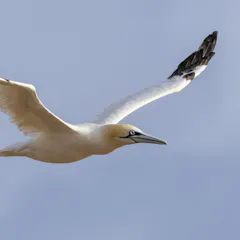
Conservation volunteers could provide a crucial defence line against bird flu outbreaks in New Zealand by ensuring early detection.
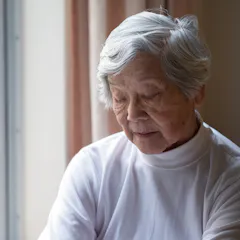
Older Chinese migrants often remain highly dependent on younger family members to care for them. Their withdrawal can leave the elders unable to meet their basic needs.

As the keepers of sensitive data, tax records and payroll information, accountants play a key role in protecting businesses from cybercrime.

While many people are comfortable with using facial recognition technology on their phone, they are less happy when it’s the government or private groups identifying them.

New Zealand’s health and safety law covers mental health. But new research shows how little it is understood by those in management positions – leaving workers vulnerable.
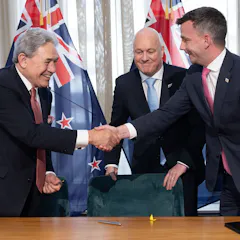
The tail wagging the dog is a risk in any coalition arrangement. But with two tails wagging vigorously, the National-led government is testing the limits of consensus and policy coherence.

Māori and Pacific women are particularly disadvantaged by the BMI limit on access to public fertility treatment. Research shows Polynesians are much leaner than Europeans at significantly higher BMIs.
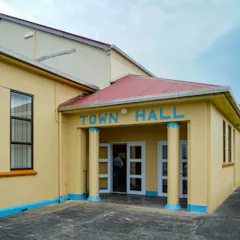
If New Zealand wants to see real improvement in community-level services and infrastructure, we need to finally make a decision on the true purpose of regional, city and district councils.

Big EdTech is increasingly filling a gap left by university underfunding. But tertiary stakeholders must question whether such “solutions” really contribute to a university education.

We asked more than 20 New Zealand literary experts, including Catherine Chidgey, Tina Makereti and Whiti Hereaka, to share their favourite NZ books published since 2000. What did they choose?

Drug cartels selling drugs in NZ and Australia are using Fiji as a waypoint – where kids as young as nine are being treated for meth addiction, while crime and HIV rates are climbing. What can be done?

New Zealand’s bilingual children often lose their mother tongue by the time they leave school. But there are fears that use of English-based decoding in structured literacy will hasten this decline.
Authors
-

Lecturer in Aviation Management, Te Kunenga ki Pūrehuroa – Massey University
-
Senior Research Advisor, Toi Rauwhārangi College of Creative Arts, Te Kunenga ki Pūrehuroa – Massey University
-
Senior Lecturer in Critical Popular Music Studies, Te Kunenga ki Pūrehuroa – Massey University
-
Associate Professor, School of Music and Screen Arts, Te Kunenga ki Pūrehuroa – Massey University
-
Professor of Disaster and Emergency Management, Te Kunenga ki Pūrehuroa – Massey University
-
Research associate, Te Kunenga ki Pūrehuroa – Massey University
-
Distinguished Professor of Infectious Disease Epidemiology and Public Health, Te Kunenga ki Pūrehuroa – Massey University
-
Distinguished Professor, College of Humanities and Social Sciences, Te Kunenga ki Pūrehuroa – Massey University
-
Professor of Politics, Te Kunenga ki Pūrehuroa – Massey University
-
Professor in Applied Mathematics, Te Kunenga ki Pūrehuroa – Massey University
-
Assistant Lecturer in Politics and International Relations, Te Kunenga ki Pūrehuroa – Massey University
-
Professor in Indigenous and International Development, Te Kunenga ki Pūrehuroa – Massey University
-
Public Health Researcher, Te Kunenga ki Pūrehuroa – Massey University
-
Research Officer in Drug Policy, SHORE & Whariki Research Centre, Te Kunenga ki Pūrehuroa – Massey University
-
Professor of Organisational Studies, Te Kunenga ki Pūrehuroa – Massey University