
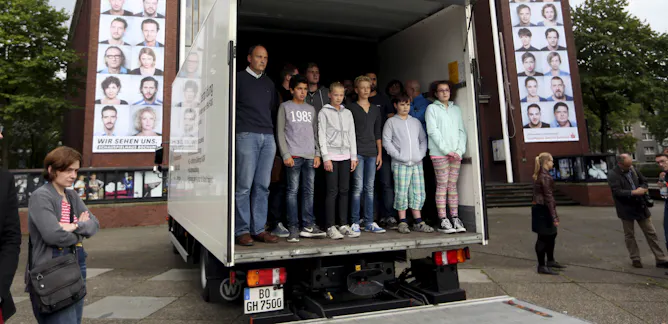
In Germany – a country where going to the theater is a deeply ingrained cultural tradition – the stage is a place to confront pressing political issues.
Stanford University

Located between San Francisco and San Jose in the heart of Silicon Valley, Stanford University is recognized as one of the world’s leading research and teaching institutions. Stanford is particularly noted for its openness to multidisciplinary research, not only within its schools and departments, but also in its laboratories, institutes, libraries and research centers.
Links
Articles

Double-majoring is thought to broaden your horizons and give you more career options. A new look at seven years of U.S. census data tells us that there may be a financial benefit as well.
The Orphan Drug Act was enacted 34 years ago to encourage the development of drugs for rare diseases. Drug companies were guaranteed seven years of exclusivity. Then the rush was on to run up prices.

You might think that trolling on the internet is done by a small, vocal minority of sociopaths. But what if all trolls aren’t born trolls? What if they are ordinary people like you and me?

Basic safeguards are not enough to protect against insider threats. It requires rethinking how to overcome the biases that cause us to dismiss the danger.

You might think you’re anonymous when you’re browsing the web. But a new study shows that browsing history can often be tied to your real-world identity.
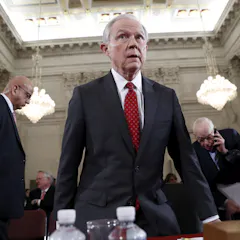
When serving as Alabama’s attorney general, Sessions supported a bill that would have expanded the state’s death penalty – even past the point where it was constitutional.
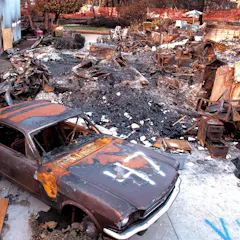
Infrared cameras are the technology of choice for detecting gas leaks across the US. New research shows that these cameras can be quite inaccurate, and leaks can persist without being detected.

Cab drivers have long discriminated against African-Americans and other minority groups. New research suggests ride-hailing apps haven’t solved the problem.
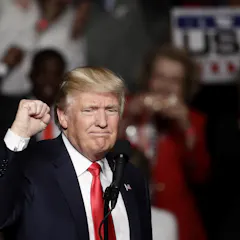
President-elect Trump has said the issue of gay marriage is settled, yet he wants to overturn Roe v. Wade, which upheld a woman’s right to abortion. What will he do once he becomes president?
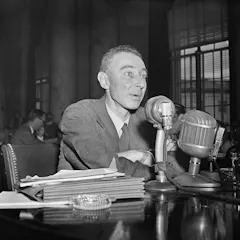
A historian of science and technology says Trump team’s request for names of Department of Energy employees working on climate change recalls worst excesses of ideology-driven science in government.

Methane concentrations in the atmosphere are growing at a faster rate than any time in the past 20 years.

The ‘war on coal’ is not really a result of onerous regulations but a combination of market forces over which a Trump administration has limited control.

As self-driving cars proliferate, we need a system to handle difficult situations.
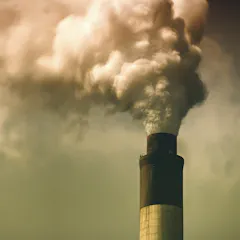
For three years, carbon emissions from fossil fuels have grown little or not at all, opening a window of opportunity to halt climate change.
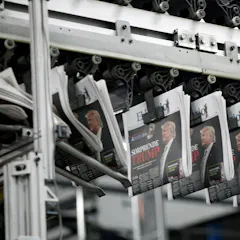
Four of our economic scholars weigh in on Trump’s legislative agenda, healing the divide, uncertainty and something known as the ‘presidential puzzle.’
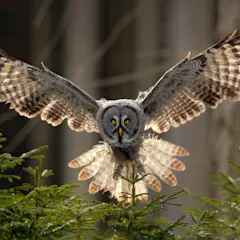
The jury is in and the debate is over: Earth’s sixth great extinction has arrived.
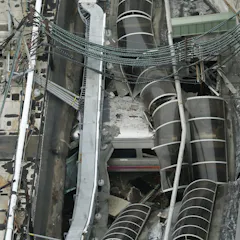
The New Jersey Transit train that crashed in Hoboken didn’t have a mandated auto-stopping safety system. Why not?
Algorithms that learn from large data sets can pick up inherent social biases. That could perpetuate the biases, or even worsen them.
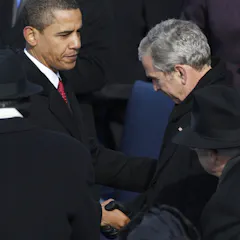
It’s true that sophisticated hackers may be able to tilt the presidential election. But the more likely threat to democracy comes from sore losers who sow doubt about voting integrity.
Authors
-

Senior Research Scholar at the Center for International Security and Conflict, Stanford University
-
Ph.D. Candidate in Finance, Stanford University
-
Doctoral Candidate, Stanford University
-
Research Scholar, Indo-Pacific Security, Stanford University
-
Deputy Director, Center for Ocean Solutions, Stanford University
-
Professor of Behavioral Sciences, Stanford University
-
Clinical Associate Professor of Infectious Diseases, Stanford University
-
Professor of Bioengineering and of Psychiatry and Behavioral Sciences, Stanford University
-
Professor of Computer Science, Stanford University
-
Research Affiliate, Stanford Graduate School of Business, Stanford University
-
Science Communicator, Stanford University
-
Former Stanford Impact Labs Postdoctoral Fellow, Stanford University
-
Emeritus Professor of Education, Stanford University
-
Associate Scientist, SLAC Computational Beamline, Stanford University
-
Professor of Particle Physics and Astrophysics, Physics Department, Stanford University