
Herbarium cabinets lock away valuable plant data that needs to be mobilised through digitisation.
South African National Biodiversity Institute

The South African National Biodiversity Institute (SANBI) leads and coordinates research, and monitors and reports on the state of biodiversity in South Africa. The institute provides knowledge and information, gives planning and policy advice and pilots best-practice management models in partnership with stakeholders. SANBI engages in ecosystem restoration and rehabilitation, leads the human capital development strategy of the sector and manages the National Botanical Gardens as ‘windows’ to South Africa’s biodiversity for enjoyment and education.
Links
Articles
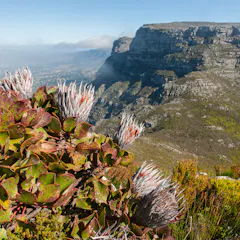
The latest checklist of Table Mountain flora shows that Cape Town is still a global hotspot for threatened flowering plants.
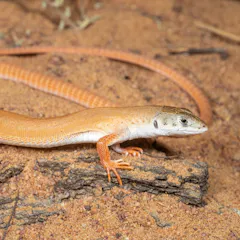
Researchers in South Africa have rediscovered a lost lizard, uncovered new localities of species and found that some are in danger of extinction.
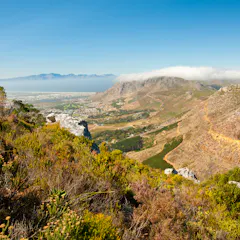
Hundreds of ancient fynbos species could regrow and restore a former pine plantation on Cape Town’s Table Mountain, but only if the remaining pine trees are removed.
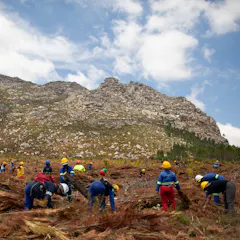
Burning invasive plants on site creates scars and prevents natural vegetation from growing back quickly.

Environmental scientists have compiled the first list of wetlands in the park. This will be useful to measure the effects of climate change.
Plus de 700 millions d'hectares de terres en Afrique ont été dégradés par l'activité humaine. Chacun peut contribuer à la restauration écologique.
More than 700 million hectares of land in Africa has been degraded by human activity. Everyone can get involved in restoring the ecology.

There are 401 indigenous terrestrial reptiles in South Africa.
More tools are available to collate biodiversity data that can be used for conservation decision making.
The research conducted through biobanks can help to address challenges like climate change and food security.

There are calls for measures to reduce the burden of red tape and promote and facilitate biodiversity research in South Africa.
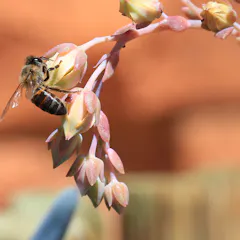
Honeybees are crucial for pollinating crops and plants. They need good forage resources to do this and these resources are under threat in South Africa.
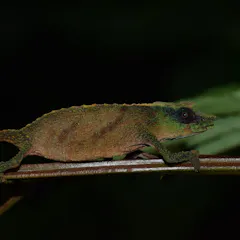
The decline of forest creatures like the Chapman’s chameleon are warning signs that forests are losing integrity.
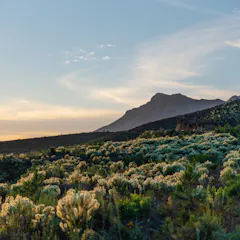
Cape Town’s new climate strategy is a good start. But it falls short when it comes to nature.
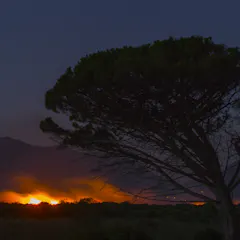
The danger of fires in the Cape region this season is partly dependent on how the Fynbos has been managed over the past few decades.

Research shows that managed honey bees may pose a threat to free roaming honey bee populations.
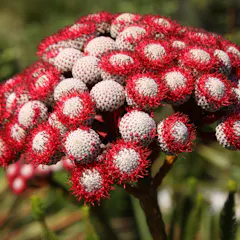
There is good news for plant conservation in South Africa and internationally.
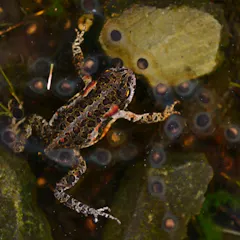
The Rose’s mountain toadlet adapts its breeding habits according to the weather.
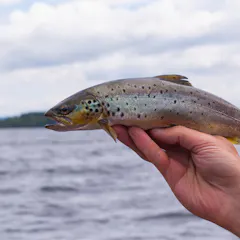
Regulating species in South Africa is difficult. But identifying those creating the greatest tension, would shift focus on the most destructive species.
Authors
-

Plant taxonomist at the National Herbarium, South African National Biodiversity Institute
-
e-Flora Coordinator, South African National Biodiversity Institute
-
Director, Collections Management, South African National Biodiversity Institute
-
Senior scientist, South African National Biodiversity Institute
-
Lead - Freshwater Biodiversity Programme, South African National Biodiversity Institute
-
Scientist, South African National Biodiversity Institute
-
Scientist, South African National Biodiversity Institute
-
Researcher at the South African National Biodiversity Institute, South African National Biodiversity Institute