

A robust national security environment results in serious protocols and relationships for dealing with something as sensitive as the Michael Chong affair. It doesn’t currently exist in Ottawa.
Queen's University, Ontario

Established in 1841 and one of Canada’s oldest degree-granting institutions, Queen’s today is a mid-sized university that provides a transformative student learning experience within a research-intensive environment A member of the prestigious U15 group of research-intensive Canadian universities, Queen’s conducts leading-edge research in areas of critical concern. Queen’s is also a member of the Matariki Network, an international group of research-intensive universities with a strong shared commitment to the undergraduate and graduate student learning experience.
Links
Articles

As toxic water continues to spill from tailings ponds across mining developments, decades of scientific research provides evidence of how wildlife will be affected.

A guaranteed basic income is a promising tool for contributing to sustainability and justice across agriculture and fishing sectors.

National Day of Mourning should be used to challenge misconceptions about occupational health and safety, and advance safer workplaces for Canadians.

When Justin Trudeau raised the issue of rape victims during a recent argument with an anti-abortionist, he inadvertently suggested there are acceptable and unacceptable reasons to abort.

Canada’s commitment to halt biodiversity loss can only be realized by weaving together Indigenous and non-Indigenous knowledge.

There is a distinction between deliberate use of a song to support a particular political campaign, and incidental music in the background at a social function hosted by a political party.

Experts on the history of sexuality in Canada say recent changes to the Expungement Act don’t go far enough, and they urge Canadians to reject attempts to divide marginalized communities.

Teachers in a study identify ‘grading obsession’ as a top challenge in education. Some are fighting back and dedicating class time to student self-assessment and peer assessment activities.

Days of international observance recognize challenges facing marginalized groups or society as a whole, draw attention to them and create unity and mobilization around those problems.

Understanding complex and contextual differences in grading across cultures and countries is important. Only in doing so can we interpret student achievement based on grades in a fair and valid way.

Educators need to carefully consider ChatGPT and issues of academic integrity to move toward an assessment system that leverages AI tools.

Researchers are key to Canada’s capacity to create a high-tech economy, build the biomedical sector and seed entrepreneurial activity, but they can’t do it without research funding.

Far from Canada being back as a major player on the world stage, its presence has been diminished under Prime Minister Justin Trudeau.

The two West African countries can help each other avert flooding disasters.
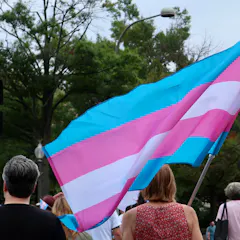
The closure of the virtual Connect-Clinic means fewer trans and non-binary people will get the vital health-care services they need.

L’avenir de notre système de santé dépend du recrutement et de la rétention d’un personnel soignant et hautement qualifié. Il est essentiel de créer des environnements où ils se sentent soutenus et en sécurité.

News reports about accidents can deliver important moral lessons and remind us to value life.
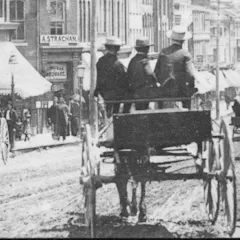
A collaborative curatorial project is cherishing every little relational trace of Black lives found in archives in a city long defined by histories of Canadian whiteness.

Repeated storytelling from elderly relatives doesn’t necessarily always signal age or cognitive decline. It’s about conveying memories and values to a new generation.
Authors
-

PhD Student in Education, Queen's University, Ontario
-
Professor, Jarislowsky-Deutsch Chair in Economic & Financial Policy, and Director of the John Deutsch Institute for the Study of Economic Policy, Department of Economics, Queen's University, Ontario
-
Assistant Professor, Department of Geography and Planning, Queen's University, Ontario
-
Smith Professor of Equity and Inclusion in Business, Queen's University, Ontario
-
Assistant Professor of Gastroenterology, Queen's University, Ontario
-
PhD Student in Education, Queen's University, Ontario
-
Assistant Professor, Public Administration, Queen's University, Ontario
-
Assistant Professor of Finance, Queen's University, Ontario
-
Associate Dean, Indigenous Health, York University, Canada; Queen's University, Ontario
-
Professor of Special and Inclusive Education, Queen's University, Ontario
-
PhD Candidate, Queen's University, Ontario
-
PhD Candidate, Education, Queen's University, Ontario
-
PhD Student in History, Queen's University, Ontario
-
Associate Professor and Toller Family Fellow of Finance, Queen's University, Ontario
-
Associate Professor of Human-Centered Computing, Queen's University, Ontario