

Reducing food waste by feeding hungry Canadians is a simplistic solution that is deeply problematic and morally distressing.
Queen's University, Ontario

Established in 1841 and one of Canada’s oldest degree-granting institutions, Queen’s today is a mid-sized university that provides a transformative student learning experience within a research-intensive environment A member of the prestigious U15 group of research-intensive Canadian universities, Queen’s conducts leading-edge research in areas of critical concern. Queen’s is also a member of the Matariki Network, an international group of research-intensive universities with a strong shared commitment to the undergraduate and graduate student learning experience.
Links
Articles

If hockey is to be a sport that brings people together and fosters what’s best about Canada, it needs to reckon with Canada’s – and hockey’s – history of racism and settler colonialism.
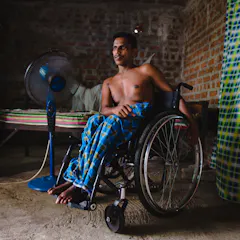
This spring marks the 25th anniversary of the Rwandan genocide and the 10th year since the Tamil genocide in Sri Lanka. The world knows what happened in Rwanda. What about Sri Lanka?

Abuses of disability diagnoses cheat students with disabilities who are now more likely to face skepticism about their diagnoses.

Un urgentologue explique comment il a introduit auprès de ses jeunes patients qui s'automutilaient la technique de la pleine conscience.

Mother’s Day was originally a call for peace and justice. Some are advocating it be returned to a day of action and reflection.
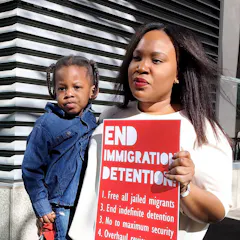
Migration governance without immigration detention is desirable and achievable. Eliminating all detention will universally benefit citizens, migrants and everyone in between.

A doctor explains how he introduces mindfulness to self-harming youth in the emergency room.

The idea of the Green New Deal has been around for more than a decade. Why all the fuss about it now?

Understanding the evolutionary roots of what draws us to delusions of legacy and distractions of leisure will help us address the environmental challenges of the 21st century.
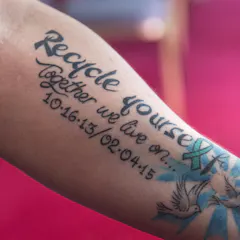
Most Canadians support organ donation after death, but fewer than 25 per cent have registered to donate their organs. What can be done to encourage more registrations?

Many hate the fight against toxic masculinity because they don’t want to let go of male identity altogether. They don’t have to. They just have to let go of the bad parts.

A new federal program aims to reduce diesel-dependency in remote Indigenous communities. But are these communities able to do this on their own terms?
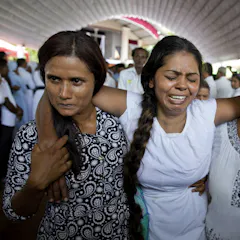
La puissance des cellules terroristes repose non pas sur leurs leaders mais plutôt sur leur complexité et leur fluidité. L’absence de direction au sens traditionnel du terme les rend difficile à contrer.

Without action, the amount of plastic waste produced globally could reach as much as 265 million tonnes per year by 2060.

Les tabous entourant le cycle menstruel empêchent les femmes qui souffrent de menstruations abondantes d'en parler ouvertement. Pourtant, le tiers d'entre elles ont ce problème.

A ‘learn local’ strategy, along with increased residency positions and the return of a rotating internship could go a long way towards improving Canada’s system of medical training.

The recent decision by the Ontario government to drastically cut funds for legal aid will cause hardship for many low-income residents of Ontario and for refugees claimants.

The Progressive Conservative government’s call to modernize education invokes long-standing rhetoric about progressive education in paradoxical ways.

In the run up to World Hemophilia Day, a clinician scientists shares what women need to know about heavy menstruation and bleeding disorders.
Authors
-

PhD Student in Education, Queen's University, Ontario
-
Professor, Jarislowsky-Deutsch Chair in Economic & Financial Policy, and Director of the John Deutsch Institute for the Study of Economic Policy, Department of Economics, Queen's University, Ontario
-
Assistant Professor, Department of Geography and Planning, Queen's University, Ontario
-
Smith Professor of Equity and Inclusion in Business, Queen's University, Ontario
-
Assistant Professor of Gastroenterology, Queen's University, Ontario
-
PhD Student in Education, Queen's University, Ontario
-
Assistant Professor, Public Administration, Queen's University, Ontario
-
Assistant Professor of Finance, Queen's University, Ontario
-
PhD student, Education, Queen's University, Ontario
-
Associate Dean, Indigenous Health, York University, Canada; Queen's University, Ontario
-
Professor of Special and Inclusive Education, Queen's University, Ontario
-
PhD Candidate, Education, Queen's University, Ontario
-
PhD Student in History, Queen's University, Ontario
-
Associate Professor and Toller Family Fellow of Finance, Queen's University, Ontario
-
Associate Professor of Human-Centered Computing, Queen's University, Ontario