

Canada’s systems of health funding, medical training and physician compensation need an overhaul – to support vital centres of medical research and complex care.
Queen's University, Ontario

Established in 1841 and one of Canada’s oldest degree-granting institutions, Queen’s today is a mid-sized university that provides a transformative student learning experience within a research-intensive environment A member of the prestigious U15 group of research-intensive Canadian universities, Queen’s conducts leading-edge research in areas of critical concern. Queen’s is also a member of the Matariki Network, an international group of research-intensive universities with a strong shared commitment to the undergraduate and graduate student learning experience.
Links
Articles

Canada’s boreal region faces bigger, hotter and more frequent wildfires that are increasingly unpredictable, but it lacks an investment in fire science that could help keep communities safe.

Financial institutions and stores judge our credit-worthiness based on how we handle our money. But we should be cautious of letting others compile our health data into a “wellness report.”

Neil Sedaka’s song “The Immigrant” was a top hit in 1975, but today it seems even more relevant, as debates rage in the United States over immigration, repatriation and racism.

Donald Trump is eroding American diplomacy and what’s known as soft power. Here’s how that may result in a new world order.

Ontario’s move to ignore the calls of the Truth and Reconciliation Commission to add Indigenous content to its history and social studies curriculum is foolish and dangerous.

Penelitian menunjukkan bahwa hasil kesehatan tidak sama untuk setiap jenis kelamin. Semua perempuan biologis tidak memiliki kerentanan yang sama terhadap penyakit. Begitu pula laki-laki biologis.

White supremacists push an agenda that have their followers believing they are in danger of extinction. But their ‘race suicide’ ideas are based on 100-year-old unscientific and racist research.

The Canadian government must undertake regular analysis of the drug shortage problem, if we are ever to develop sustainable solutions.

Bigender, gender fluid, cisgender? Emerging gender categorizations are important – for your health.

High CEO compensation angers the public, particularly when it doesn’t seemed tied to performance. But as a whole, trends in executive compensation are consistent with fundamental economic forces.

Canada’s national parks don’t need more visitors. They could use more scientists, and better science, to help conserve the country’s species.

Toronto’s fight against diptheria teaches us the powerful impact of public health campaigns – in persuading parents to vaccinate their children.

Research has shown that the most successful basketball coaches resist pressure to make changes during games. Choosing not to make a move is sometimes also the right call for business leaders.
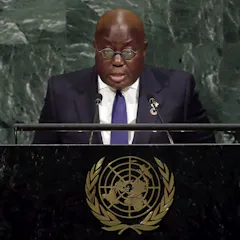
Ghanaians respond positively to financial appeals from churches compared to how they respond to paying taxes. Here’s how, and why, Ghana’s government should learn from religious groups.

The words “Christianity” and “progressive” don’t seem like they belong in the same sentence anymore. But to many progressive Christians, their religion has always been about social justice.

Competition between neighbours turns up the volume on inequality. Homicide and civil war may be the result.

‘Confessions of an English Opium-Eater’ is considered the first modern drug memoir. Many believe it is responsible for our romantic ideas of opium-based drug use today.

To improve wait times for surgery, Canada needs to fix its health-care system. Developing a national seniors’ strategy would be a good place to start.

A documentary filmmaker discusses her work which looks at the erased history of Palestinians in a Jerusalem neighbourhood in order to point to the possibility of a shared Jewish/Arab future.
Authors
-

PhD Student in Education, Queen's University, Ontario
-
Professor, Jarislowsky-Deutsch Chair in Economic & Financial Policy, and Director of the John Deutsch Institute for the Study of Economic Policy, Department of Economics, Queen's University, Ontario
-
Assistant Professor, Department of Geography and Planning, Queen's University, Ontario
-
Smith Professor of Equity and Inclusion in Business, Queen's University, Ontario
-
Assistant Professor of Gastroenterology, Queen's University, Ontario
-
PhD Student in Education, Queen's University, Ontario
-
Assistant Professor, Public Administration, Queen's University, Ontario
-
Assistant Professor of Finance, Queen's University, Ontario
-
PhD student, Education, Queen's University, Ontario
-
Associate Dean, Indigenous Health, York University, Canada; Queen's University, Ontario
-
Professor of Special and Inclusive Education, Queen's University, Ontario
-
PhD Candidate, Education, Queen's University, Ontario
-
PhD Student in History, Queen's University, Ontario
-
Associate Professor and Toller Family Fellow of Finance, Queen's University, Ontario
-
Associate Professor of Human-Centered Computing, Queen's University, Ontario