

La guerra en Ucrania es a la vez síntoma y causa de una crisis paralizante del sistema internacional. ¿Quién puede ponerle remedio?
PUC-Rio

A Pontifícia Universidade Católica do Rio de Janeiro (PUC-Rio) foi a primeira instituição privada de ensino superior do país, criada pela Igreja Católica. Foi fundada em 1940 pelo Cardeal D. Sebastião Leme e pelo Padre Leonel Franca S.J. Além de oferecer educação, a PUC-Rio assumiu a tarefa de auxiliar a comunidade, com base nos valores éticos cristãos, na solidariedade e no respeito humano. Representa um espaço de realização, superação de desafios e desenvolvimento de seus alunos.
A universidade funciona sob a supervisão da Companhia de Jesus e sob a autoridade suprema do Cardeal Arcebispo do Rio de Janeiro como seu Grão-Chanceler. É, portanto, uma universidade católica baseada em princípios humanísticos cristãos que acolhe alunos, funcionários, professores, pesquisadores e administradores de todas as religiões, nacionalidades, grupos étnicos e classes sociais.
O ponto de partida referencial da PUC-Rio é o desenvolvimento integral do ser humano em duas perspectivas principais: a filosófica e a teológica. Além disso, é uma instituição de pesquisa de doutorado que tem como foco principal o desenvolvimento do conhecimento acadêmico e científico. Possui 12.000 alunos de graduação e 2.500 alunos de pós-graduação.
PUC-Rio was the first private higher education institution in the country, created by the Catholic Church. It was founded in 1940 by Cardinal D. Sebastião Leme and Father Leonel Franca S.J. Beyond providing education, PUC-Rio undertook the task of assisting the community, based on Christian ethical values, solidarity and human respect. It represents a space for achievement, overcoming challenges and development of its students.
The university operates under the supervision of the Society of Jesus and under the supreme authority of the Cardinal Archbishop of Rio de Janeiro as its Grand Chancellor. It is thus a Catholic university based in Christian humanistic principles that welcomes students, staff members, teachers, researchers and administrators of all religions, nationalities, ethnic groups and social classes.
The referential starting-point of PUC-Rio is the complete development of the human being in two main perspectives: the philosophical and the theological. Besides that, it is a doctoral research institution that focuses primarily in the development of academic and scientific knowledge. It has 12,000 undergraduate students and 2,500 graduate students.
Links
Articles
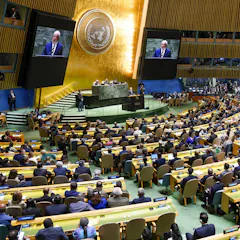
The war in Ukraine is both a symptom and a cause of a paralysing crisis in the international system. It is up to the Global South to reform the multilateral system.
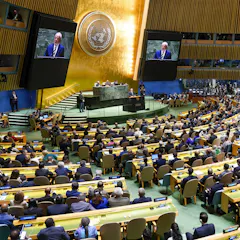
A guerra na Ucrânia é sintoma e causa de uma crise de paralisia do sistema internacional. Para os autores, cabe ao Brasil e ao Sul Global se empenharem para reformar o sistema multilateral.

A regulação, incluindo a criação de “santuários” livres, vai nos permitir colher os benefícios da IA e, ao mesmo tempo, oferecer proteções vitais para nossas capacidades cognitivas e privacidade.

Setting up AI-free ‘sanctuaries’ could allow us to reap the technology’s benefits while offering vital safeguards to our cognitive capacities and privacy.
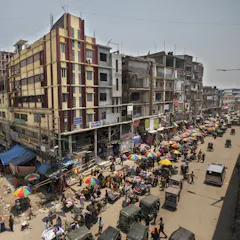
COVID-19 is spreading fast through not only the world’s richest cities but also its poorest, ravaging slum areas where risk factors like overcrowding and poverty accelerate disease transmission.
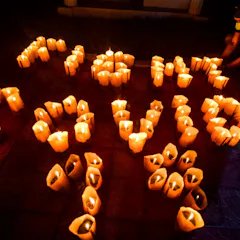
Il faut une réponse globale d'autant que les conséquences de l’épidémie seront beaucoup plus graves et durables dans les pays les plus pauvres.

The consequences will be far more severe and long lasting in poorer countries.

As evangelicalism spreads across Brazil, some of Rio de Janeiro’s most notorious gangs see minority religions as an affront to God. And they’re using guns to spread their gospel.
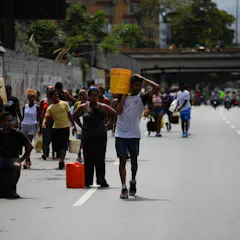
Citing security concerns, the US is evacuating its embassy in Caracas, where President Maduro blames the US for a calamitous power outage. Venezuela’s relations with Brazil are eroding quickly, too.
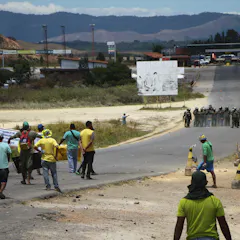
Brazil’s president has threatened military intervention in neighboring Venezuela, called its leader a ‘dictator’ and sent troops to the border. But Brazil’s military is quietly working to avoid war.
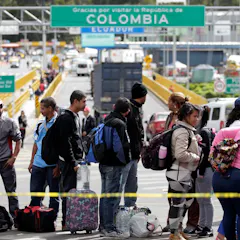
Unos 5.000 venezolanos huyen del hambre y el caos a diario, la crisis migratoria más grande de la historia de América Latina. Como no existen campos de refugiados, son las ciudades que los reciben.

Up to 5,000 refugees flee hunger and chaos in Venezuela each day – a migrant crisis rivaling Syria’s. Most arrive to poor South American border cities that are dangerously unprepared for the influx.

Since 2000, 8.8 million Brazilians have been displaced by disaster, development and crime, new data shows. Now Venezuelan migrants are pouring into the country. Still, Brazil has no real refugee plan.

As hard-line Pentecostalism spreads across Brazil, some drug traffickers in gang-controlled areas of Rio de Janeiro are using religion as an excuse to attack nonbelievers.
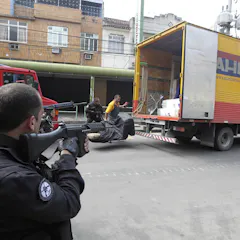
In Rio de Janeiro, a stray bullet kills or injures one person every seven hours.
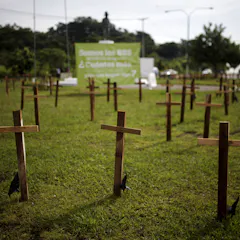
Latin America’s murder rate is the highest in the world, accounting for one in every four homicides on the planet.
Authors
-

Departamento de Química, PUC-Rio
-
Professor de Teoria do Estado e Direito Constitucional, PUC-Rio
-
Professor do Departamento de Informática, PUC-Rio
-
Professora Adjunta de Relações Internacionais, Universidade Federal Rural do Rio de Janeiro (UFRRJ); PUC-Rio
-
Cientista do Nosso Estado da FAPERJ e professor associado do Departamento de Química do Centro Técnico Científico, PUC-Rio
-
Professor Associado de Comunicação Política, PUC-Rio; University of Arizona
-
Professor de Finanças e Avaliação por Opções Reais no IAG, PUC-Rio
-
Mestre em Comunicação Social, PUC-Rio
-
Doutorando em Química, PUC-Rio
-
Doutor em Administração e pesquisador, PUC-Rio
-
Pesquisador do Núcleo de Estudos em Saúde e Gênero, PUC-Rio
-
Graduanda em Engenharia Química, PUC-Rio
-
Mestranda, PUC-Rio
-
Professora Associada do Instituto de Relações Internacionais da PUC-Rio e Pesquisadora do BRICS Policy Center, PUC-Rio
-
Professora Associada do Departamento de Serviço Social, PUC-Rio