
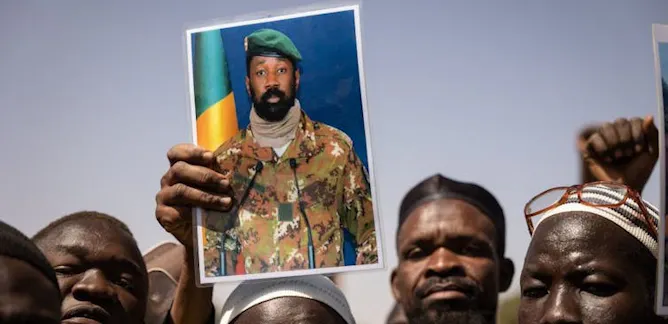
Le Mali traverse une période d'instabilité politique.
Norwegian Institute of International Affairs

The Norwegian Institute of International Affairs [NUPI] is a leading center for research on international issues in areas of particular relevance to Norwegian foreign policy.
We communicate research-based insights to the Norwegian public as well as to wider international audiences, and are committed to excellence, relevance and credibility in all our work. NUPI has three main pillars of research and expertise: security and risk, growth and development, and international order and governance. The Security and Risk pillar covers traditional security and defence policy and peace operations, as well as other aspects of risk in Norwegian foreign policy related to greater investment, travel and presence abroad. Growth and development focuses on the emerging powers, international economics and developmental issues. Order and governance covers the multilateral system, regional organizations and how diplomacy as an institution works and evolves.
At NUPI we undertake basic as well as applied research and advisory services, always striving for sound, theory-informed foundations in our work. A central principle is interdisciplinary collaboration, within the institute and with other institutions in Norway and abroad. We aim to be relevant both for professionals in international politics and for the general public in Norway. NUPI’s researchers participate actively in the public debate in their fields of expertise and make frequent appearances in the media.
NUPI was established by the Norwegian Parliament in 1959. The institute is a state body under the Ministry of Education and Research, but operates independently as a non-political institution in all its professional activities. Main sources of funding for research at NUPI are the Research Council of Norway, the Norwegian Ministry of Foreign Affairs and the Norwegian Ministry of Defence. Support also comes from private companies and international funding sources, such as the EU.
Links
Articles
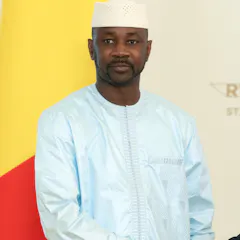
Mali is in a period of political uncertainty.
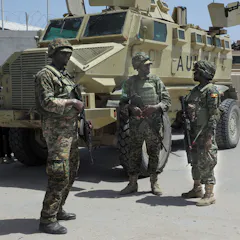
Le concept de la Force Africaine en Attente doit s'adapter aux réalités modernes des conflits.
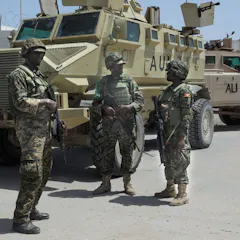
The concept of the African Standby Force needs to adapt to the modern realities of conflict.
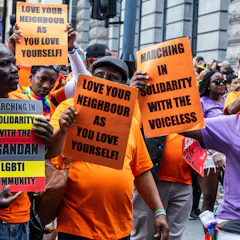
The World Bank’s funding freeze reflects a shift from policy imposition to indirect ways of controlling client nations.
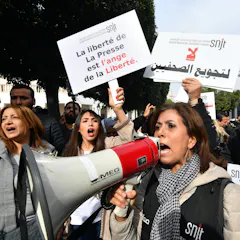
La liberté d’expression, principal acquis de la révolution tunisienne de 2011, est aujourd’hui gravement menacée par le président Kaïs Saïed.
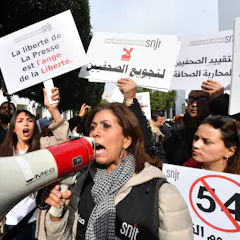
Freedom of expression was the one remaining gain of Tunisia’s 2011 revolution, but it is now severely threatened by a populist president.
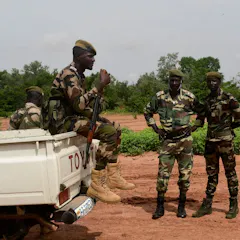
Pour résoudre les conflits djihadistes au Sahel, il faut aussi traiter les djihadistes comme des acteurs politiques qui cherchent à proposer une gouvernance alternative.
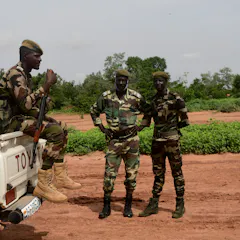
Resolving jihadist conflicts in the Sahel requires treating jihadists not as terrorists only but also as political actors who seek to provide an alternative form of governance to the status quo.
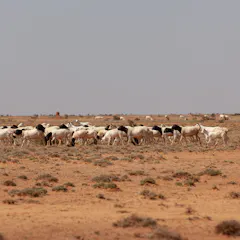
The federal government needs to address the relationship between climate-related realities and the country’s national security.

Sudan’s new government came to power after a people-driven process to oust former President Omar al-Bashir. It must be careful to place ordinary Sudanese at the centre of the reforms process.
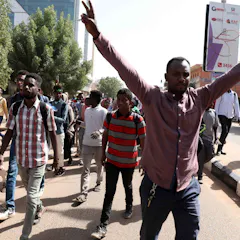
Taking Sudan off America’s list of terror is just one step in the country’s journey to economic recovery
Authors
-

Senior Research Fellow, Norwegian Institute of International Affairs and Visiting Professor University of Buckingham, Norwegian Institute of International Affairs
-
Senior Researcher, Norwegian Institute of International Affairs
-
Research Professor, Norwegian Institute of International Affairs
-
Research Professor in political science, Norwegian Institute of International Affairs
-
Research Professor, Norwegian Institute of International Affairs
-
Research Fellow and PhD Candidate at University of Oxford, Norwegian Institute of International Affairs
-
Research Fellow, Norwegian Institute of International Affairs