
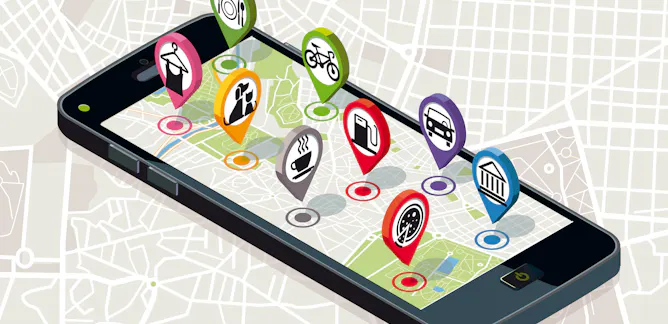
Banyak aplikasi bertanya apakah Anda mau membagi lokasi Anda? Anda jawab tidak dan Anda pikir masalah selesai. Ternyata ponsel Anda tetap bisa membocorkan lokasi Anda.
Northeastern University

Founded in 1898, Northeastern is a global, experiential, research university built on a tradition of engagement with the world, creating a distinctive approach to education and research. The university offers a comprehensive range of undergraduate and graduate programs leading to degrees through the doctorate in nine colleges and schools, and select advanced degrees at graduate campuses in Charlotte, North Carolina, and Seattle.
Links
Articles

It’s not just fitness trackers – mobile phones can reveal users’ whereabouts too, even with location tracking turned off.

How do internet companies decide which network traffic to slow down and which to charge against users’ data plans? And what can we learn about net neutrality from the answers?

Social media apps are becoming as important as water, food and batteries when communities face natural disasters. One key function is helping people connect with neighbors and support each other.

New survey data show that Muslim Americans are the most negatively perceived religious group in the US and are often victims of Islamophobic attacks. How are they responding? By getting organized.
A former president of Northeastern and scholar of higher education shares his perspectives on what has – and hasn’t – changed in the role of the college president.

International student integration can (and should) be fostered on college campuses for the sake of national security and professional readiness.

Recent incidents reveal more than just men behaving badly. They show the consequences when corporate cultures are driven by hyper-masculine personalities at the top.

In the wake of the suicide bombing in Manchester, England, an expert on social networks explains why ties to other people help societies recover from traumatic events.

For robots to be most useful when working alongside humans, we’ll have to figure out how to make robots that can literally lend us a hand when our own two are not enough.

Defaults are powerful tools that policymakers and marketers can use to nudge us to make certain choices, whether in our interest or in theirs. How do we ensure they’re used responsibly?
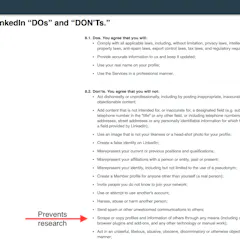
Algorithms can have enormous consequences on people’s lives, yet a federal law prevents us from studying whether they may be biased, unfair or discriminatory.

He campaigned on the notion that his business experience would equip him to ‘make America great again,’ but running a family company is poor training for the presidency.

Israeli settlements are one main reason many observers are increasingly pessimistic about the prospects for peace between Israel and the Palestinians. Can Trump break through?
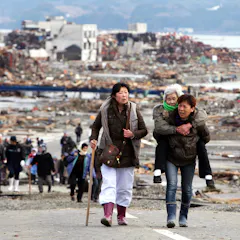
Disaster preparations often focus on gear and logistics, but research in Japan after the 2011 earthquake and tsunami shows that strong social ties played a key role in helping communities rebound.

The FBI is warning of Russian cyberattackers probing American election systems. Information warfare scholars discuss Russia’s digital efforts to benefit its national interests.
A computer model suggests that while more cases of Zika can be expected in the continental U.S. outbreaks will probably be small and are not projected to spread.

Togolese consumers are increasingly choosing Chinese replicas over ‘authentic’ Dutch wax prints. Their choice raises fundamental questions about the notion of intellectual property.

Peer review is a crucial part of the academic publication system. It is also a critical part of the hiring and evaluation process. What’s the problem with peer review?

Ransomware – which encrypts your files and offers to sell you the key – operates differently from other malicious software. Those differences turn out to give potential victims a fighting chance.
Authors
-

Robert Gray Dodge Professor of Network Science, Northeastern University
-
Professor of Journalism, Northeastern University
-
Professor of Public Policy and Urban Affairs and Director of the Boston Area Research Initiative, Northeastern University
-
Professor of Political Science, Public Policy and Urban Affairs, Northeastern University
-
Associate Professor of Communication Studies, Northeastern University
-
Professor of Criminology and Criminal Justice, Northeastern University
-
Professor of Government Emeritus, Northeastern University
-
Lecturer in Law, Northeastern University
-
Assistant Professor of Supply Chain and Health Sciences, Northeastern University
-
Professor of Philosophy and Religion, Northeastern University
-
Associate Professor of International Business and Strategy, Northeastern University; Institute for Humane Studies
-
Special Advisor, Poverty Solutions, University of Michigan; Northeastern University
-
Associate Professor of Anthropology, Northeastern University
-
Associate Professor of Social Policy Research, Northeastern University
-
Assistant Professor of Religion and Anthropology, Northeastern University