

While few will dispute that a minute comprises 60 seconds, the perception of time can vary dramatically from person to person and from one situation to the next. Time can race, or it can drag.
Neuroscience Research Australia

Neuroscience Research Australia (NeuRA) is a leader in brain and nervous system research. Our goal is to prevent, treat and cure brain and nervous system diseases, disorders and injuries through medical research.
Links
Articles
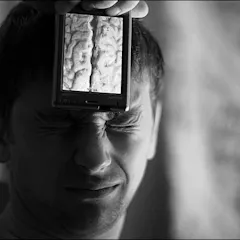
The brain is truly a marvel. A seemingly endless library, whose shelves house our most precious memories as well as our lifetime’s knowledge. But is there a point where it reaches capacity?
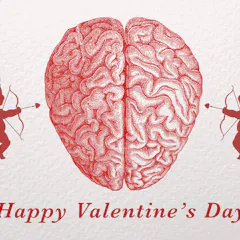
In William Shakespeare’s comedy Merchant of Venice, the play’s heroine Portia sings: Tell me where is fancy bred, Or in the heart or in the head. If you look at Valentine’s Day cards, it’s clear fancy…

For many of us, memories are our most precious possessions; they makes us the people we are. Consider how you would feel then if your memories were stripped from you, as they are from people diagnosed…

The more curious we are about a topic, the easier it is to remember not only information about that topic, but also other unrelated information shown at the same time. A study published today in Neuron…

Alzheimer’s disease causes progressive damage to the brain, resulting in problems with memory, cognition, social engagement, and, ultimately, a person’s ability to care for themselves. Alzheimer’s is the…

A computer system has been developed that can tell whether facial expressions of pain are real or fake – with possible implications for those of us who fake the occasional “sickie”. A study, published…

Many amputees experience pain in their missing limbs, but allowing them to “see” their missing limbs in action through augmented reality technology may help alleviate this phantom limb pain (PLP), a case…

Memory is an essential part of our existence. Who we are, what we know and what we think can all be derived from our ability to remember. How reliable, though, are our memories? A study, published in the…

We now know that there’s much more to pain than simply what is happening in the painful body part, and attention has turned to the role of the brain. But not even this mysterious organ can tell us everything…

Late-stage dementia is characterised by increasing agitation that can be distressing for the person with the illness and their carers. So, researchers are investigating whether robots disguised as animals…
Death rates for hip fracture patients are almost four times greater in certain New South Wales public hospitals. A study…

We are usually told that daydreaming is a waste of time and mental power, but the ability to daydream offers us tremendous flexibility in our daily lives. The frequency with which we daydream suggests…

It may seem silly to ask yourself if your index finger is part of your body, but that question is actually perfectly reasonable in neuroscience research - and has led to important insights into key brain…
All memories aren’t created equal. Whether you remember an event the next day, week or year, depends on a number of factors, the most important one of which is the emotion associated with it. Emotional…
The brains of people diagnosed with depression are less adaptable to their environments, a study emerging from Neuroscience…

Testosterone may trigger a brain chemical process linked to schizophrenia but the same sex hormone can also improve cognitive thinking skills in men with the disorder, two new studies show. Scientists…
Scientists have linked common genetic markers with major psychiatric disorders including autism and schizophrenia, in the largest ever genetic study of psychiatric illness. The study findings, published…

Empirical science needs data. But all data are subject to random variation, and random variation obscures patterns in data. So statistical methods are used to make inferences about the true patterns or…

Obstructive sleep apnoea (OSA) is a common sleep-related breathing disorder, where the upper airway repeatedly collapses during sleep. During an obstructive breathing event, someone with OSA continues…
Authors
-

NHMRC Emerging Leadership Fellow, Neuroscience Research Australia
-
Research assistant, Neuroscience Research Australia
-
Research Fellow, Neuroscience Research Australia
-
Senior Research Officer, Neuroscience Research Australia
-
Postdoctoral Research Fellow, Biomedical Engineer, Upper Airway & Sleep Physiologist, Neuroscience Research Australia
-
Senior Research Fellow , Neuroscience Research Australia
-
Senior Principal Research Scientist, Neuroscience Research Australia
-
Senior Research Fellow, Neuroscience Research Australia
-
Lecturer, School of Psychology, UNSW ; Neuroscience Research Australia
-
Postdoctoral Research Fellow, Neuroscience Research Australia
-
Scientist and Digital Librarian, Neuroscience Research Australia
-
Deputy Director, Neuroscience Research Australia
-
Research Fellow in Brain Plasticity and Pain, Neuroscience Research Australia
-
Postdoctoral fellow, Neuroscience Research Australia
-
Senior Principal Research Fellow, Neuroscience Research Australia