

The Trevor Noah phenomenon speaks to an influential comedic revolution that is happening in South Africa. Its comics operate in an increasingly complex, high-risk and conflict-intense society.
Nelson Mandela University

Nelson Mandela University, as a dynamic African University, is committed to excellence and innovation, and fostering a pioneering and inventive spirit among our students and scholars. It is a University that acts as a social laboratory for experimentation, innovation and creativity to find answers to epic challenges facing society and the economy today.
NMU recently established and launched a number of research hubs such as the Centre for Broadband Communication to conduct pioneering research around optical fibre data transport for the Square Kilometre Array radio telescope; an innovation hub to support small business in Port Elizabeth and beyond; a Centre for African Palaeoscience; and a Research Chair in Earth Systems Science. More exciting is the development currently underway of a range of new maritime and marine education and training, research, innovation and engagement programmes to support South Africa and the continent’s blue economy initiatives.
Links
Articles

Research suggests that universities in South Africa haven’t paid much attention to the potential harm that social media could cause - and the benefits it could create.

The central thrust of Haffajee’s book is compelling. It argues that black South Africans, especially the new generation of young, black ‘born frees’ are obsessed with whiteness and white privilege.
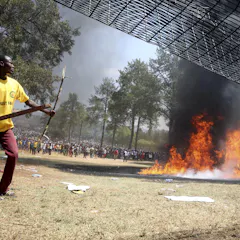
Two narratives have emerged from student protests in South Africa: reform on the one hand - and revolution on the other. Which narrative will triumph?
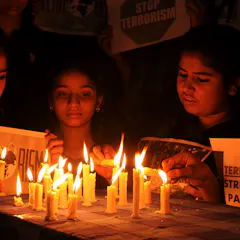
In the next few weeks we may see a resurgence of rhetoric calling for more resources to fight the War on Terror following the Paris attacks. Islamophobia may take deeper root in Europe as a whole.
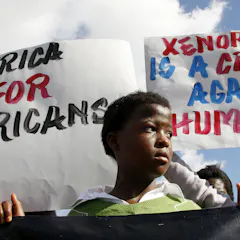
South African university students are as guilty of xenophobia as anyone else. Three approaches through teaching and research could make a huge difference.

South Africa’s rugby administrators are facing increased criticism for their failure to shed its white image. The tone of the debate is different this time, amid growing protests against inequality.
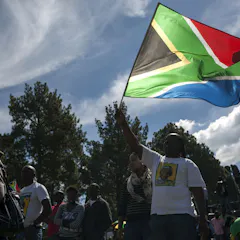
University students in South Africa have shown the potential of mass mobilisation to influence policy in advancing justice for their constitutional democratic rights.
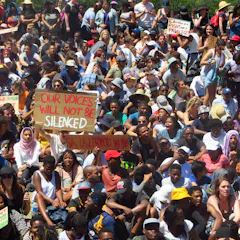
Students have won an important victory. But to understand the complex nature of oppression and how to respond to it will require many struggles over a longer period of time.
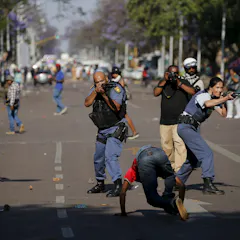
South African students have won a pyrrhic victory in their battle for free university education. Will students and their institutions ever be able to interact without violent conflict again?

Quality higher education is crucial for recovery, peace-building, economic development and stronger governance in post-conflict societies.
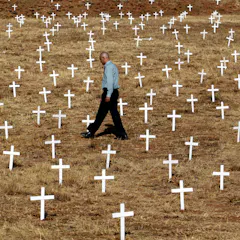
South Africa’s homicide rates have declined consistently since democracy, but remain among the highest in the world. They are about four times the global average at more than 30 per 100,000 people.

South Africa’s oceans economy can contribute R177 billion to the GDP and create up to one million new jobs by 2033. But this requires more skilled people to drive the growth.
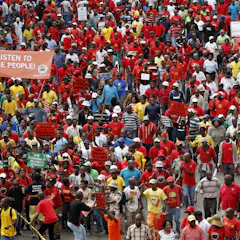
Economic transformation of unequal societies in a democratising context is difficult. This requires a creative mix of policy options underpinned by a commitment to social justice.
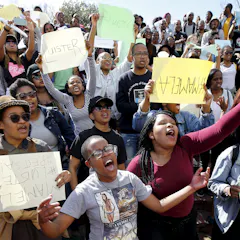
The university should be the bastion of the right to free expression in the promotion of democracy, and has a moral and ethical obligation to provide spaces for fierce debate and critical engagement.
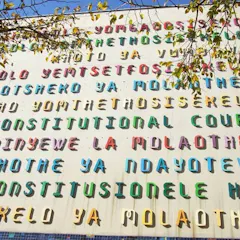
In the past few years, many South Africans have come to associate Heritage Day with a good opportunity to have a barbeque, known locally as a braai. But the day is meant for so much more than that.

South Africa is seismically stable and should consider mining geothermal plants to solve its energy crisis.
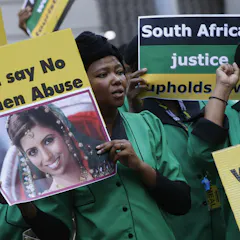
South Africa’s violence against women ranks as one of the worst in the world. As much as 40-50% of women in the country have suffered intimate partner violence.

Women need to start believing in themselves to be successful. Men own their success but women attribute it to external factors. Facebook COO Sheryl Sandberg learned this a while back.
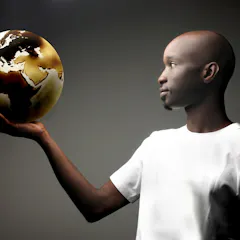
There are two functions of language: communication and access to knowledge. Each must be pursued as an objective in its own right rather than being lumped together.
Authors
-

Research Assistant, Media and Communication, Nelson Mandela University
-
Senior lecturer in Languages and Literature, Nelson Mandela University
-
Research fellow, Nelson Mandela University
-
Research Associate, African Centre for Coastal Palaeoscience, Nelson Mandela University
-
Postdoctoral fellow, Nelson Mandela University
-
Senior Lecturer and head of the Department of Media and Communication, Nelson Mandela University
-
Senior Research Fellow, Nelson Mandela University
-
Professor, Department of Business Management, Nelson Mandela University
-
Lecturer, Nelson Mandela University
-
Research Director: South African International Maritime Institute (SAIMI), Nelson Mandela University
-
Lecturer, Nelson Mandela University
-
Research fellow, Department of Geography, Archaeology & Environmental Studies, University of the Witwatersrand; Research Associate, African Centre for Coastal Palaeoscience, Nelson Mandela University
-
Researcher, Nelson Mandela University
-
Lecturer in Business Management, Nelson Mandela University
-
Research Associate, African Centre for Coastal Palaeoscience, Nelson Mandela University