

Extreme wet years are getting wetter and more common. This means Australia’s terrestrial ecosystems will play a larger role in the global carbon cycle.
NASA

NASA’s vision: To reach for new heights and reveal the unknown so that what we do and learn will benefit all humankind.
To do that, thousands of people have been working around the world – and off of it – for 50 years, trying to answer some basic questions. What’s out there in space? How do we get there? What will we find? What can we learn there, or learn just by trying to get there, that will make life better here on Earth?
NASA conducts its work in three principal organisations, called mission directorates:
Aeronautics: pioneers and proves new flight technologies that improve our ability to explore and which have practical applications on Earth.
Human Exploration and Operations: focuses on International Space Station operations and human exploration beyond low Earth orbit.
Science: explores the Earth, solar system and universe beyond; charts the best route of discovery; and reaps the benefits of Earth and space exploration for society.
Links
Articles
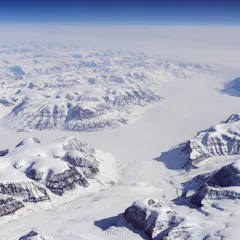
Scientists say they’ve found fossils showing life existed on Earth 3.7 billion years ago. How good is the evidence? And what does it mean for the search for life elsewhere in our solar system?
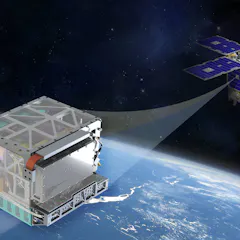
Measuring time is a crucial part of navigation – particularly in space, where exacting precision is called for. The DSAC is poised to make a change that will aid future deep space missions.
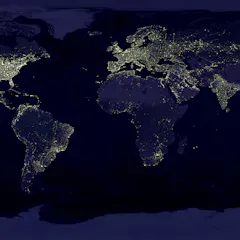
Hundreds of cities worldwide have pledged to act against climate change. New York City’s experience rebuilding after Hurricane Sandy offers useful lessons about making urban areas more resilient.

Dawn’s mission director and chief engineer describes his ‘dream come true’ job – and how the new data coming back from Ceres could unlock some of the secrets of the earliest days of our solar system.
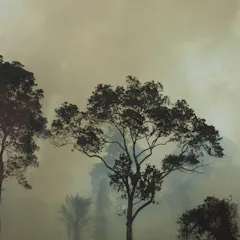
On the African continent, more fire for crops leads to less rainfall.

Higher CO2 levels in the atmosphere are changing how quickly trees process water, which scientists are studying to see if it will affect river flow, flooding and soil moisture.

Climate change is affecting all regions of the globe. But some places, such as Africa, are more vulnerable than others.
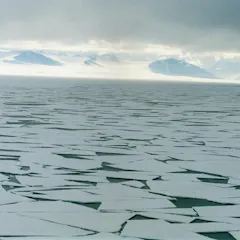
The amount of the earth’s ocean surface covered by sea ice has been continually observed by satellites and its extent estimated since 1978. The trend has been for shrinking sea ice in the Arctic and, more…
Research by NASA scientists suggests that distant planets that share Earth-like qualities may use friction to move from volatile…

It’s been nearly 30 years since the discovery of the ozone hole over Antarctica, and the realisation that chlorine, in the form of chlorofluorocarbons or CFCs, was the chemical culprit behind the depletion…
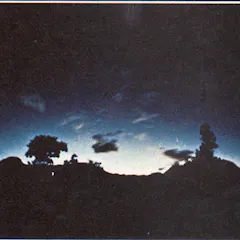
Earthquake lights are among nature’s most strange, most ephemeral, and hard-to-explain phenomena. While rare, and only recently accepted by science, they have been reported for hundreds or even thousands…
As CO2 levels in the atmosphere increase, so too does the earth’s sensitivity to the gas, according to new research conducted…
Differences in estimates of how fast glaciers are disappearing and contributing to sea level rise have been resolved by a…
The presence, size and location of an asteroid belt may determine if life can evolve on an Earth-like planet. If this is…
A new moon has been discovered orbiting the icy dwarf planet Pluto, increasing the number of known moons of Pluto to five…
NASA’s Lunar Reconnaissance Orbiter (LRO) spacecraft has returned data that indicate ice may account for as much as 22% of…
After nearly a century of speculation, the Hubble Telescope can now predict with certainty: the titanic collision of the…
NASA is aiming the Hubble Telescope at a crater on the moon to observe the transition of Venus. The telescope is unable to…
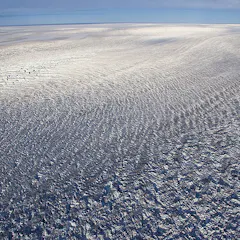
Satellite and in situ observations show sea level is continuing to rise. In the last Intergovernmental Panel on Climate Change report, earth system model projections indicated global sea-level rise by…
Authors
-

Associate Research Scientist in polar sea ice variability, NASA
-
Project Scientist, Mars Science Laboratory, NASA
-
Research Scientist, Ames Research Center, NASA
-
Research scientist, NASA
-
Director, Information Retrieval and Data Science Group and Adjunct Associate Professor, USC and Principal Data Scientist, NASA
-
Space Physicist, NASA
-
NASA Postdoctoral Fellow, NASA
-
Associate Research Scientist, NASA
-
Sea Ice Scientist and Deputy Project Scientist for NASA's Operation IceBridge, NASA
-
Postdoctoral Fellow in Planetary Sciences, NASA
-
Climate Scientist, NASA
-
Research Scientist of Planetary Studies, NASA
-
Research Psychologist, NASA
-
Principal Investigator on the Deep Space Atomic Clock Technology Demonstration Mission, Jet Propulsion Laboratory, NASA
-
Senior Research Scientist, National Snow and Ice Data Center, NASA