
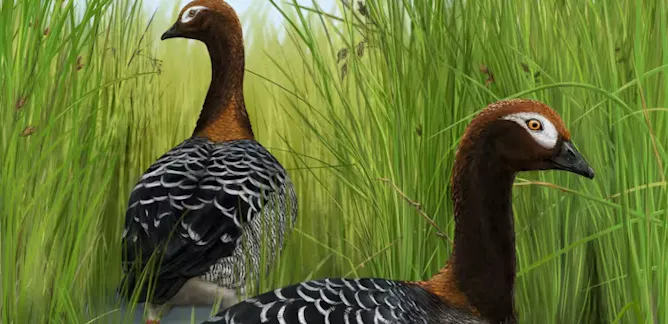
The newly described fossil goose Meterchen luti lived alongside crocodilians and turtles on the shores of the ancient Lake Manuherikia.
Museum of New Zealand Te Papa Tongarewa

The Museum of New Zealand Te Papa Tongarewa is the national museum and art gallery of New Zealand, located in Wellington.
Links
Articles
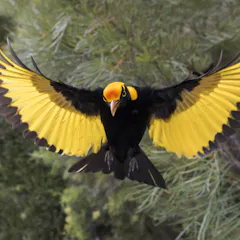
New Zealand’s ancient bowerbird was smaller and more slender than the species living in Australia and New Guinea today.
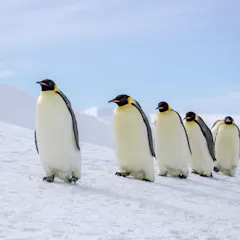
Great penguins once lived in much warmer waters, but then retreated to the Southern Ocean. In a warming world, they might be able to shift their range again.
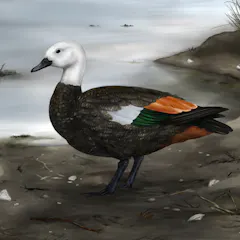
Many birds on Rēkohu Chatham Islands show how ‘island syndrome’ influences evolution – they are distinct but remain closely related to species on the mainland.
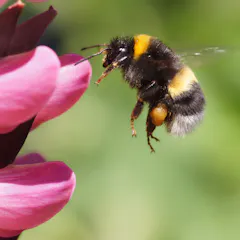
Those big bumble bees and wasps you might have seen in your garden are likely the queens preparing their nests and colonies for summer.
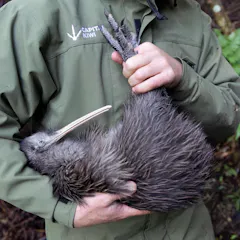
A recent announcement that kiwi and moa are Australian immigrants is not borne out by available evidence. Working out when birds arrived in New Zealand requires both fossil evidence and genetics.

The discovery of the Manawatāwhi pāua, unique to the Three Kings Islands, highlights the need to build taxonomic expertise to speed up work to describe thousands of as-yet unnamed species.

About a third of insects attracted to artificial lights die by morning, often from exhaustion. But we can help them, and the vital ecosystems they serve, by reducing light pollution.
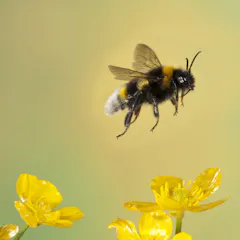
Many common insects seem to disappear during autumn and winter – but they are still around. Making your garden a good winter habitat can help these vital pollinators survive and thrive.

The native red admiral is less common than it used to be, but we can all help threatened bug species by ensuring they have the right habitats to thrive in.
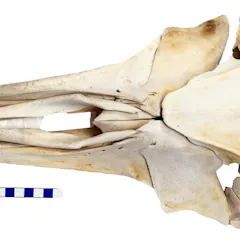
Our new genomic research finally solves a 150 years of scientific mystery about the unusual and ancient pygmy right whale.
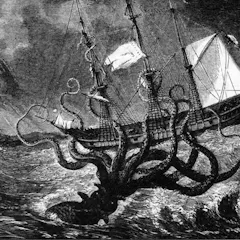
Selama berabad-abad, Kraken ditakuti karena dianggap sebagai monster cumi-cumi raksasa yang bisa menenggelamkan kapal. Belakangan, sains menjawab misteri legenda Kraken.
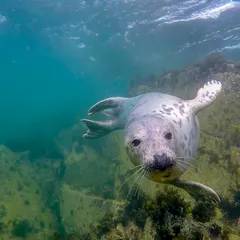
New research combines cutting-edge engineering with animal behaviour to explain the origins of efficient swimming in nature’s underwater acrobats: seals and sea lions.
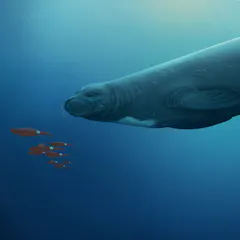
This newly discovered ancient monk seal is challenging previous theories about how and where monachine seals evolved. It’s the biggest breakthrough in seal evolution research in about 70 years.
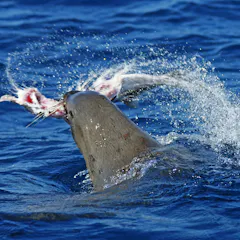
This new study describes an unlucky fur seal found with severe injuries, revealing how predators sometimes pay the ultimate price for their food when targeting dangerous prey.
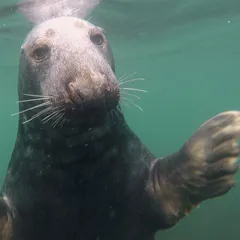
Clapping underwater takes real strength. But wild grey seals can do it, to warn off competitors and attract potential mates.
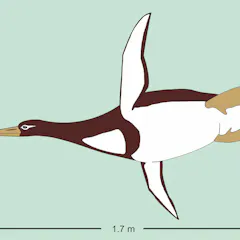
Fossilised bones discovered in New Zealand reveal an extinct penguin which may have been the largest to ever live, around the same height as an average man.
Authors
-

Curator of Vertebrates, Museum of New Zealand Te Papa Tongarewa
-
Curator of Vertebrates, Museum of New Zealand Te Papa Tongarewa
-
Curator Invertebrates, Museum of New Zealand Te Papa Tongarewa
-
Curator of Invertebrates, Museum of New Zealand Te Papa Tongarewa
-
Curator of Fishes, Museum of New Zealand Te Papa Tongarewa; Newcastle University