
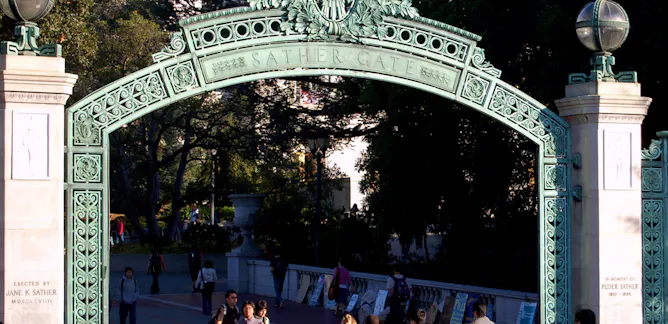
State support for public research universities declined by 28 percent between 2003 and 2013. So, why does it matter?
Michigan State University

Michigan State University Spartans work to advance the common good in uncommon ways. The nation’s pioneer land-grant university, MSU began as a bold experiment that democratised higher education and helped bring science and innovation into everyday life. Today, MSU is one of the top research universities in the world - on one of the biggest, greenest campuses in the nation - and is home to a diverse community of dedicated students and scholars, athletes and artists, scientists and leaders.
Links
Articles

Un innocent qui s’accuse d’un crime qu’il n’a pas commis. Un cauchemar plus fréquent qu’on ne le croit. Mais comment en arrive-t-on à de faux aveux ? Les réponses de psychologues expérimentateurs.

Innocent people do confess to terrible crimes they had nothing to do with. Psychologists are investigating factors that contribute to false confession – including how well-rested a suspect feels.

While it’s impressive, developing a computer to win at Go is not a big step toward the type of artificial intelligence used by the thinking machines we see in the movies.

The state takeover and fiscal crisis in Flint hamstrung city managers, making it hard to provide basic services like water.

Expert image analysts have an important role to play, even in an age of computer interpretation and crowdsourcing.

The U.S. alliance with Saudi Arabia goes back to the 1930s. Here’s why recent uneasiness doesn’t mean it’s ending anytime soon.

The French term for ISIS – known as Da'ish or Daesh – has gathered more interest in the wake of the Paris attacks. Here’s why this battle of naming matters.

A cubic kilometer of clear, stable ice could help physicists answer big questions about cosmic rays and neutrinos. Hardy scientists collect data via a unique telescope at the frozen bottom of the world.

What explains the huge gap between US and European consumers on GMO foods? A short history helps explain.

Students in the same grade in the same school receive a very different education based on the socioeconomic status of their parents.

A steakhouse wouldn’t be evaluated based on a fish prepared at a seafood restaurant. But this is what teacher evaluation looks like.

The signing of the Trans-Pacific Partnership belies the fact that the US’s share of trade in the region has been declining for some time.

AB InBev’s expected bid for SABMiller continues a trend of industry consolidation at the top, but the strong growth in craft brewing is challenging that strategy.

Market speculation on whether the Fed will raise rates is reaching fever pitch, but the central bank no longer has the pull it once did.

Satisfaction with democracy varies widely in Africa. Across 28 countries, only 46% of citizens say they are “very satisfied” or “fairly satisfied” with the way democracy works in their countries.

Back in 2001, a Goldman Sachs economist said Brazil, Russia, India and China would become the powerhouses of the global economy in the coming decades. Is that still in the cards?

Hillary Clinton’s US$350 billion college plan will need a doubling of the federal government’s funding to colleges. But this large expansion in federal dollars will not be without its own costs.

China’s interventions to cheapen its currency relative to others will hurt US imports in the short term, but the country’s surging “mainstream” will easily offset the impact.

What are the early warning signs of threats to the stability of African democracies? The signs could be seen in Mali before it exploded in 2012. Ghana and others would do well learn from Mali.
Authors
-

Assistant Dean for Practice, Innovation, and Professional Education and Associate Professor of Nursing, Michigan State University
-
Professor of Nuclear Physics, Michigan State University
-
Assistant Professor of Law, Michigan State University; Institute for Humane Studies
-
Associate Professor of Public Health, Michigan State University
-
Professor of Journalism, Michigan State University
-
PhD Candidate in Social Work, Michigan State University
-
Research Specialist, Michigan State University
-
Assistant Professor of K-12 Educational Administration, Michigan State University
-
Professor of Public Relations, Michigan State University
-
Associate Professor of Religious Studies, Michigan State University
-
PhD Student, Michigan State University
-
Professor of Pediatrics and Human Development at the Michigan State University College of Human Medicine, Michigan State University
-
Foglio Endowed Chair of Spirituality, Michigan State University
-
Patricia Edwards is a Friend of The Conversation.
Professor of Education, Michigan State University
-
Professor of Physics and Astronomy, Michigan State University