

Some health myths are harmless. A nurse who studies misinformation explains how to tell which are worth challenging, and how to raise them kindly.
London South Bank University

London South Bank University (LSBU) has been providing professional and technical education since 1892, with a vision to transform lives, communities, businesses and society through applied education and insight.
The University’s teaching is underpinned by its relationships with industry, often developed through collaborative research, providing access to industry standard facilities, and with courses accredited by professional bodies and designed with employers.
LSBU’s research is highly applied, focused on addressing real-world challenges and often conducted in close collaboration with industry, business, community and government partners. The University is the leading provider in London of business support for SMEs, funded by European Union structural funds; and its business incubation programme is ranked second amongst all UK universities. LSBU’s research focusses on four main areas: Environment and Sustainability, Health and Social Care, Social Justice and Digital, all of them committed to delivering real world impact. The University is part of the LSBU Group, a ground-breaking collaboration of education providers based in south London.
Links
Articles

Birth involves emissions from travel, pain relief and disposable products, but system-level changes can reduce them without restricting choice.
Les maladies rénales ne se manifestent souvent que lorsque les lésions en sont déjà à un stade très avancé. Il est donc important de prendre soin de ses reins sans attendre…

For many people, the mental benefits of a runner’s high even outlast the run itself.
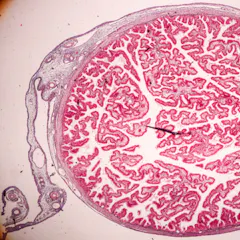
For some mothers, the placenta has deep cultural meaning. Asking about it during pregnancy could prevent avoidable distress.

Tourist destinations can do more to encourage travellers to use public transport.

Makerfield’s new MP said the area would give its name to a new test to ensure fairness for neglected areas.

Scientists are studying the phenomenon of animals behaving strangely before earthquakes.

Spencer won the Gorton and Denton byelection for the Green party.

Lifelong plasticity is a core principle of neuroscience, yet it operates within real limits shaped by effort, stress and ageing.

There’s huge potential in transforming brownfield land from environmental liability and eyesore into local renewable energy generators.

Imagine cycling from your hotel to a historic site, hopping on an electric bus to a museum and strolling to dinner. That’s a blueprint for sustainable tourism.

Students explored ideas of identity through model building.

Surviving a stroke is only the beginning. Many people face years of hidden disabilities, limited rehabilitation and financial strain without enough help.

Experts react to the political effects of Rachel Reeves’s budget.

Women are more likely to have a stroke – and more likely to be misdiagnosed. Hormones, pregnancy and medical bias are part of the reason.

Social media exploits our brain’s responsiveness to reward and social cues — enforcing the narrow beauty ideals we internalise.

A stroke can happen at any age. Here’s what to look for – and why every second matters.

The prime minister mentioned Nigel Farage by name multiple times – a highly unusual approach to a party conference speech.

Lorsque vous câlinez un chat, l’ocytocine, « l’hormone de l’amour », augmente dans vos deux cerveaux.
Authors
-

Lecturer in Politics with International Relations, London South Bank University
-
Lecturer in Midwifery, School of Nursing and Midwifery, London South Bank University
-
Dean of the School of the Built Environment and Architecture and Professor of Technology and Organisation, London South Bank University
-
Senior Lecturer in Marketing, London South Bank University
-
Director of Mechanical Intelligence (MI) Research Group, London South Bank University
-
Lecturer in Project Management, London South Bank University; University of Manchester
-
Research assistant, London South Bank University; University of Southampton
-
PhD Candidate, Public Trust in Healthcare, London South Bank University
-
Professor, Mechanical Engineering and Design, London South Bank University
-
Senior Lecturer in Neurosciences and Neurorehabilitation, Course Leader in the College of Health and Life Sciences, London South Bank University
-
Associate Professor in Education, London South Bank University
-
Professor of Kidney Care, London South Bank University
-
Senior Lecturer in Bioscience, London South Bank University
-
Midwifery Lecturer, London South Bank University
-
Senior Nurse Lecturer, London South Bank University