

Pesquisa mostra que tipo de informação as comunidades amazônicas querem receber para entender e reagir às ameaças aos seus territórios
Johannes Gutenberg University of Mainz

With about 36,500 students from about 130 nations, Johannes Gutenberg University Mainz (JGU) is one of the ten largest universities in Germany. As the only comprehensive university in Rhineland-Palatinate, JGU combines almost all academic disciplines under one roof, including the Mainz University Medical Center, the School of Music, and the Mainz Academy of Arts. This is a unique feature in the German academic landscape. With 84 fields of study and a total of 222 degree courses, including 98 Bachelor’s and 103 Master’s degree programs, JGU offers an extraordinarily broad range of courses. Some 4,150 academics, including 540 professors, teach and conduct research in JGU’s more than 150 departments, institutes, and clinics (as of December 1, 2011; financed by federal and third-party funding).
Links
Articles

Most of us as consumers decide what to buy based on the price and quality of goods. But our values play a role in our decision-making: what we buy and where we buy it is influenced by our beliefs.

Toumani Diabaté a inspiré d'innombrables musiciens et fans à travers le monde et les a rapprochés de la musique mandingue.

What happens underground doesn’t stay underground. If we overexploit groundwater and kill off its species, we put surface species – including us – at risk.

Attitudes towards Kwame Nkrumah have shifted from veneration to confrontation and destruction and, finally, to more subtle forms of remembrance.

Local realities shape the transport system, making it less directly applicable as a model elsewhere.

Society has moved to a place where everyone is held accountable if their jokes are found offensive.

Teori konspirasi berkembang di saat ketidakpastian dan menumbuhkan ketidakpercayaan pada otoritas medis.

Las teorías de la conspiración florecen en tiempos de incertidumbre y fomentan la desconfianza en las autoridades sanitarias.

Conspiracy theories bloom in times of uncertainty and foster distrust of medical authorities.

Comment l'Union européenne est-elle perçue, de Rome à Oslo, en passant par Berlin, Amsterdam, Stockholm et Prague ? A l'occasion du renouvellement du Parlement européen, six experts répondent.

Ahead of the 2019 EU elections, experts from the Czech Republic, Germany, Italy, the Netherlands, Sweden and Norway look at how the EU is perceived, key issues and perspectives for the election.

Home births are on the up but hospitals still matter.
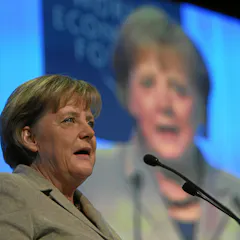
The results of the German election have been described as a triumph for Angela Merkel. Her Christian Democrats bounced back from their second-worst result since 1949 to heights they have not seen since…
Authors
-

Professor of Anthropology, Johannes Gutenberg University of Mainz
-
enseignant-chercheur, Johannes Gutenberg University of Mainz
-
Postdoctoral researcher, Johannes Gutenberg University of Mainz
-
Postdoctoral Research Fellow, Johannes Gutenberg University of Mainz
-
Professor of Political Science, Johannes Gutenberg University of Mainz
-
Associate Professor in Geophysics, Johannes Gutenberg University of Mainz
-
Post-doctoral researcher, Johannes Gutenberg University of Mainz
-
Chief executive officer, Johannes Gutenberg University of Mainz
-
Professor of Statistics and Econometrics, Johannes Gutenberg University of Mainz
-
Professor, Earth systems modelling, Johannes Gutenberg University of Mainz
-
Professor of Structural Geology & Tectonics, Johannes Gutenberg University of Mainz