
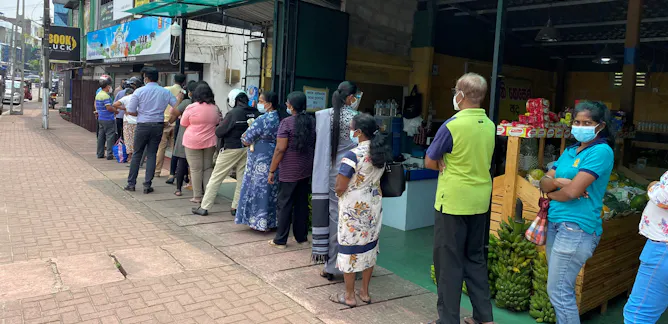
Food, fuel and fertiliser prices were rising fast even before war broke out. We need to act now to avoid a humanitarian crisis.
International Food Policy Research Institute (IFPRI)

The International Food Policy Research Institute (IFPRI) provides research-based policy solutions to sustainably reduce poverty and end hunger and malnutrition in developing countries. Established in 1975, IFPRI currently has more than 600 employees working in over 50 countries. It is a research center of the CGIAR Consortium, a worldwide partnership engaged in agricultural research for development.
Vision and Mission
IFPRI’s vision is a world free of hunger and malnutrition. Its mission is to provide research-based policy solutions that sustainably reduce poverty and end hunger and malnutrition.
Links
Articles
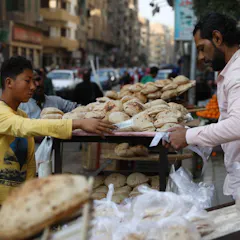
Egypt is already feeling the impact of the war, which has led to recent cancellation of tenders due to lack of offers, in particular from Ukraine and Russia.

Whoever wins the elections will face two key challenges: reviving the country’s democratic credentials and stimulating the economy.

Even where vaccines are available, one barrier to progress is vaccine hesitancy: the reluctance or refusal to vaccinate.

The net effect is that the shocks are most severe on poorer, more vulnerable households.

Despite their popularity, there are reasons to doubt whether “home gardens” provide a sustainable and cost-effective way of addressing hidden hunger.
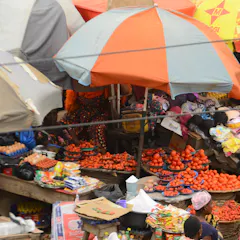
The potential exists for malnutrition to exacerbate the health consequences of the COVID-19 epidemic.

The findings suggest that farmers will benefit from more accurate crop yield monitoring.

Smallholder avocado farmers in Kenya face several barriers to participating in export markets.
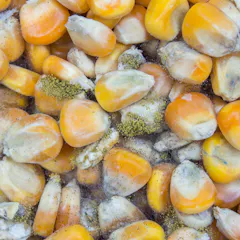
Most of the maize consumed in Kenya is never even tested for aflatoxin.
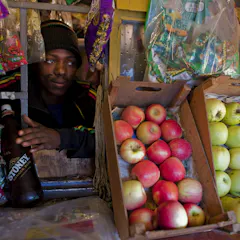
By better understanding the politics and governance of African cities and variations across cities, we can identify feasible opportunities to improve informal traders’ livelihoods.
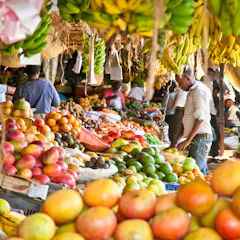
The fact that relative food prices differ so markedly and so systematically provides a very strong rationale for nutrition-focused food policies.
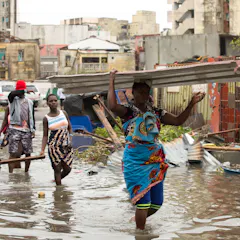
Cyclone Idai hit poor countries the hardest and shows why disaster resilience is a necessity.
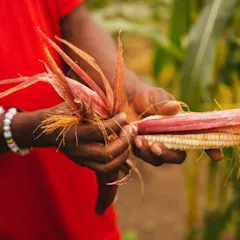
Policy choices made by Senegal, Ghana, Rwanda, Angola, Cameroon, Ethiopia and Togo over the past 15 years have led to significant reductions in child undernourishment.
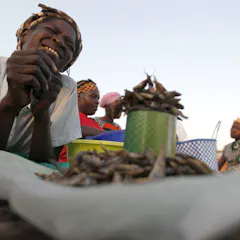
The harassment of informal food vendors by national and municipal governments remains a major impediment to improving the resilience of the urban poor in African cities.

As Zambia prepares to go to the polls again the entire party system is in flux, electoral violence has been worryingly frequent and the country’s democratic credentials are increasingly in doubt
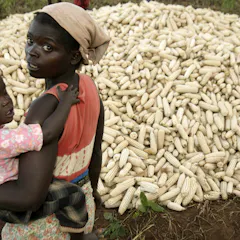
Malawi’s large-scale subsidy for farmers has resulted in higher maize production, lower food prices and higher wages. But this has come at significant costs.
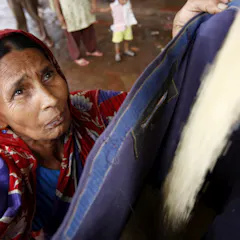
The first-ever official meeting of Ministers of Agriculture from G20 countries being held in Paris on June 22-23, presents an extraordinary opportunity. Tasked with developing an action plan to address…
Authors
-

Senior Research Fellow in the Markets, Trade, and Institutions Unit, International Food Policy Research Institute (IFPRI)
-
Senior Research Fellow, International Food Policy Research Institute (IFPRI)
-
Senior Research Fellow, International Food Policy Research Institute (IFPRI)
-
Research Fellow, International Food Policy Research Institute (IFPRI)
-
Senior Research Fellow & Malawi Country Program Leader, International Food Policy Research Institute (IFPRI)
-
Senior Research Fellow, International Food Policy Research Institute (IFPRI)
-
Senior Research Coordinator for IFPRI and Policy Hub Leader for the Consultative Group on International Agriculture Research (CGIAR) in Malawi, International Food Policy Research Institute (IFPRI)
-
Senior Scientist, Foresight and Policy Modeling Unit, International Food Policy Research Institute (IFPRI)
-
Senior Research Fellow and Program Leader for the Sudan Strategy Support Program, International Food Policy Research Institute (IFPRI)
-
Research Fellow, International Food Policy Research Institute (IFPRI)
-
Senior Research Fellow, International Food Policy Research Institute (IFPRI)
-
Senior Research Associate, Development Strategies and Governance Unit, International Food Policy Research Institute (IFPRI)
-
Research Analyst, Sudan Strategy Support Program (SSSP), International Food Policy Research Institute (IFPRI)
-
Research Fellow, International Food Policy Research Institute (IFPRI)
-
Director of the Markets, Trade, and Institutions, International Food Policy Research Institute (IFPRI)