

South African businesses have typically invested in innovation activities that help them prepare for technological and organisational change.
Human Sciences Research Council

The HSRC was established in 1968 as South Africa’s statutory research agency and has grown to become the largest dedicated research institute in the social sciences and humanities on the African continent, doing cutting-edge public research in areas that are crucial to development.
Our mandate is to inform the effective formulation and monitoring of government policy; to evaluate policy implementation; to stimulate public debate through the effective dissemination of research-based data and fact-based research results; to foster research collaboration; and to help build research capacity and infrastructure for the human sciences.
The Council conducts large-scale, policy-relevant, social-scientific research for public sector users, non-governmental organisations and international development agencies. Research activities and structures are closely aligned with South Africa’s national development priorities.
The HSRC’s integrated research programmes provide single points of entry – complete with a critical mass of researchers – for interdisciplinary and problem-orientated research in the following areas:
- Africa Institute of South Africa
- Democracy, Governance and Service Delivery
- Economic Performance and Development
- Education and Skills Development
- Human and Social Development
- Population Health, Health Systems and Innovation
- Social Aspects of HIV/AIDS, STIs and TB.
A cross-cutting entity, Research Use and Impact Assessment, seeks to extend and enhance the use and impact of scientific research from the HSRC and other sources of research; and to manage the HSRC’s relationships, reputation and brand.
Links
Articles

Families play a vital role in the process of skill formation, which is just as important as the role of schools.

The Freedom Charter process was an imperfect but impressive attempt at capturing the will of the people and articulating an alternative vision to apartheid South Africa.

Despite the best efforts of governments, schools and parents there’ll be learning losses across the board and worsened educational outcomes for the poor.
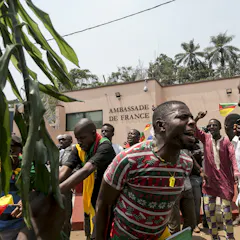
The African Union’s intervention track record in conflict situations is mixed.
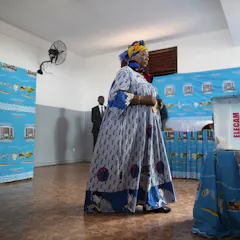
Many believe that it is only a return to the country’s two-state federation that will end the conflict and break the impasse.

Some critics argue that the new certificate may encourage more pupils to drop out of school. But we argue that it is a positive move.
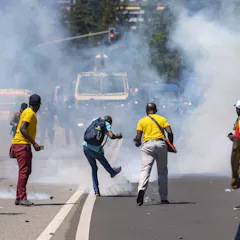
What Cameroon needs is a properly mediated process signing all the parties to a pre-agreed agenda

South African parents want their children be taught in English despite the fact that research shows that academic progress is hindered if a child is taught in a language they aren’t proficient in.

All the virtual personal assistants on the market today come with a default female voice and is programmed to respond to all kinds of suggestive questions and comments.

Beliefs about the role played by foreign nationals in South Africa clearly influence how people think about anti-immigrant hate crime.
Services have not featured strongly in the economic strategies of developing countries. However, South Africa’s recently published economic reform proposals point to a greater role for services.
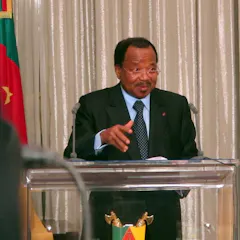
Les anglophones du Cameroun souffrent d’une marginalisation flagrante et sont traités comme des citoyens de seconde zone par le gouvernement francophone.

Cameroon’s English speaking people suffer gross marginalisation and are treated as second-class citizens by the Francophone government.
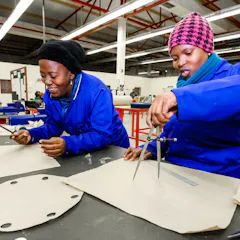
The world of the fourth industrial revolution looks set to be one dominated by forms of knowledge and industries – like science and technology – that have long been dominated by men.
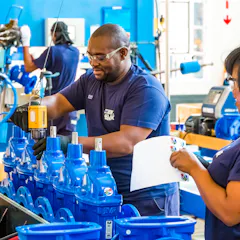
The governments needs to adjust its agenda to take on board concerns voiced by citizens about the impact of technological changes.
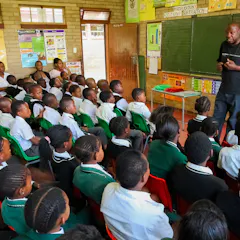
It’s easy to report on access and inputs, but much more difficult to achieve educational quality and meaningful outcomes.
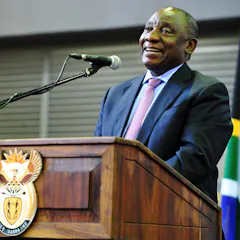
President Cyril Ramaphosa has to ensure that reform of critical institutions is placed first. Everything else will be compromised if this fails.
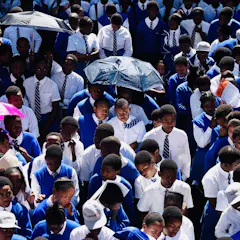
Here’s what researchers found when they assessed the election manifestos of South Africa’s three biggest political parties’ and what they say about education.

Corruption has, over the past decade and a half, become one of South Africans’ biggest concerns.
Authors
-

Chief Research Specialist, Human Sciences Research Council
-
Research Specialist at the Centre for Science, Technology and Innovation Indicators, Human Sciences Research Council
-
Chief Research Specialist, Human Sciences Research Council
-
Executive Head of the Centre for Science, Technology and Innovation Indicators, Human Sciences Research Council
-
Chief Research Specialist , Human Sciences Research Council
-
Senior Research Specialist, Centre for Science, Technology and Innovation Indicators (CeSTII), Human Sciences Research Council
-
Research Manager, Human Sciences Research Council
-
Senior Research Specialist, Human Sciences Research Council
-
Chief Research Specialist, Human Sciences Research Council
-
Strategic Lead, Human Sciences Research Council
-
Chief Research Specialist., Human Sciences Research Council
-
Chief Research Specialist, Human Sciences Research Council
-
Professor of Practice, Human Sciences Research Council
-
Distinguished Research Specialist, Human Sciences Research Council
-
Senior Research Specialist, Human Sciences Research Council