
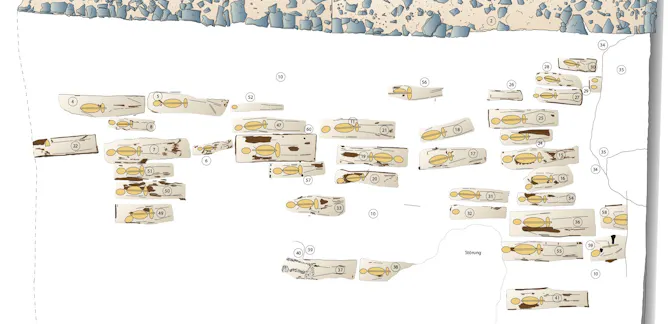
A German town needed to relocate a medieval graveyard to build a parking garage. A positive side effect: Scientists got to sequence the DNA of Ashkenazi Jews who lived more than 600 years ago.
Harvard University

Harvard is at the frontier of academic and intellectual discovery. Those who venture here—to learn, research, teach, work, and grow—join nearly four centuries of students and scholars in the pursuit of truth, knowledge, and a better world.
As a research university and nonprofit institution, Harvard is focused on creating educational opportunities for people from many lived experiences.
Harvard has 12 degree-granting Schools and the Harvard Radcliffe Institute. We also offer countless of non-degree opportunities for professional and lifelong learners, including executive education, continuing education, and online courses.
Links
Articles

Some countries, like Kenya, Uganda, South Africa, Zambia, and Nigeria, have been more proactive than others, but it is still hard for many to get PrEP.

A new study investigated whether ‘school connectedness’ prevents the onset of depression and anxiety in 14 to 24 year-olds.
Une victoire est possible, mais seulement en 2026 ou 2030 et seulement si les équipes africaines peuvent jouer plus régulièrement des matches internationaux de haut niveau.

Staging the spectacle in Qatar has raised rights issues and concerns about the heat. But away from the controversy, there will be the usual mix of sporting moments, supporters’ joy and heartache.
A win is possible - but only in 2026 or 2030 and only if African teams get to play more high level internationals more regularly.
There is a lot about Donald Trump that makes him attractive to the public, and alluring to the media. A scholar of political journalism has some suggestions about how to cover him.

Le recul démocratique de la Tunisie montre comment les autocrates peuvent utiliser la couverture constitutionnelle pour consolider l'autoritarisme.

Tunisia’s democratic backslide demonstrates how autocrats can use constitutional cover to entrench authoritarianism.

Voter demographics and policy priorities are two recurrent, big issues on Election Day – but shifts in election administration and voting laws are new challenges influencing the midterms.
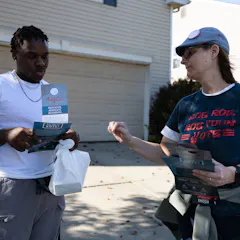
New surveys carried out by a team of social scientists find no evidence that Democrats, Republicans and independents are more likely to vote because of the Supreme Court’s abortion decision in June.

The United States has more economic inequality than other wealthy nations.

Published in 1962, ‘Silent Spring’ called attention to collateral damage from widespread use of synthetic pesticides. Many problems the book anticipated persist today in new forms.
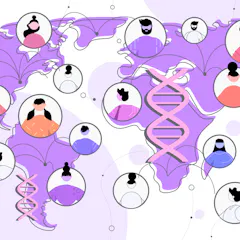
Existing genetic data and sequencing tools are overwhelmingly based on people of European ancestry, which excludes much of the rich genetic variation of the world.
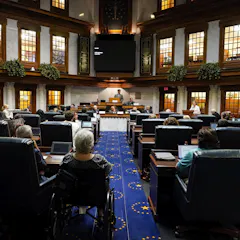
Why do government policies sometimes fail to reflect the public will? The answer begins with the design of the US government system, forged in the 18th century.
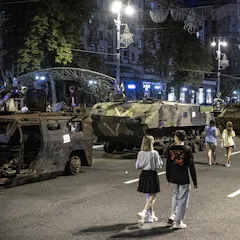
Ukraine is marking its 31st year of independence on Aug. 24, 2022. A scholar of protest movements explains why Ukrainians have never taken its independence for granted.

Youth suicides in the US have increased by around 50% over the past decade – gun availability is a big part of that trend.
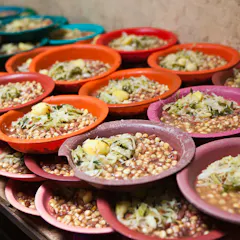
In addition to improving health and education outcomes, school feeding programmes bring social protection and help develop local agricultural economies by boosting local farming activities.
Justice Samuel Alito said that abortion policy crafted by elected representatives in the states would be more responsive to what constituents want than federal protection of the right. He was wrong.

The prevailing narrative around migrant smuggling has clouded the public’s understanding of the issue by obfuscating the role smuggling plays in helping refugees gain asylum.
Authors
-

Lecturer on Law, Senior Clinical Instructor, Harvard University; Harvard Kennedy School
-
Research Fellow in Medicine, Harvard University
-
Chercheur postdoctoral et docteur en neuropsychologie, Harvard University
-
Senior Fellow of the Arctic Initiative, Harvard Kennedy School
-
Professor of Psychology, Harvard University
-
Assistant Professor - University of Alabama & Harvard BKC Faculty Associate, University of Alabama; California State University, San Bernardino; Harvard University
-
Doutorando em Tecnologia e Sociedade, Universidade Tecnológica Federal do Paraná. Pesquisador visitante, Harvard University
-
Postdoctoral associate, Harvard University; Graduate Institute – Institut de hautes études internationales et du développement (IHEID)
-
Emeritus Lecturer, Harvard Kennedy School
-
Postdoctoral Research Associate in Environmental Public Health, Harvard University; University of Liverpool
-
Ph.D. Candidate in Religious Studies, Harvard University
-
Senior Research Associate in Environment and Natural Resources and Science, Technology, and Public Policy, Harvard Kennedy School
-
Professor of U.S.-Asia Relations, Harvard Kennedy School
-
Fellow at the Belfer Center for Science and International Affairs, Harvard Kennedy School
-
Assistant Professor, Harvard University