
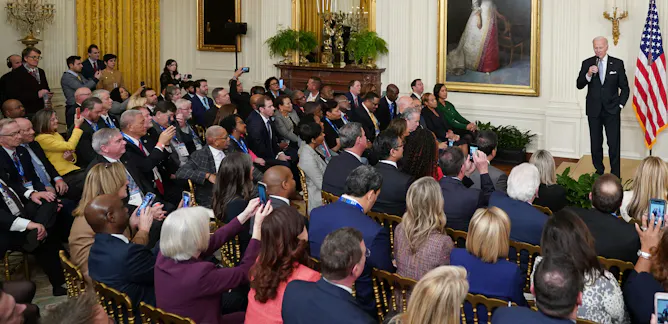
As in the federal and state governments, local elected officials are more likely to be white than their constituents. At times, such as with school boards, the differences are particularly stark.
Harvard University

Harvard is at the frontier of academic and intellectual discovery. Those who venture here—to learn, research, teach, work, and grow—join nearly four centuries of students and scholars in the pursuit of truth, knowledge, and a better world.
As a research university and nonprofit institution, Harvard is focused on creating educational opportunities for people from many lived experiences.
Harvard has 12 degree-granting Schools and the Harvard Radcliffe Institute. We also offer countless of non-degree opportunities for professional and lifelong learners, including executive education, continuing education, and online courses.
Links
Articles

Who’s responsible for the factors that led to the federal government’s recently announced cap on international students, and what are the implications for those directly affected?

The climate migration deal has been dubbed as offering Tuvaluans a lifeline, but others say it is a neocolonial arrangement that does not tackle rising ocean levels.

Migration is considered an inevitable effect of climate change. It could also be part of the solution.

Life is full of hidden bottlenecks that result from logistical trade-offs between efficiency and your unique needs and desires. AI promises to change this taken-for-granted equation.
Racial threats and slights take a toll on health, but the continual invalidation and questioning of whether those so-called microaggressions exist has an even more insidious effect, research shows.

Cuba gets less attention as an espionage threat than Russia or China, but is a potent player in the spy world. Its intelligence service has already penetrated the US government at least once.

Psychedelics are an opportunity to do better than our past drug control strategies. Adults should be trusted to make the right decisions, but policymakers should ensure they do so fully informed.

Canadians should demand greater accountability from their governments to reduce the need for last-minute humanitarian efforts in the face of climate-related disasters in their communities.

Elon Musk’s visit to the U.S.-Mexico border played into false tropes that paint asylum seekers as dangerous criminals.

Algorithms have been blamed for dividing society. What if they could support social cohesion instead?

Calling something a ‘tragedy’ serves to minimize human responsibility for its causes, which can be convenient for the people who are causing the ‘tragedy.’

New research shows turning northern rivers inland to irrigate Australia’s dry interior would not increase rainfall. This is another argument against the Bradfield scheme.

ChatGPT and its ilk give propagandists and intelligence agents a powerful new tool for interfering in politics. The clock is ticking on learning to spot this disinformation before the 2024 election.
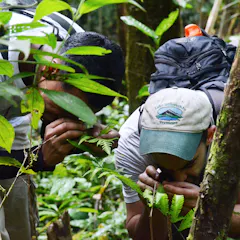
Botanizing is the practice of observing and appreciating plant life. Two plant scientists explain how it benefits people and the planet.

International students frequently face challenges finding suitable places to live. Instead of blaming them, the government should be helping them.

Diversity programs benefit schools and students in multiple ways, research shows.

Black women died during or soon after pregnancy at higher rates than any other racial group in every year from 1999 to 2019. American Indian and Alaska Native women had the greatest increase in risk during this period.

New findings by political scientists at Northwestern University and Harvard Kennedy School provide a clearer picture of which demographic groups support Trump.

The modern representative democracy was the best form of government mid-18th-century technology could invent. The 21st century is a different place scientifically, technically and socially.
Authors
-

Lecturer on Law, Senior Clinical Instructor, Harvard University; Harvard Kennedy School
-
Research Fellow in Medicine, Harvard University
-
Chercheur postdoctoral et docteur en neuropsychologie, Harvard University
-
Senior Fellow of the Arctic Initiative, Harvard Kennedy School
-
Professor of Psychology, Harvard University
-
Assistant Professor - University of Alabama & Harvard BKC Faculty Associate, University of Alabama; California State University, San Bernardino; Harvard University
-
Doutorando em Tecnologia e Sociedade, Universidade Tecnológica Federal do Paraná. Pesquisador visitante, Harvard University
-
Postdoctoral associate, Harvard University; Graduate Institute – Institut de hautes études internationales et du développement (IHEID)
-
Emeritus Lecturer, Harvard Kennedy School
-
Postdoctoral Research Associate in Environmental Public Health, Harvard University; University of Liverpool
-
Ph.D. Candidate in Religious Studies, Harvard University
-
Senior Research Associate in Environment and Natural Resources and Science, Technology, and Public Policy, Harvard Kennedy School
-
Professor of U.S.-Asia Relations, Harvard Kennedy School
-
Fellow at the Belfer Center for Science and International Affairs, Harvard Kennedy School
-
Assistant Professor, Harvard University