

‘Why is nutrition so confusing?’ is a common lament, but the truth is out there. Forget fad diets and media hype. It’s time to harness the power of science to create a healthy and sustainable diet.
Harvard University

Harvard is at the frontier of academic and intellectual discovery. Those who venture here—to learn, research, teach, work, and grow—join nearly four centuries of students and scholars in the pursuit of truth, knowledge, and a better world.
As a research university and nonprofit institution, Harvard is focused on creating educational opportunities for people from many lived experiences.
Harvard has 12 degree-granting Schools and the Harvard Radcliffe Institute. We also offer countless of non-degree opportunities for professional and lifelong learners, including executive education, continuing education, and online courses.
Links
Articles

Le sociofinancement médical recueille des milliards de dollars chaque année - surtout pour ceux qui ont déjà de bons emplois et sont propriétaires de leur propre maison.

Medical crowdfunding raises billions of dollars annually – mostly for those who already have good jobs and own their own homes.
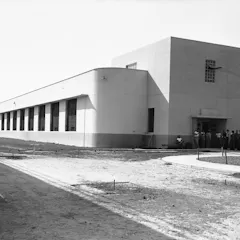
Scudder’s approach was grounded in trust and mutual respect. There would be no guards, no weapons, no walls and no uniforms.

Approval ratings are usually a good way to predict the winner of the next presidential election. But Trump’s numbers fall far outside any historical trends.

Hidden forces are always at work in the world, and people always want to control them, a cognitive anthropologist explains. Enter the human universal of shamanism.

Software makers including Apple have been creating apps aimed at limiting how much time we spend using our smartphones. A behavioral scientist explains how – and whether – they work.

For many working women, motherhood is a major interruption to their career. Some eventually work their way back up to full-time work, but there are many other paths that women might follow.
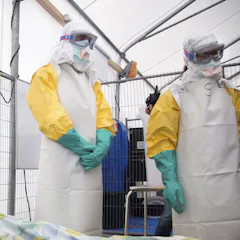
The high stress conditions of an outbreak can spread a dysfunctional culture among those working to fight it. A survey after the 2015 Ebola epidemic quantified the issue – and suggests a better way.
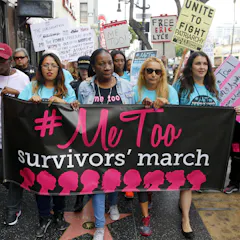
From the French Revolution to #MeToo, social movements often burst into the mainstream with what seems like little warning. Cass Sunstein explains why.
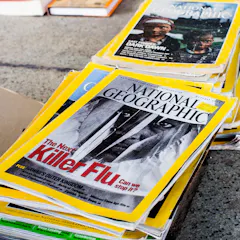
La science fait partie de la vie quotidienne. Les informations circulent et disent un fait et son contraire. Les journalistes doivent tenir compte de toutes les ambiguïtés d'un sujet.

The college admission cheating scandal recently announced by the Department of Justice shows why colleges should admit students via lottery, argues an expert on college admissions.

People – individually and in groups – were not as good at facial recognition as an algorithm. But five people plus the algorithm, working together, were even better.
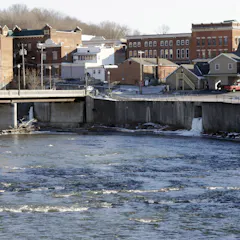
EPA is moving to regulate two chemicals from a group called PFAS that are contaminating drinking water. A public health expert explains why the agency should take much broader action.
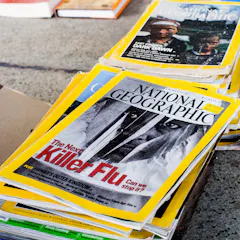
Science is a part of everyday life. Science journalists can do more to connect science to the public.
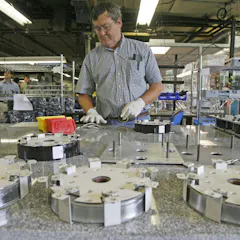
An Obama administration veteran offers some insights from his experience about driving massive increases in clean energy.
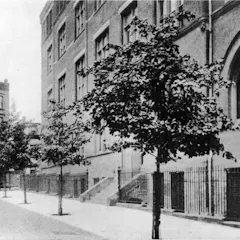
In 1910, along one 45-block stretch of New York City’s Fifth Avenue, there were only 13 trees.
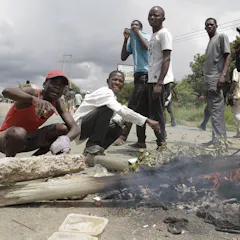
President Emmerson Mnangagwa’s decision to double the price of petrol shows very poor judgement and bad leadership.

Colleges and universities are often criticized for how they admit students from diverse groups. A college admissions scholar suggests an admissions lottery could help make the process more fair.
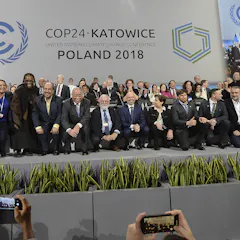
An economist breaks down results on two key issues at the COP24 climate change meeting: getting all nations to use the same measuring and reporting rules, and linking policies across borders.
Authors
-

Lecturer on Law, Senior Clinical Instructor, Harvard University; Harvard Kennedy School
-
Research Fellow in Medicine, Harvard University
-
Chercheur postdoctoral et docteur en neuropsychologie, Harvard University
-
Senior Fellow of the Arctic Initiative, Harvard Kennedy School
-
Professor of Psychology, Harvard University
-
Assistant Professor - University of Alabama & Harvard BKC Faculty Associate, University of Alabama; California State University, San Bernardino; Harvard University
-
Doutorando em Tecnologia e Sociedade, Universidade Tecnológica Federal do Paraná. Pesquisador visitante, Harvard University
-
Postdoctoral associate, Harvard University; Graduate Institute – Institut de hautes études internationales et du développement (IHEID)
-
Emeritus Lecturer, Harvard Kennedy School
-
Postdoctoral Research Associate in Environmental Public Health, Harvard University; University of Liverpool
-
Ph.D. Candidate in Religious Studies, Harvard University
-
Senior Research Associate in Environment and Natural Resources and Science, Technology, and Public Policy, Harvard Kennedy School
-
Professor of U.S.-Asia Relations, Harvard Kennedy School
-
Fellow at the Belfer Center for Science and International Affairs, Harvard Kennedy School
-
Assistant Professor, Harvard University