
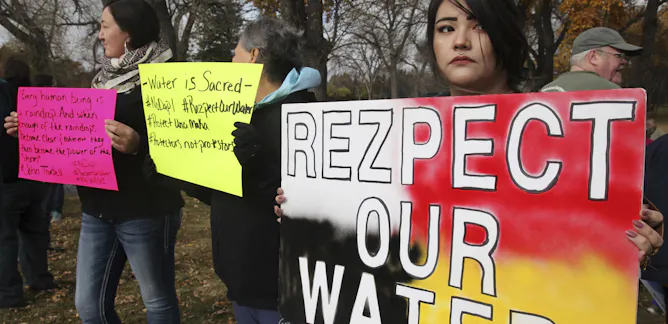
A scholar explains what makes landscapes sacred in Native American religion and why there needs to be a better understanding of the ties to the land.
Harvard University

Harvard is at the frontier of academic and intellectual discovery. Those who venture here—to learn, research, teach, work, and grow—join nearly four centuries of students and scholars in the pursuit of truth, knowledge, and a better world.
As a research university and nonprofit institution, Harvard is focused on creating educational opportunities for people from many lived experiences.
Harvard has 12 degree-granting Schools and the Harvard Radcliffe Institute. We also offer countless of non-degree opportunities for professional and lifelong learners, including executive education, continuing education, and online courses.
Links
Articles

Physician Health Programs are intended to help doctors with substance abuse disorders and mental health problems. But that’s not always what happens.
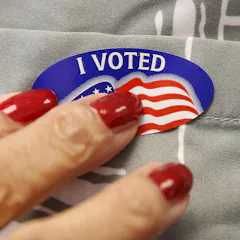
As Election Day approaches, candidates in races across the country will be doing everything they can to get out the vote – including turning to behavioral science.

Developing brand new treatments and cures isn’t the only way to achieve a major reduction in cancer deaths worldwide.
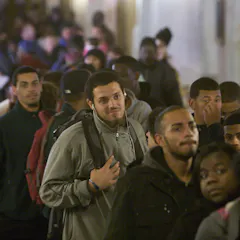
Republicans want voter ID laws. Democrats want more access to the ballot. Why do we have to choose?

Race to the White House - episode #3
The Conversation, CC BY-ND27.7 MB (download)
The third episode of Race to the White House dissects the first presidential debate between Hillary Clinton and Donald Trump.
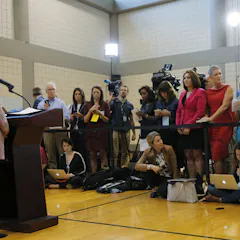
L'analyse détaillée de la couverture médiatique de la campagne permet de découvrir ce qui retient l'attention des journaux et des chaînes de télé - et, in fine, des électeurs.
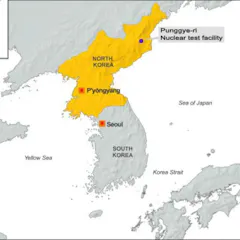
After North Korea’s fifth nuclear test on Sept. 9, the U.S. is calling for tighter global sanctions. New research shows that this strategy actually helps North Korea.
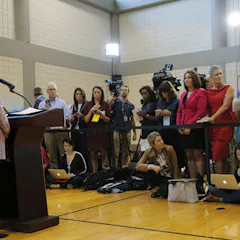
How is the Trump-Clinton contest being covered by the country’s major newspapers and broadcasters? We look at the data.

The factors limiting poultry production are similar to those affecting the rest of the agricultural systems.
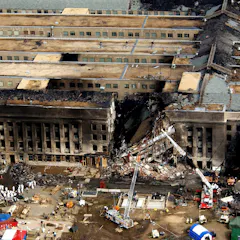
The National Incident Management System (NIMS), created after 9/11, has helped government agencies respond to large-scale emergencies, including mass shootings and the Boston Marathon bombing.

Research suggests how your online friends experienced the housing collapse affected how you perceived your local real estate market.

Public health experts enlist the molecular biology tools that create genetically modified organisms – as well as the GMOs themselves – in the fight against emerging infectious diseases.

Les gouvernements utilisent l’argent des contribuables pour servir les intérêts des investisseurs des banques et la dette. Ils doivent réorienter leur action vers les entrepreneurs et les actions.

Human resistance to innovation can be an obstacle to solving major global challenges.

A study estimates that Americans would pay $92 billion yearly in extra taxes to protect national parks. But the Trump Administration’s budget calls for cuts.
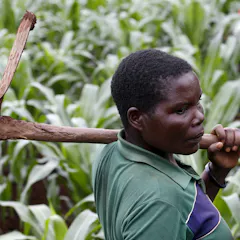
It’s been proved that prizes can boost cultural innovation. The same is certainly true for innovation in agriculture – which Africa desperately needs.

Machines that can target and kill people without human intervention or accountability pose a moral threat to the world.

We come across dishonest acts in our day-to-day lives. Perhaps we commit them as well. But, guess what? Most of us care so much about being moral that we tend to forget our unethical behavior.
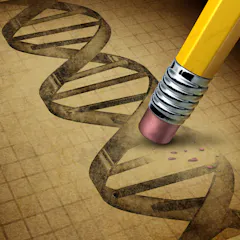
A recent closed meeting about building synthetic genomes raised suspicions about just what scientists were planning, away from the public eye.
Authors
-

Lecturer on Law, Senior Clinical Instructor, Harvard University; Harvard Kennedy School
-
Research Fellow in Medicine, Harvard University
-
Chercheur postdoctoral et docteur en neuropsychologie, Harvard University
-
Senior Fellow of the Arctic Initiative, Harvard Kennedy School
-
Professor of Psychology, Harvard University
-
Assistant Professor - University of Alabama & Harvard BKC Faculty Associate, University of Alabama; California State University, San Bernardino; Harvard University
-
Doutorando em Tecnologia e Sociedade, Universidade Tecnológica Federal do Paraná. Pesquisador visitante, Harvard University
-
Postdoctoral associate, Harvard University; Graduate Institute – Institut de hautes études internationales et du développement (IHEID)
-
Emeritus Lecturer, Harvard Kennedy School
-
Postdoctoral Research Associate in Environmental Public Health, Harvard University; University of Liverpool
-
Ph.D. Candidate in Religious Studies, Harvard University
-
Senior Research Associate in Environment and Natural Resources and Science, Technology, and Public Policy, Harvard Kennedy School
-
Professor of U.S.-Asia Relations, Harvard Kennedy School
-
Fellow at the Belfer Center for Science and International Affairs, Harvard Kennedy School
-
Assistant Professor, Harvard University