
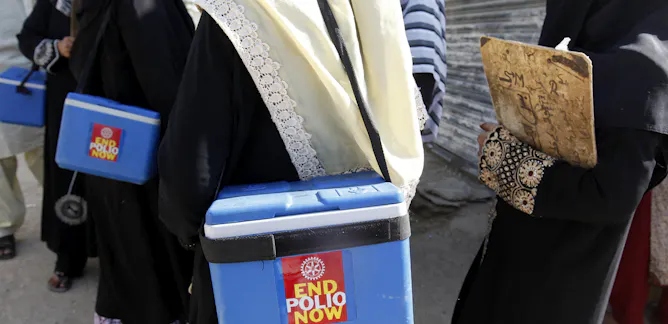
Researchers are piloting a smartphone app to collect better information about who is getting vaccinated and to design better incentives for health workers on vaccination drives.
Harvard University

Harvard is at the frontier of academic and intellectual discovery. Those who venture here—to learn, research, teach, work, and grow—join nearly four centuries of students and scholars in the pursuit of truth, knowledge, and a better world.
As a research university and nonprofit institution, Harvard is focused on creating educational opportunities for people from many lived experiences.
Harvard has 12 degree-granting Schools and the Harvard Radcliffe Institute. We also offer countless of non-degree opportunities for professional and lifelong learners, including executive education, continuing education, and online courses.
Links
Articles

Environmental economists have long argued a carbon price is the best way to factor in the social cost of climate change. Did Obama effectively use a carbon price to nix the Keystone XL pipeline?
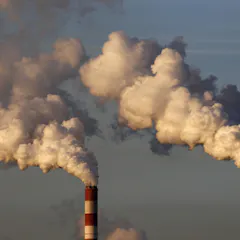
Behind the US pledge to cut carbon in Paris climate talks lies a bigger effort to build a durable system to verify all countries’ emission cuts.

Laden with animals, conspiracy theories and apocalyptic visions, Muhammad Fanatil al-Hajaya’s poetry reflects how many Arabs – urban and rural, rich and poor – view the world.

China’s economy has continued to slow despite efforts by its leaders to give it a boost, which is very bad news for an increasingly dependent Africa.

About a quarter of all renters are spending at least half of their income on housing, and the situation is projected to get much worse over the next decade.
Ignore the gloom around prospects for emerging markets. There are diamonds in the rough.
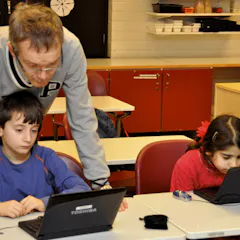
October 5 is World Teachers’ Day. How about paying some attention to how teachers experience their work? Do teachers in Finland have more autonomy when compared to those in the US?
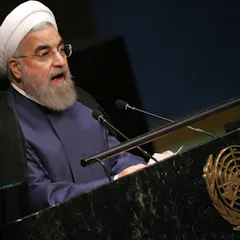
Increasing trade and commerce will make it easier to verify the Iranians are keeping their promises under the nuclear agreement.

Kids today face a variety of digital stressors –from negotiating how much communication to have with close friends to digital abuse.
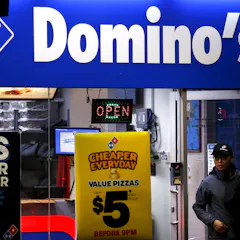
From deciding when and what to eat to how much food you actually put on your plate, the average person makes over 200 food-related decisions each day, most of which are automatic.

Students are creating ‘multiple personalities’ to cheat on MOOCs. How do they do that? What are its implications?

There is no harm in avoiding white coats, but there could be danger in wearing one.

Family meals – with lively conversation, storytelling and discussions of books and the tales they contain – feed children’s literacy skills.
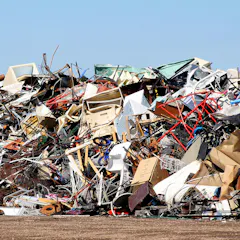
The ‘linear economy’ that drove 20th-century leaps in wealth is no longer sustainable, and our standard of living will not survive without a dramatic redesign.
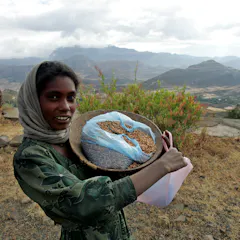
The seed industry in sub-Saharan Africa suffers from many challenges. India, which has one of the biggest seed markets in the world, offers some lessons on how these challenges could be overcome.
Over the past 60 years, China has experimented extensively with policies and programmes to encourage the growth of rural enterprises. Africa could do well by following in these footsteps.

Elections will give Alexis Tspiras another chance to put Greece’s financial house in order. Here’s what he should do after the government reforms in September.

The latest dubious tactic of global soft-drink giant Coca-Cola has now been revealed for what it is - a move by an industry with a threatened financial future to confuse science, policy and the public…

Poor Americans suffer disproportionately from higher energy prices. Energy policies should fund innovation to make low-carbon energy cheaper.
Authors
-

Lecturer on Law, Senior Clinical Instructor, Harvard University; Harvard Kennedy School
-
Research Fellow in Medicine, Harvard University
-
Chercheur postdoctoral et docteur en neuropsychologie, Harvard University
-
Senior Fellow of the Arctic Initiative, Harvard Kennedy School
-
Professor of Psychology, Harvard University
-
Assistant Professor - University of Alabama & Harvard BKC Faculty Associate, University of Alabama; California State University, San Bernardino; Harvard University
-
Doutorando em Tecnologia e Sociedade, Universidade Tecnológica Federal do Paraná. Pesquisador visitante, Harvard University
-
Postdoctoral associate, Harvard University; Graduate Institute – Institut de hautes études internationales et du développement (IHEID)
-
Emeritus Lecturer, Harvard Kennedy School
-
Postdoctoral Research Associate in Environmental Public Health, Harvard University; University of Liverpool
-
Ph.D. Candidate in Religious Studies, Harvard University
-
Senior Research Associate in Environment and Natural Resources and Science, Technology, and Public Policy, Harvard Kennedy School
-
Professor of U.S.-Asia Relations, Harvard Kennedy School
-
Fellow at the Belfer Center for Science and International Affairs, Harvard Kennedy School
-
Assistant Professor, Harvard University