

O tempo, a energia e as habilidades necessárias para verificar as respostas da IA às suas perguntas podem anular quaisquer ganhos de produtividade que a tecnologia proporcione
Georgia Institute of Technology

The Georgia Institute of Technology is one of the top public research universities in the United States, developing leaders who advance technology and improve the human condition. More than 56,000 undergraduate and graduate students are enrolled at Georgia Tech’s 400-acre main campus in the heart of Atlanta and online. As a leading technological university, Georgia Tech is an engine of economic development for Georgia, the Southeast, and the nation, conducting more than $1 billion in annual research for government, industry, and society.
Links
Articles

The American consumer has kept hanging on despite inflation, tariffs and high interest rates.
Nvidia found itself in the right place at the right time. It was the dominant seller of graphics chips by the early 2000s, and those chips later turned out to be well suited for running AI.

The Trump administration has retired several key websites that scientists and businesses alike have used to track weather events.

Making AI accountable for “strict liability” in court would shift risk from the public to the companies seeking fortunes.

The time, energy and skills needed to verify AI’s answers to your queries can erase any productivity gains that the technology provides.

The brain’s ability to process sound more consistently may influence how well you’re able to discriminate between different sounds.
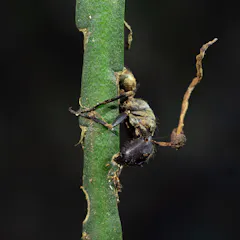
Parasitic fungi, wasps, worms and amoeba can control the behavior of their hosts in various horrifying ways.
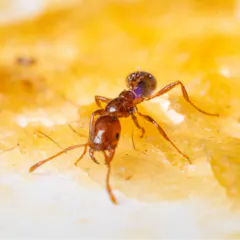
Earwax’s unusual physical properties help it repel insects in the lab. Is this a job it evolved to do in animal ears?

Storms big and small can produce a lot of rain. What matters most is how fast they’re moving, as an atmospheric scientist and educator explains.
Hands-on learning about building a business is something students of all majors can benefit from.

A hit 1983 movie illustrates what computer scientists have long known: If you give an AI agent a goal but don’t control what it can and can’t do, you shouldn’t be surprised by what it does.

Bacteria make a survival gamble when they devote all their energy to forming spores. Evolution is quick to get rid of this function, and researchers did the accounting to understand why.

A report that one of Trump’s aides went a year without routine vetting raises a question a former CIA executive knows well: What is that process for?

A CIA veteran explains that a polygraph campaign is not likely to eliminate leaks, but it may divert investigative energy from essential security priorities.

Bacteria use strategies similar to artificial neural networks to use the past to adapt to the future.

Historical events hold lessons about collaboration and competition in space that could inform how experts plan for the discovery of life beyond Earth.

Oil companies are making massive profits and stockpiling cash, and holding off on changing their investment plans.

Point-to-point rocket delivery could cut down on transportation times. But engineers will need to figure out how to integrate rockets into current transportation systems.

Communities and entrepreneurs are experimenting with ways to turn this nuisance into a valuable resource.
Authors
-

Professor of Practice, International Affairs, Georgia Institute of Technology
-
Postdoctoral Scholar in Biological Sciences, Georgia Institute of Technology
-
Professor of the Practice of Supply Chain Management, Georgia Institute of Technology
-
Professor of Mechanical Engineering and Biology, Adjunct Professor of Physics, Georgia Institute of Technology
-
Ph.D. Student in the Sam Nunn School of International Affairs, Georgia Institute of Technology
-
Professor of Business Law and Ethics; Associate Director for Law, Policy, and Ethics at the Machine Learning Center, Georgia Institute of Technology
-
Principal Research Scientist, Partnership for an Advanced Computing Environment, Georgia Institute of Technology
-
Professor of Cognitive Engineering, Georgia Institute of Technology
-
Professor of International Affairs, Georgia Institute of Technology
-
Vice President of Commercialization and Chief Commercialization Officer, Georgia Institute of Technology
-
Associate Professor of Physics, Georgia Institute of Technology
-
Associate Professor of Operations Management, Georgia Institute of Technology
-
Associate Professor of Biomedical Engineering, Georgia Institute of Technology
-
Assistant Professor of Psychology, Georgia Institute of Technology
-
Atmospheric Science Educator, Georgia Institute of Technology