
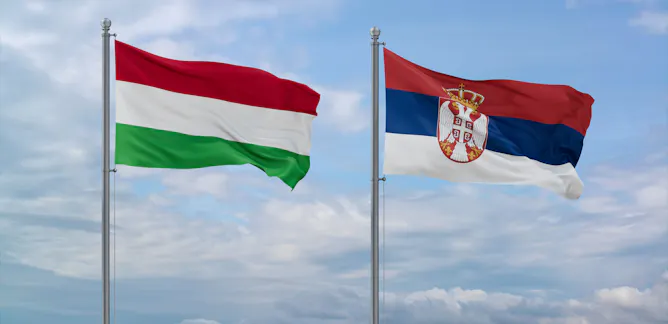
En Hongrie puis en Serbie, les électeurs ont congédié des dirigeants qui misaient à la fois sur l’UE, sur Pékin et Moscou. Pour les petits États, jouer l’Est contre l’Ouest ne rapporte peut-être plus.
European University Institute

The European University Institute (EUI) is a unique international centre for doctorate and post-doctorate studies and research, situated in the Tuscan hills overlooking Florence. Since its establishment 40 years ago by the six founding members of the then European Communities, the EUI has earned a reputation as a leading international academic institution with a European focus. The four departments – Economics, History and Civilization, Law, and Political and Social Sciences – host scholars from more than 60 countries, studying for the Institution’s doctorate or one-year masters in law or European economics.
Links
Articles
L’écart entre ce que la France produit, ses dépenses publiques et ce que les contribuables financent est une source d’inquiétude. Contrairement à la Grèce, il n’est pas trop tard pour sauver son économie : quelles sont donc les options de la France ?
By breaking away from illiberal rule, Serbia and Hungary provide examples of states seeking the best of both worlds in their relations with China, Russia and the West.
Les spécialistes des migrations peuvent se sentir ignorés. Une enquête européenne indique pourtant que les décideurs les écoutent, mais tiennent aussi compte des inquiétudes perçues du public.
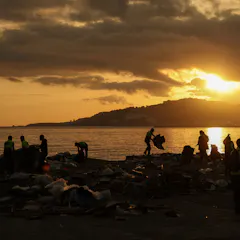
New European research explores the reasons behind the disconnect between policymakers and researchers on migration.
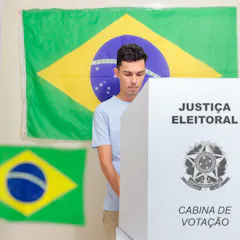
Brazil has just made civic education compulsory in schools. Whether it takes hold will depend less on the law than on what happens in the classroom.
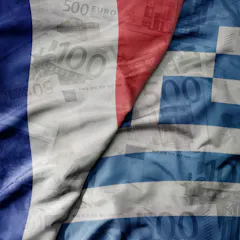
France’s gap between what it produces, public spending and what taxpayers finance is cause for concern. Unlike Greece, it’s not too late to salvage its economy, so what are France’s options?
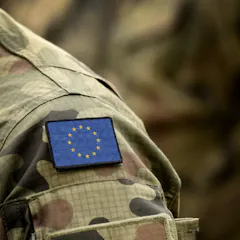
The EU may not yet have a common army but via its citizens, member states can foster a culture of resilience and solidarity if all levels of society can pull together.
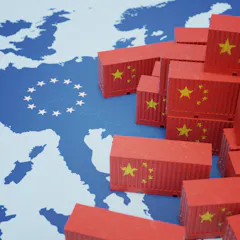
The US and China have extended their trade truce till January. Meanwhile, EU-China export/import imbalances persist with sticking points, including voluntary export curbs and industrial policy reform.
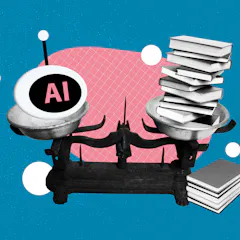
Understanding the technological shift from a literary to a post-literary society is crucial for rethinking AI’s place in learning environments.

Support settlements are at the forefront of Russian spatial policy. What does the development of these administrative service hubs tell us about how the land lies in Russia today?
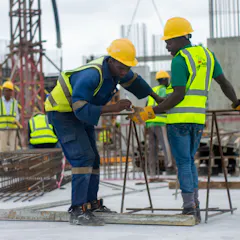
Effective migration policy is not about imposing new patterns of movement, but about making existing ones safer, fairer, and more beneficial for all.
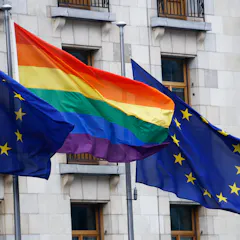
A team of researchers explains why support for LGBTIQIA+ rights in Europe that is not based on homonationalist agendas, but intersectional fights against discrimination matters now more than ever.
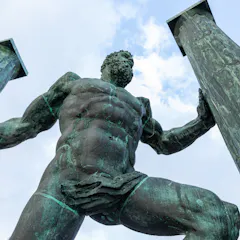
In a knee-jerk reaction to the situation in Ceuta, 22 EU member states are seeking to step up border security. What are the legal loopholes and do stronger controls comply with the rule of law?

Comment s’habiller, recevoir, décorer son intérieur ou choisir un restaurant : après 1789, ces questions deviennent essentielles pour une société en pleine recomposition. C’est dans ce contexte qu’apparaissent les tout premiers influenceurs de l’histoire.
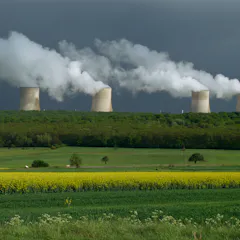
Three researchers take stock of different Union-wide policy approaches to removing and storing carbon emissions in the heavy industry sector.

Influencer culture is not a thing of the past, and yet the movers and shakers of post-revolutionary France are proof that writing lifestyle columns and trending is a centuries-old pursuit.

We are living in a world backed by technology that seems to have a spiritual project of its own. Are the fears of the Pope’s AI-critical encyclical founded?
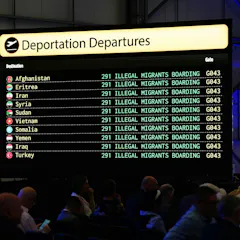
L'Union européenne a fait de l'argent et des moyens de contrôle les deux piliers de sa stratégie de retour des migrants. Cela ne fonctionne pas.

Geopolitical and economic uncertainty topped the G7 summit agenda. The world needs strong, inclusive international institutions more than ever.
Authors
-

Policy Leader Fellow, School of Transnational Governance, European University Institute
-
Professor, European University Institute
-
Professor of History of Gender and Sexuality, European University Institute
-
Policy Leader Fellow, European University Institute
-
Research fellow, European University Institute
-
Policy Leader Fellow at the Florence School of Transnational Governance, European University Institute
-
Full-time Professor and Chair in International Political Economy - Florence School of Transnational Governance, European University Institute
-
PhD Researcher, European University Institute
-
PhD researcher in EU Law, European University Institute
-
Researcher, European University Institute
-
Doctoral Researcher in Law, European University Institute
-
Professor at the Institute of Political Studies of the Polish Academy of Sciences and a part-time Professor at the Robert Schuman Centre for Advanced Studies, European University Institute
-
Department of History, European University Institute
-
Researcher at The Robert Schuman Centre, European University Institute; Monash University
-
Department of History, European University Institute