

Carbon capture and sequestration can play a role in limiting warming but the nuances of its application are far more complicated than just planting trees. Getting it wrong could make warming worse.
CSIRO

As Australia’s national science agency, CSIRO is solving the greatest challenges through innovative science and technology.
CSIRO - unlocking a better future for everyone.
Links
Articles

Most Aussie homes are not suited to the current climate, let alone future extremes. But they can be upgraded. A new report identifies the most common housing types and benefits of renovating.
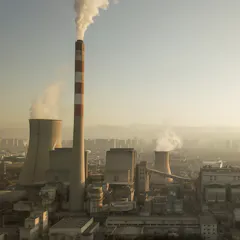
Les quantités de CO₂ que nous pouvons encore émettre tout en respectant l’objectif de l’accord de Paris se réduisent à une peau de chagrin : au rythme de 2023, nous aurons épuisé ce budget carbone dans sept ans.
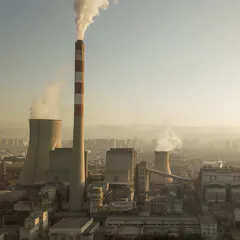
Record emissions are fast shrinking the remaining amount of carbon dioxide we can emit if we are to limit global warming. At current rates, we’ll use up the budget for a 1.5°C outcome in seven years.
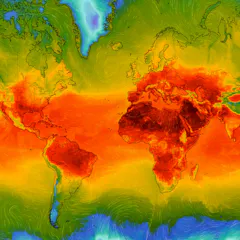
We can’t prevent continued global warming without reaching net zero carbon dioxide emissions. New climate simulations show what might happen when we get there.

As kids, we’re naturally more likely to enjoy sweet and salty tastes and reject bitterness. But that changes as we grow older.

Every living thing leaves traces in its environment. By sampling water or even air for this environmental DNA, we can know which species live where.
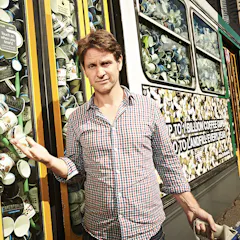
Understanding the success of the ABC’s War on Waste is a lesson in behavioural psychology. Research reveals five ways to guide other entertainment-education interventions to similar success.
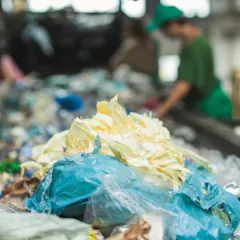
United Nations efforts to advance a global treaty on plastic pollution echo past multilateral agreements that tackled ozone layer depletion and acid rain.

Any plan to dam or extract water from some of Australia’s last wild rivers must carefully consider the consequences. Prawn, mud crab and barramundi fisheries could suffer in the Gulf of Carpentaria.
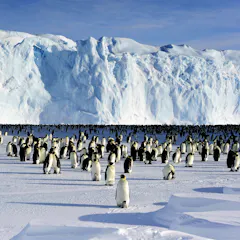
The first comprehensive assessment of trends in Southern Ocean ecosystems reveals an urgent need to address climate change. The summary for policymakers can guide decision-makers.
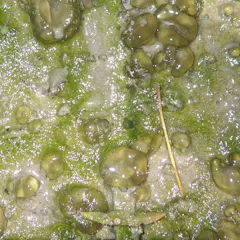
Slime gets a bad name in popular culture, but it’s food for invertebrates who become food for many other creatures.
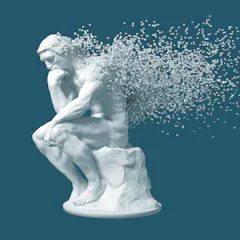
AI tools are becoming increasingly personalised to cater to our every need. Will outsourcing the handling of information to AI make us ‘dumber’?

A climate overshoot that creates warmer oceans with lower oxygen levels will reduce the suitable habitat for many marine species long after CO₂ levels have peaked and declined.

Holding climate change to 1.5 might be possible – but in the best case, we’ll blow past the limit first and then backpedal.
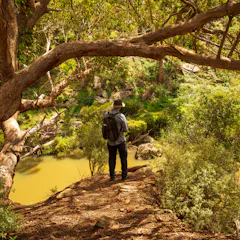
Citizen science is coming of age. The data are pouring in from observations by naturalists and birders.
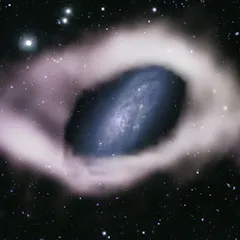
New ASKAP images reveal a giant hydrogen ring around the spiral galaxy NGC 4632.
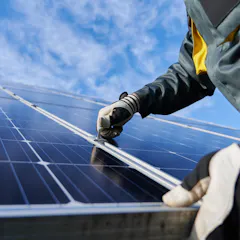
Tandem solar cells promise to revolutionise the clean energy transition – but a shortage of materials means they must urgently be redesigned.

Alien invaders are penetrating the borders of every country in the world. Now the full extent of the problems and potential solutions have been exposed, in a new United Nations report.

As well as the important ethical reasons for minimising animal use in research, the reality is sometimes animals just aren’t that good at predicting human responses.
Authors
-

SKA-Low Commissioning Scientist, Square Kilometre Array Observatory; and Affiliate, Space and Astronomy, CSIRO
-
Chief Research Scientist - Environment, CSIRO
-
Research Lead, Carbon Dioxide Removal, CSIRO
-
Principal Research Scientist in Aquatic Ecology, CSIRO
-
Behavioural Scientist, CSIRO
-
Senior Research Scientist in Aquatic Ecology, CSIRO
-
Professor, Senior Principal Research Scientist, CSIRO
-
Postdoctoral Research Fellow, Marine Carbon Dioxide Removal, CSIRO
-
Radio Astronomy Research Scientist, CSIRO
-
Research Director, CSIRO
-
Senior Principal Research Scientist, Environment, CSIRO
-
Research scientist, CSIRO
-
Principal Research Scientist, CSIRO
-
Principal Research Scientist in Ecosystem Ecology, CSIRO
-
Senior Principal Research Scientist, CSIRO