

Here’s why economists aren’t sure about humanity’s place in an automated future.
CSIRO

As Australia’s national science agency, CSIRO is solving the greatest challenges through innovative science and technology.
CSIRO - unlocking a better future for everyone.
Links
Articles
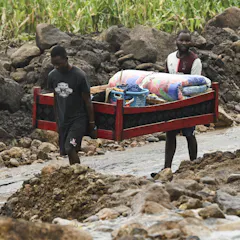
Extreme weather events are complex – and working out exactly how much damage climate change caused is a tricky task.
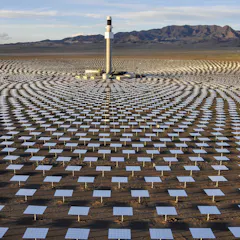
Solar thermal technology has the potential to provide both long-duration storage and industrial heat, yet it has been largely overlooked in the Australian context. That is about to change.
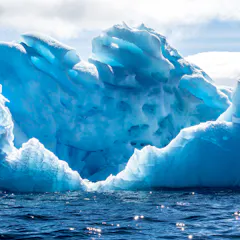
In a plot reminiscent of the 2004 movie The Day After Tomorrow?, Australian scientists are warning that the Southern Ocean’s deep “overturning” circulation is slowing and headed for collapse.

Not all La Niñas are wet, nor El Niños dry – especially if you live in Sydney. So here’s how to interpret what an El Niño forecast means for you.

After three long years of rainy weather, La Niña is over. But that doesn’t mean El Niño is a certainty. Here’s why.
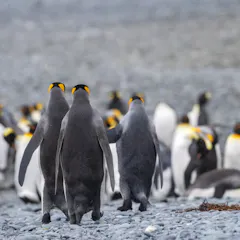
Macquarie Island isn’t just a windswept rock halfway to Antarctica. It’s a globally unique home to dozens of bird and marine mammal species, hence the government’s plans to give it greater protection.

The largest birds that ever lived on Earth, elephant birds have a spotty fossil record. But understanding them could help protect Madagascar’s biodiversity.
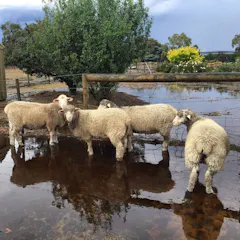
Superbugs like it hot and wet, so climate change presents a major challenge for healthcare and agriculture, says a new report from CSIRO and the ATSE.

A new process to quickly remove radioactive chemicals from water and other liquids and trap them in a clay-like substance could make nuclear waste management much easier.
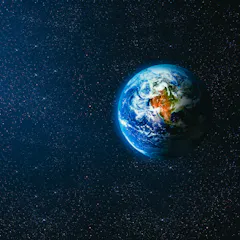
Mountaineer and scientist Will Steffen said climbing was similar to science: “That’s the buzz you get in science when you solve a big problem and suddenly see how it all fits together”
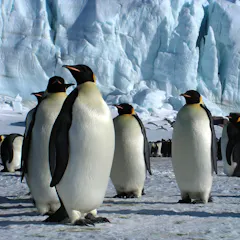
The species at risk include flowering plants, moss and lichens, tough invertebrates and breeding seabirds.
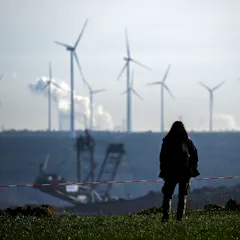
Aux niveaux actuels d'émissions, il y a 50 % de chances que la planète atteigne la hausse de température moyenne mondiale de 1,5 °C dans les 9 ans à venir.

Pada tingkat emisi saat ini, ada 50% kemungkinan bumi akan mencapai kenaikan suhu rata-rata global 1,5°C hanya dalam sembilan tahun.

The findings have big implications for how Australians prepare for extreme weather events.
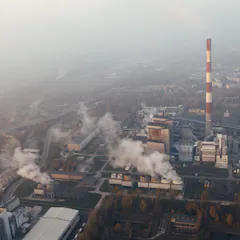
Con los niveles actuales de emisiones, hay un 50 % de posibilidades de que el planeta alcance el 1,5 °C de aumento de la temperatura media global en sólo nueve años.
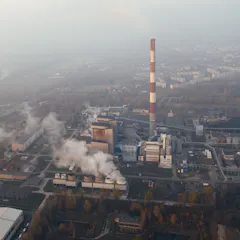
At current levels of emissions, there is a 50% chance the planet will reach the 1.5°C global average temperature rise in just nine years.

Each year, enough fishing line to circle the Earth 18 times is lost at sea. This not only harms marine life, but also the livelihoods of fishers worldwide.

The findings underscore the urgent need to both reduce greenhouse gas emissions, and help animals find cool places to shelter.

Sejauh ini, jenis silikon lebih mahal digunakan untuk menghasilkan panel surya efisiensi tinggi. Kini, ada cara penggunaan bahan baku lebih murah yang akan memotong biaya tenaga surya untuk semua.
Authors
-

SKA-Low Commissioning Scientist, Square Kilometre Array Observatory; and Affiliate, Space and Astronomy, CSIRO
-
Chief Research Scientist - Environment, CSIRO
-
Research Lead, Carbon Dioxide Removal, CSIRO
-
Principal Research Scientist in Aquatic Ecology, CSIRO
-
Behavioural Scientist, CSIRO
-
Senior Research Scientist in Aquatic Ecology, CSIRO
-
Professor, Senior Principal Research Scientist, CSIRO
-
Postdoctoral Research Fellow, Marine Carbon Dioxide Removal, CSIRO
-
Radio Astronomy Research Scientist, CSIRO
-
Research Director, CSIRO
-
Senior Principal Research Scientist, Environment, CSIRO
-
Research scientist, CSIRO
-
Principal Research Scientist, CSIRO
-
Principal Research Scientist in Ecosystem Ecology, CSIRO
-
Senior Principal Research Scientist, CSIRO